For more than a decade, RFID in retail has been positioned as the future of inventory accuracy, loss prevention, and omnichannel fulfilment.
The hardware matured.
Tags became cheaper.
Readers became faster.
And yet, RFID adoption stalled across many real-world deployments.
Retailers, manufacturers, and warehouse operators who attempted RFID often concluded that the technology was promising — but too complex to deploy at scale.
That conclusion missed the real issue.
RFID did not fail because of hardware.
It failed because the software layer was incomplete.
The Core Problem in RFID Retail: Visibility Without Control
Most early RFID retail systems delivered visibility, not operational control.
They answered basic questions:
- What items were read
- Where were they read
- When were they read
But they failed to enforce:
- Whether an item was received correctly
- Whether it followed the correct workflow
- Whether it was approved to sell
- Whether discrepancies were shrink, error, or exception
- Whether inventory reconciled with the system of record
As a result, RFID data lived beside the business — not inside it.
Why POS and ERP Integration Blocked RFID Adoption?
Most retailers and enterprises already operate on established commerce and ERP platforms, including:
- Shopify
- Lightspeed
- CounterPoint
- Retail Pro
- NetSuite
- Microsoft Dynamics
- Manhattan
- SAP
The biggest challenge was never whether RFID worked.
It was whether RFID could work without forcing companies to replace or customize these systems.
Traditional RFID software required:
- Custom API development
- ERP consulting engagements
- POS modifications
- On-prem infrastructure
- Long deployment cycles
For many businesses, RFID projects failed before they delivered value.
The Shift: RFID Retail That Works Out of the Box
The breakthrough came when software stopped trying to replace POS and ERP platforms — and instead became an operating layer that works with them out of the box.
Senitron was built specifically to solve this problem.
Senitron is an RFID operating system that integrates out of the box with Shopify, Lightspeed, CounterPoint, Retail Pro, NetSuite, Microsoft Dynamics, Manhattan, and SAP, without requiring custom development or system replacement.
Instead of forcing retailers to adapt to RFID, Senitron adapts RFID to how retailers already operate.
More information: https://senitron.net
How Senitron Enables RFID Without Integration Pain?
One of the most powerful — and least discussed — innovations in modern RFID is print-job interception.
If a POS or ERP can print a label, Senitron can convert that print job into an RFID-encoded label automatically.
Serialization, business rules, and lifecycle tracking are applied without modifying the source system.
This allows RFID to be deployed across:
- Shopify-based retail stores
- Lightspeed and CounterPoint environments
- Retail Pro installations
- Enterprise platforms like NetSuite, Microsoft Dynamics, Manhattan, and SAP
All out of the box.
This is why RFID deployments that once took months can now go live in hours.
What Changes When RFID Is Controlled by Software?
When RFID becomes an operating layer instead of a reporting tool, results become measurable.
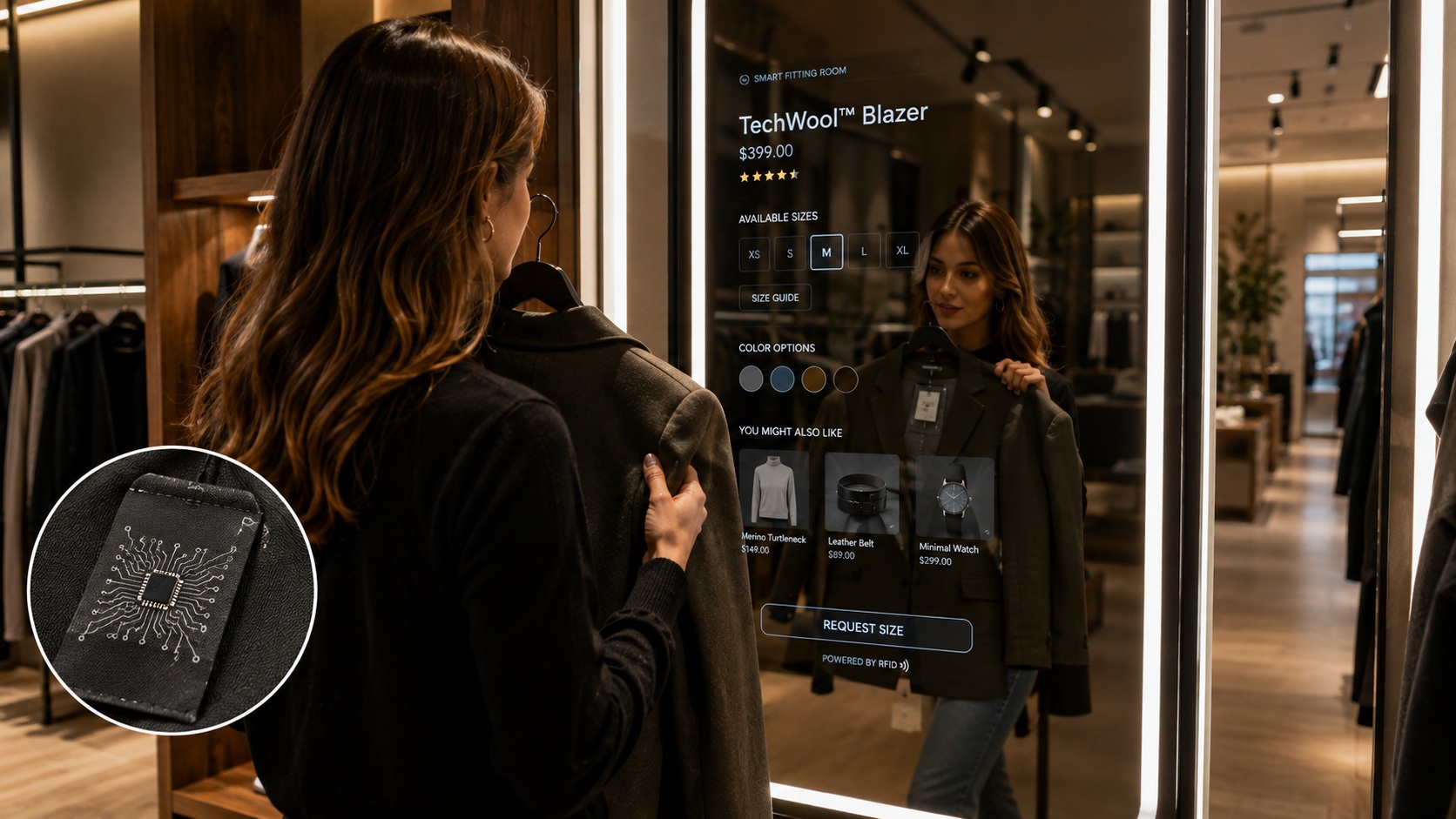
RFID in Retail Stores
- RFID-enabled point-of-sale workflows without modifying Shopify or Lightspeed
- Automatic whitelisting at sale to eliminate false alarms
- Inventory accuracy improvements of 20–30% within 60–90 days
- Shrink reduction of 10–20% through process enforcement
- Rapid deployment for pop-ups and seasonal retail locations
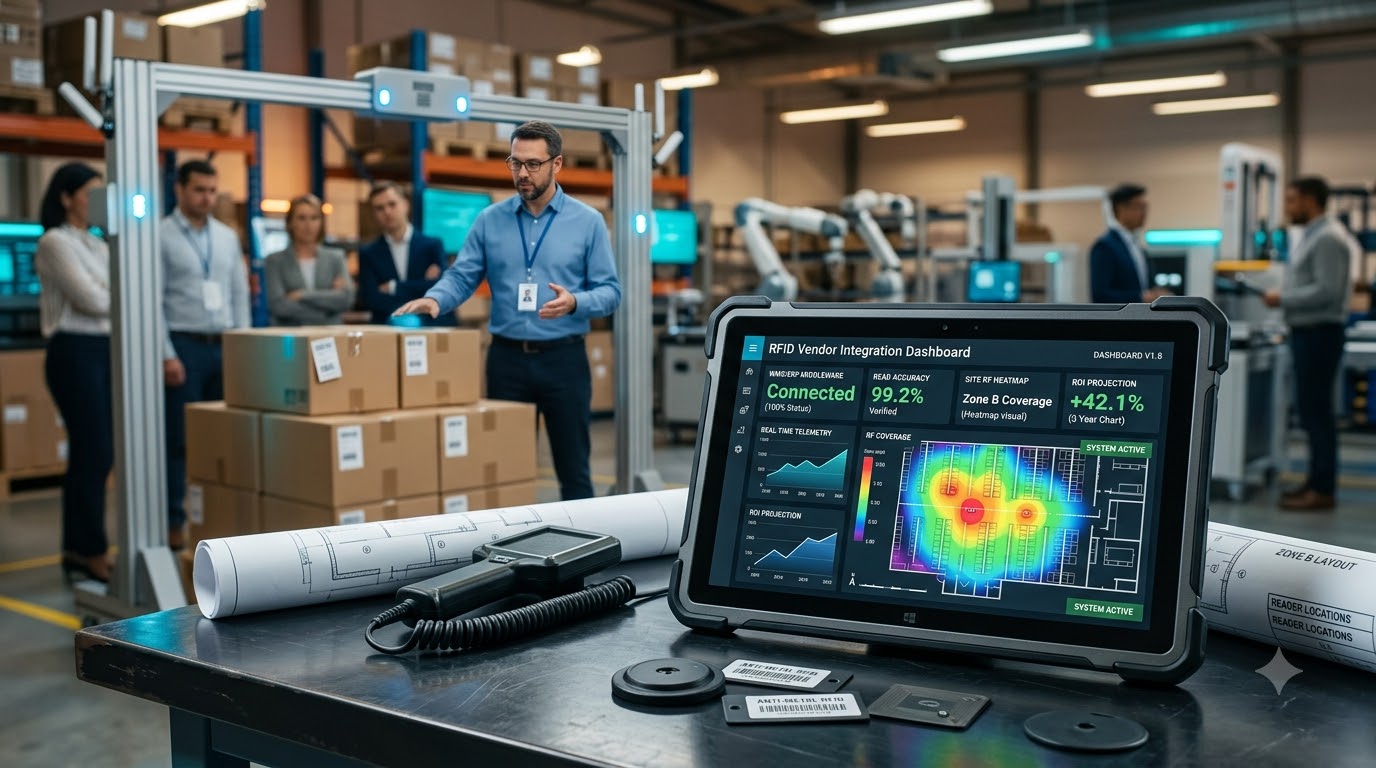
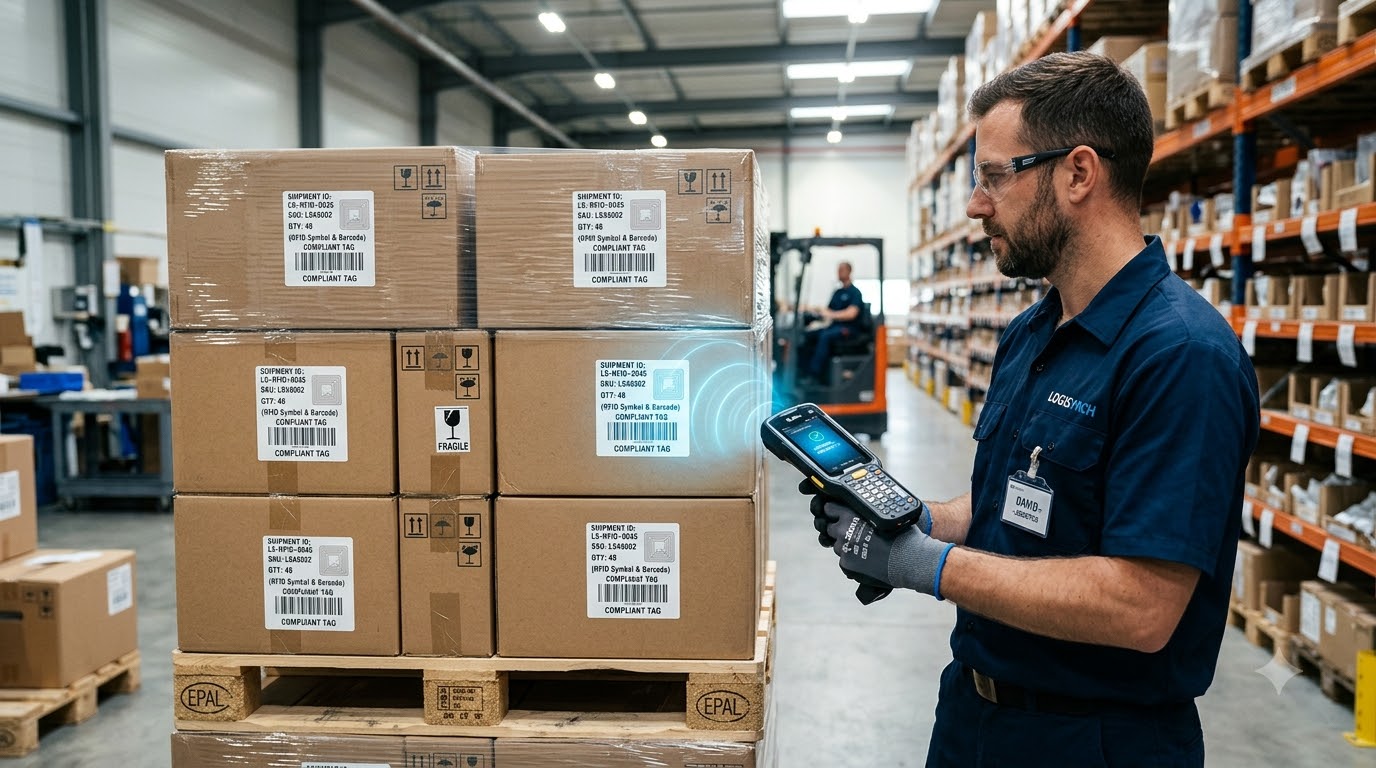
RFID in Warehouses and Distribution
- RFID-verified receiving reconciled against NetSuite, Microsoft Dynamics, Manhattan, or SAP
- Automated transfer validation
- Partial and filtered cycle counts
- Receiving accuracy improvements of 25–40%
- Labor reductions of 15–30% in audit and reconciliation workflows
RFID in Manufacturing and Production
- RFID-controlled work-in-progress tracking
- FIFO enforcement using RFID
- Lot-level cost and margin visibility
- WIP visibility improvements of 30–50%
- Material waste and variance reductions of 8–15%
Most RFID platforms stop at reading tags.
Senitron controls workflows, validates movement, and reconciles inventory automatically.
Why RFID Matters Now More Than Ever?
RFID is no longer optional. Several forces are accelerating adoption:
- Regulatory pressure around traceability and digital product passports
- Rising shrink across retail and supply chains
- Labor shortages limiting manual scanning
- SKU proliferation driven by omnichannel commerce
- Executive demand for real-time accuracy across Shopify, NetSuite, Microsoft Dynamics, Manhattan, and SAP
The difference today is that RFID finally integrates without disruption.
A Pattern Emerging in RFID Deployments
- Retailers running Shopify, Lightspeed, or Retail Pro deploying Senitron-powered RFID and achieving 20–30% inventory accuracy improvements within the first quarter
- Distribution centers using NetSuite, Manhattan, or SAP eliminating manual receiving discrepancies and reducing inbound reconciliation effort by 30% or more
- Manufacturers gaining ERP-grade production visibility without modifying SAP or Microsoft Dynamics, resulting in 10–15% reductions in material variance
The common thread:
RFID succeeds when software controls the operation, not when it merely reports on it.
RFID Didn’t Need Better Hardware
It Needed Senitron
RFID was never meant to live in dashboards and spreadsheets.
It was meant to control physical inventory in motion.
By working out of the box with Shopify, Lightspeed, CounterPoint, Retail Pro, NetSuite, Microsoft Dynamics, Manhattan, and SAP, Senitron delivers RFID the way it was always intended.
RFID didn’t fail.
It was waiting for the right operating system.
To learn more, contact:
joe@senitron.net
1-213-455-4977