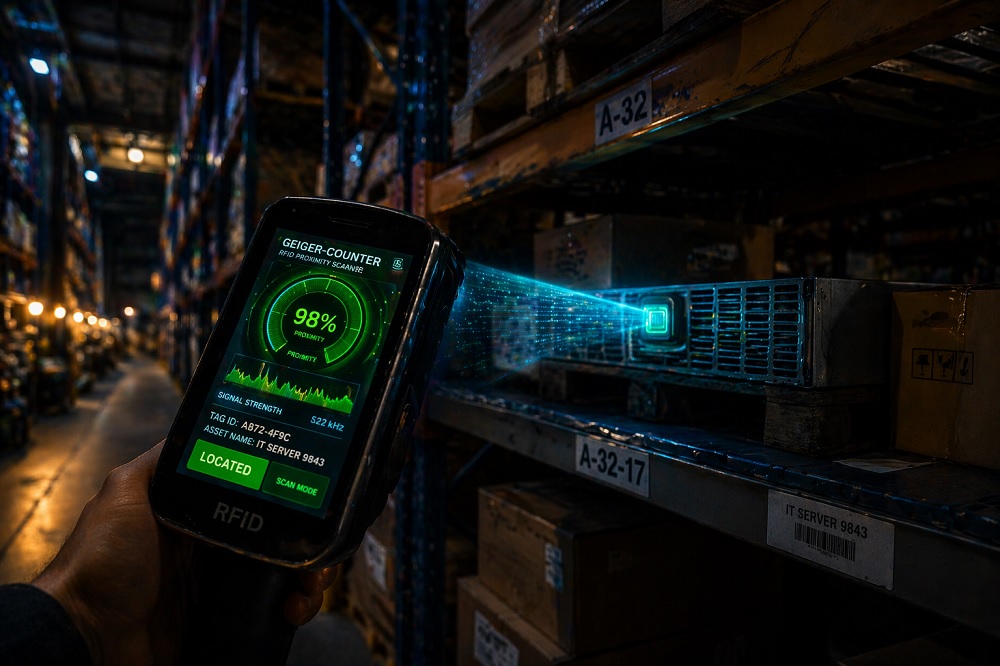
All operations managers experience the sinking feeling: the enterprise software points out that an important asset is within the building, yet it cannot be located on the floor. It might be an IT server valued at $5,000, a key legal artifact, or a life-saving medical device. Still, the old-fashioned process of seeking and finding is a colossal waste of human resources and capital. According to industry estimates, a number of firms can only work with the so-called ghost assets, or things that have been listed in the financial ledger but are no longer in operation.
Radio Frequency Identification (RFID) is used by modern businesses when line-of-sight tracking is not possible. In particular, mobile RFID readers have the option of a search mode called the Geiger-counter search that has achieved a breakthrough in asset management.
It enables employees to locate the proverbial needle in the haystack within just a few seconds. It is in this manner that this technology is eradicating wastage of inventory and reinstating efficiency in operations.
Q1. What is an RFID “Geiger-Counter” search, and how exactly does it work?
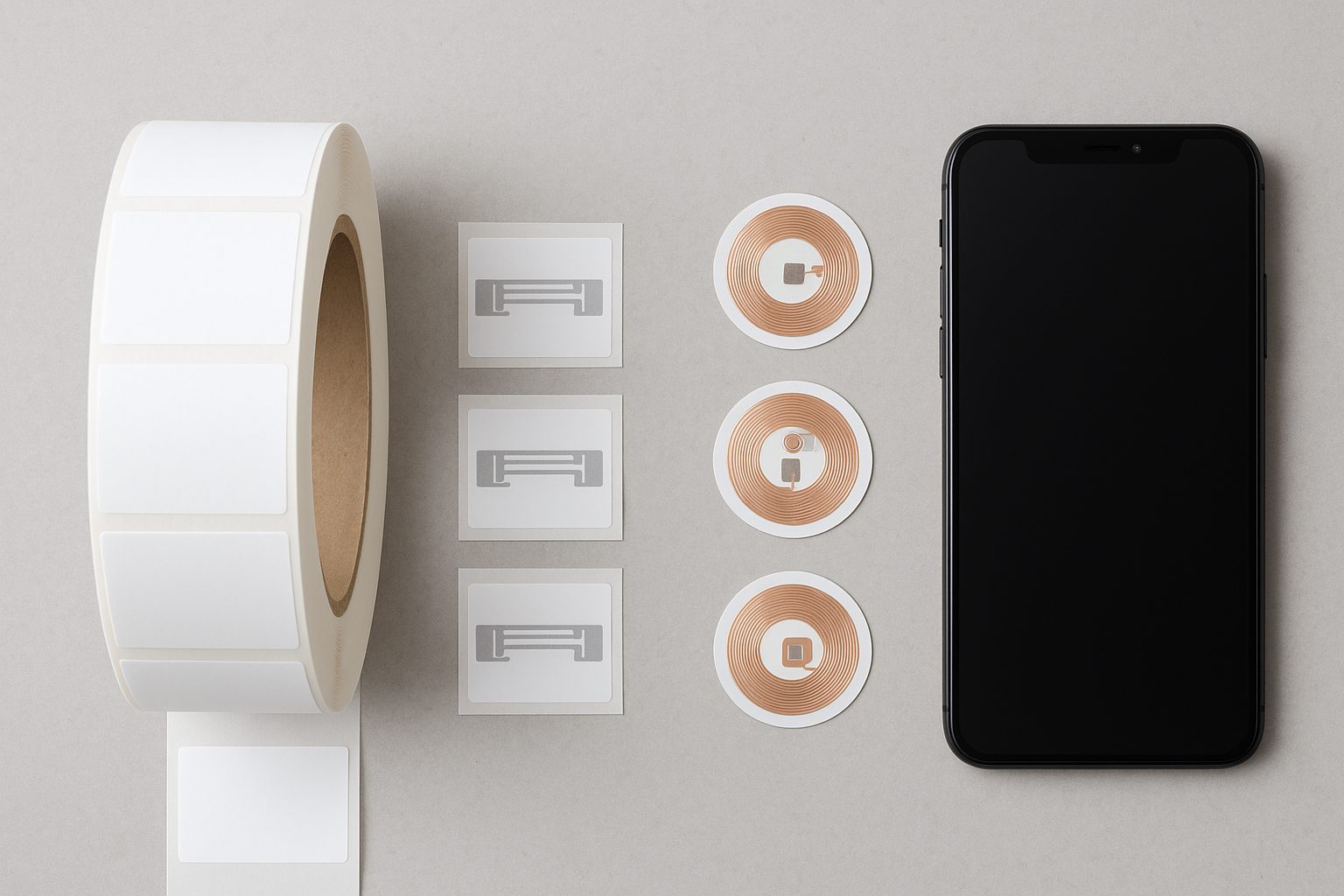
An RFID Geiger-counter search is a directional tracking system that involves the use of a localized search to identify the direction of a single item that has gone missing by using a handheld RFID reader. It follows the conceptual principle of a radiation Geiger counter, except that, rather than radiation being detected, the EPC of a particular Electronic Product is detected as radio waves emitted by an item.
Accessing the Target: An employee enters the asset they are seeking (e.g., Dell Server Rack #402) in their mobile tracking system.
The Sweep: The employee goes into the plant with the handheld scanner. The gadget has a constant and focused radio frequency (RF) signal that only searches the target tag.
Audio-Visual Feedback: on receiving the signal issued by the desired RFID tag, the reader starts beeping, and provides a visual indication of proximity to the screen (usually a bar gauge or a percentage meter).
Zeroing In: The closer the worker brings himself to the concealed asset, the greater the signal strength. The meter shown on the screen gets filled, and the beeps heard on the audio become louder and quicker. This takes the user to the item directly, despite it being covered in a box made of cardboard, standing on a shelf of the highest level, or in the incorrect department altogether.
Q2. Why are traditional barcode systems failing to locate misplaced assets?
The barcodes are ideal in point of sale and organized receiving, but are riddled with flaws where they suffer from hard limitations on asset recovery because of their physical restriction.
The Line-of-Sight Bottleneck: When scanning a barcode, a worker has to physically see the label with the scanner and line the scanner up with the label entirely. When a tagged object is put in the backward position at a shelf or stashed in a storage bin, the barcode is useless.
Manual Search Labor: A worker that is having to search for a lost barcoded object must decide to touch, move, and inspect hundreds of objects around the area to find it. This guess-and-check system may require hours and interfere with the operations around it.
The Ghost Asset Phenomenon: The assets that cannot be located when engaging in a manual audit are usually considered lost, and the company ends up purchasing new ones that they did not need. The original property turns into a ghost, which consumes capital expenditure budgets without creating value.
These problems are totally avoided by RFID since radio waves can pass through cardboard, plastic, wood, and fabric, meaning that workers can find the assets without establishing a clear line of sight.
Q3. Which industries benefit most from RFID Geiger-counter tracking?
Although faster searches can be applied to any industry that types of inventory that need to be dealt with in physical form, the Geiger-counter feature is of the utmost importance in those industries in which any loss of the asset has extreme financial, performance, or legal impacts:
IT Asset Management (ITAM) (2): RFID is used in data centers and corporate offices as a means of tracking hard drives, laptops, and servers. Locating a lost server blade is guaranteed quickly, and data safety regulations are enforced, as well as audits are successful.
The Law Enforcement and Evidence: RFID is used by police departments to trace the chain of custody of evidence. The Geiger-counter mode enables an officer to reveal the location of a particular evidence bag immediately within a tightly packed, highly secured storage vault.
Healthcare: Nurses mostly waste productive shift time trying to find common equipment such as infusion pumps, crash carts, or wheelchairs. RFID enables hospital personnel to find out the closest device available at a particular time, which reduces the response time to care significantly.
Retail and Warehousing: Retailers are set to sort the correct size or color of clothes that have been buried in the hectic backrooms. It simplifies the process of searching a particular lot of raw materials in a huge warehouse in the case of manufacturing, eliminating the need to waste millions of dollars on assembling an assembly line.
Conclusion
In hot-stakes settings, losing an asset will result in the loss of money, person-hours, and regulatory adherence. The RFID Geiger-counter search will turn a tedious, haphazard search into an accurate, technology-based search. This mobile solution will help businesses get rid of ghost assets, as well as empower their workforce and ensure complete and real-time visibility of their valuable inventory.
FAQs
What is the maximum range for an RFID Geiger-counter search?
The standard passive UHF RFID tag is capable of being detected over a range of 15 to 30 feet, covering a distance depending on the physical environment, the size of the RFID tag antenna, and the power output of the handheld reader.
Does the asset need a battery for the tag to be found?
No. Passive RFID tags do not need any internal batteries. They tap the power used in their operation directly into the radio wave being emitted by the handheld scanner, which makes them incredibly low-cost as well as enables them to last the entire life of the item to which they are affixed.
Can the scanner find multiple missing items at once?
Although the Geiger-counter mode is designed to tune to an individual object by using an audio-visual closeness pointer, a typical RFID reader scan can at least readily scan hundreds of various labels in a few seconds.
Learn more: healthcare RFID and hospital asset tracking