Whenever a food recall news breaks, an atmosphere of fear is felt throughout the populations, corporate executives, and regulatory agencies. This narrative is not new: once a potential pathogen has been detected, a frenzied days-long search starts tracing the geographical origin of the contaminated product through a maze of distributors, processors, and farms.
The price is staggering in wasted food, brand reputation, as well as, most importantly, the health of the people. However, what would happen if we were able to compress that investigation procedure from days to minutes? It is not an ultra-high technology fantasy, but rather, the current reality of Ultra-High Frequency (UHF) RFID tags, a technology that is set to make the U.S food supply chain future-proof.
With the advent of the new regulatory world of the Food Safety Modernization Act (FSMA) and the continued pressure by the people to know more about the world they consume, the old system of tracking food is collapsing.
Barcodes, which are the workhorse of logistics over the decades, must be scanned by sight and identify the type of product (a case of lettuce) and not the individual (this particular case of lettuce in farm Y with a harvest date of X). UHF RFID breaks these restrictions and gives a jump in ability, which is transforming the farm-to-fork traceability.
Why is There a Stark Contrast?
The most interesting case in favor of RFID is the dramatic compression of time in the case of a crisis.
What About Barcode Recall?
One of the retailers notices a contamination. Invoices and batch numbers are traced by hand by investigators. They have to physically locate and scan every barcode of pallets, cases, and logs at each of the chain stops, warehouses, distributors, and processors.
This is both tedious and subject to human judgment, and usually the recalls are too extensive to be risky (all lettuce shipped in April in Region A). This inaccuracy causes widespread wastage of food and loss of consumer confidence.
Learn about RFID-Enabled Recall
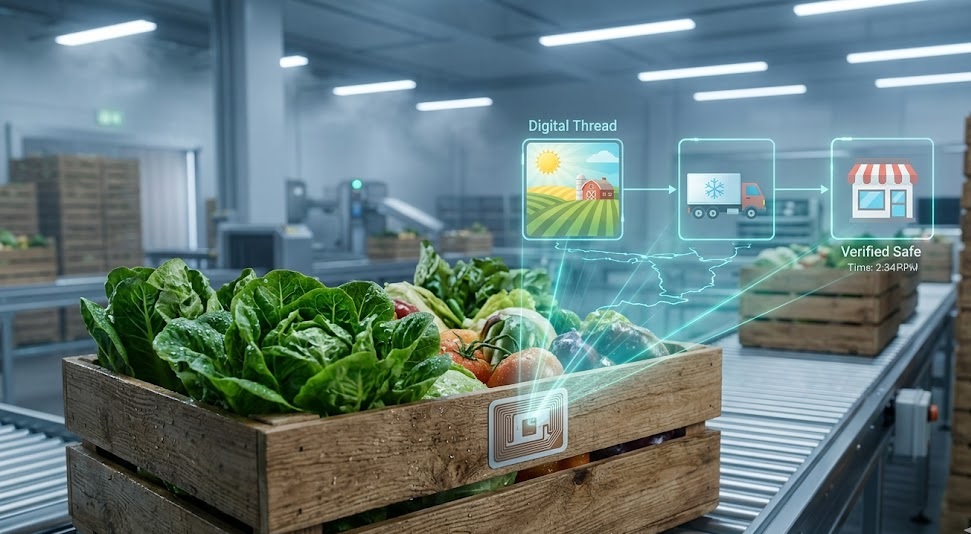
This is the identical contaminated item. A query is typed in a traceability system that is based on the cloud. With the special serial number of the RFID tag on the item, the system can instantly show all the digital history of the item: where it was grown, when it was picked, where it was processed, where all the shipping checkpoints are, and its current position, be it in a warehouse or on a certain shelf at the store.
The recall is surgically precise: “Only 200 of these particular cases, lot # 12345, tagged individually. The remainder of the supply chain works continuously.
Key Impacts of UHF RFID for Food Traceability
How Does It Work?
A UHF RFID system is not a tag alone. It’s an ecosystem:
- The Tag
It is a small and flexible label that forms a microchip and an antenna and is usually disposable. It records an individual Electronic Product Code (EPC), an online license plate of that particular item or case.
- The Reader/ Antenna
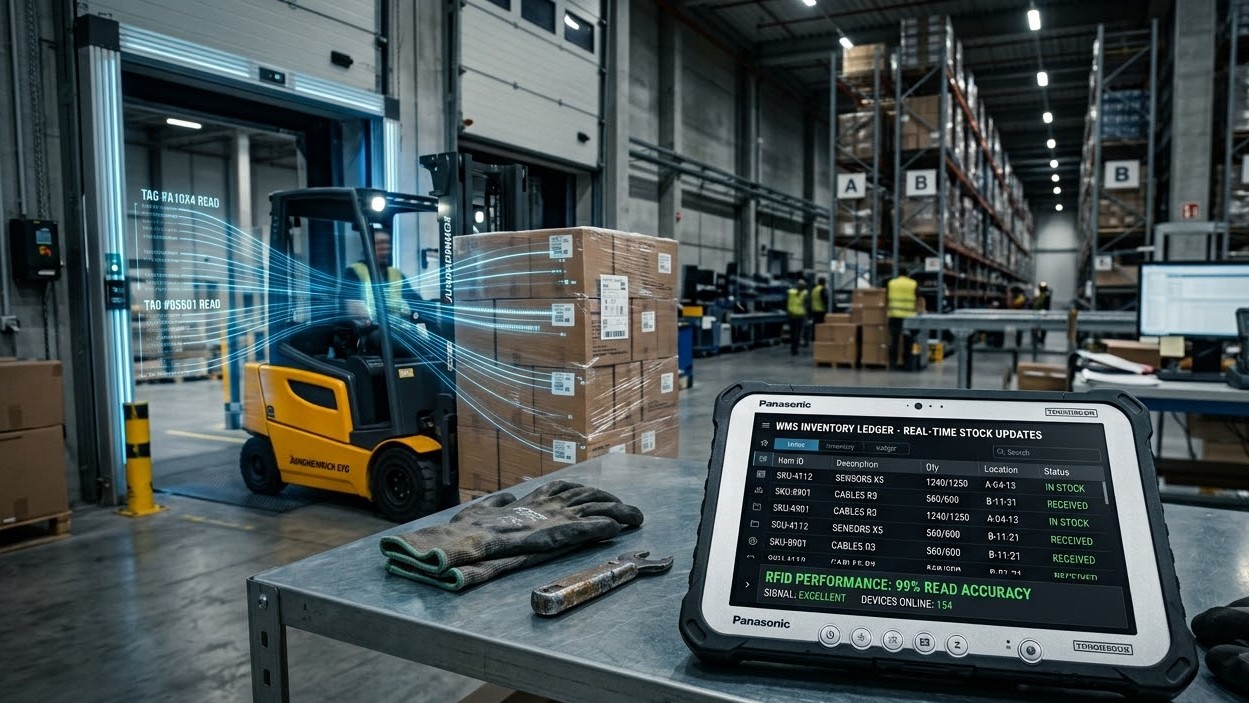
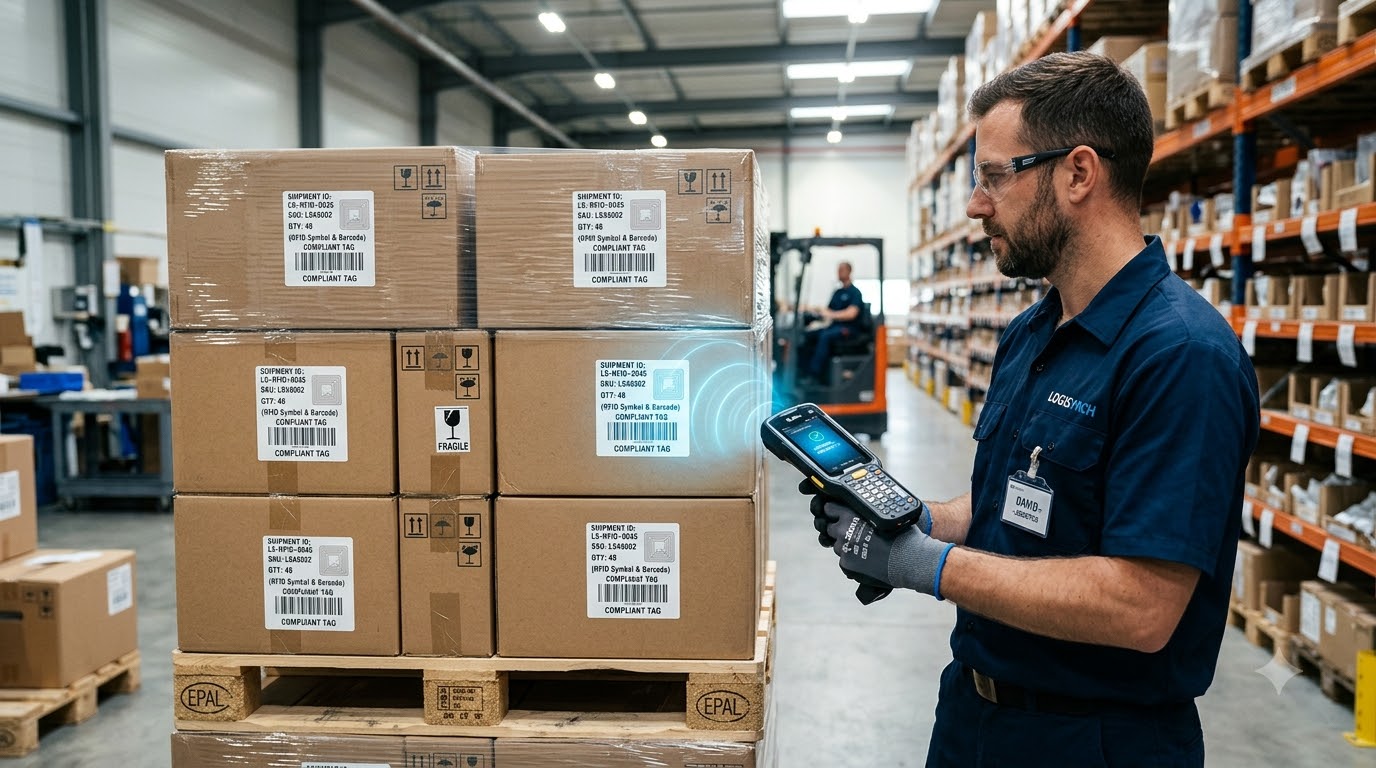
They can either be mounted (at the dock doors, conveyor belts) or be handheld. Their radio waves operate the tag and retrieve its data remotely, without the need for line of sight, up to 30 feet when the tag is placed on a pallet.
- The Software Platform
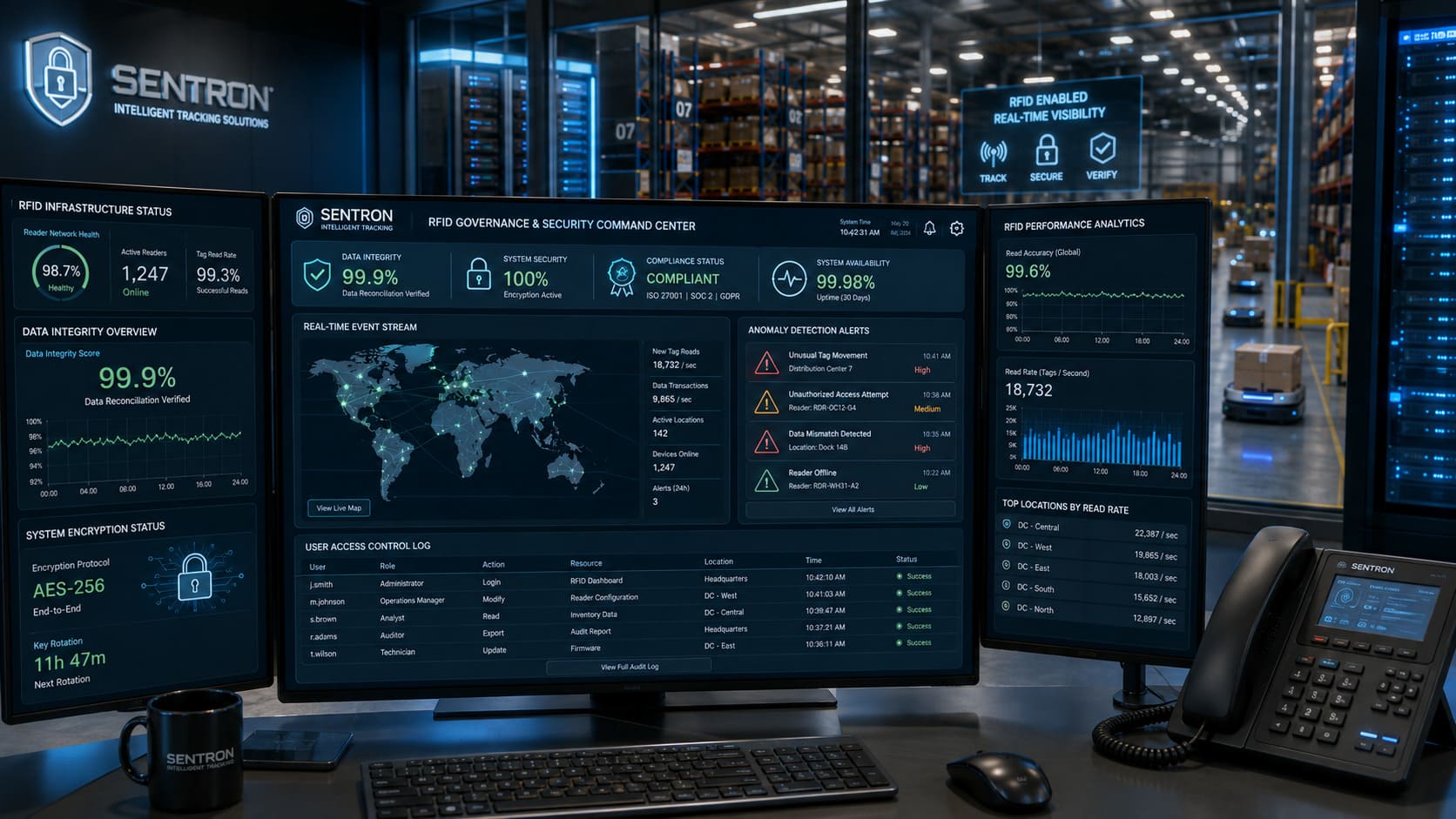
The head of the operation. It handles the flood of read data, links each tag EPC to key tracking facilities (GTIN, lot/batch, date), and offers a convenient interface for querying traceability on-the-fly.
Some of the Future-Proof Advantages
Granularity & Uniqueness
Not only in SKU types, but also in items. This allows farm-to-fork (and even fork-to-farm) (reverse logistics) transparency.
Speed & Automation
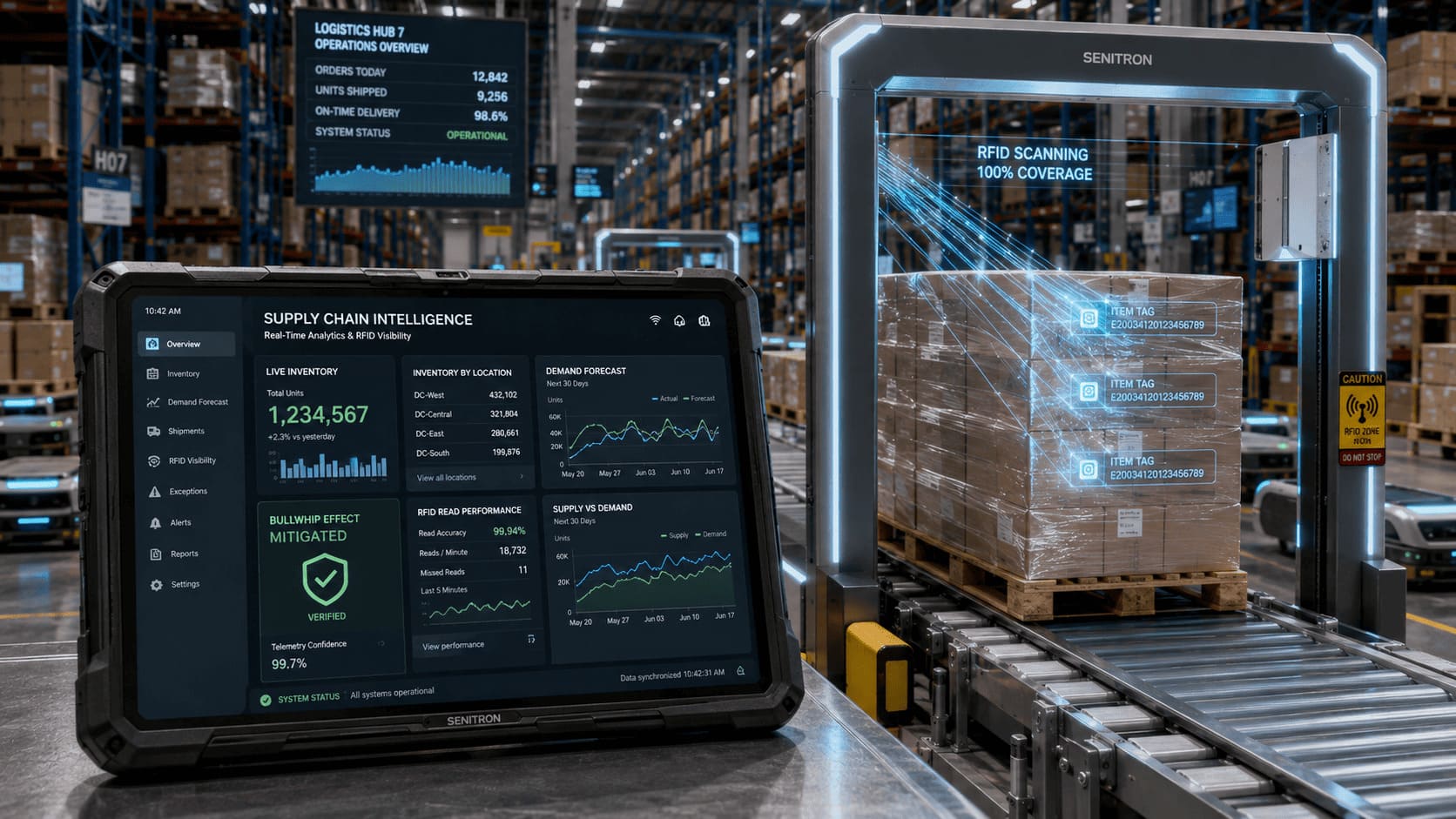
Scan hundreds of tags every second on a conveyor, automate receiving, shipping, and inventory. This works towards efficiency and safety.
Real-Time Visibility
See the whereabouts of your assets in real-time, and shrinkage reduction, inventory optimization, and stockouts are avoided.
Interoperability
The existing systems are able to pass data without compromising security across the chain, which is a value ingrained in standards such as the New Era of Smarter Food Safety by the FDA and the ISO 23494 traceability standard, supported by the industry.
How to Address the Regulatory and Consumer Pressure?
Rule 204 of FSMA requires improved record-keeping of traceability of a particular Food Traceability List (fresh produce, seafood, eggs). RFID is the strongest technological solution to address these requirements.
To the consumers, the scan of a QR code on their smartphone (connected to the RFID data) can show the path of a product, creating an incredible level of brand trust and responding to the need for ethical and sustainable sourcing.
Follow These Tips for A Successful RFID Journey
Implementation of RFID is a strategic decision. Here are key tips for success:
Always Start with A Pilot
Never boil the ocean. Start with a high-value, high-risk product line or a certain area of your operation (e.g., outbound shipping out of one facility).
Critical Tracking Events
Visualize your supply chain in order to determine the important points where information has to be recorded (e.g., transformation, shipping, receiving). These events should be synchronized with your RFID reads.
How to Choose the Right Product
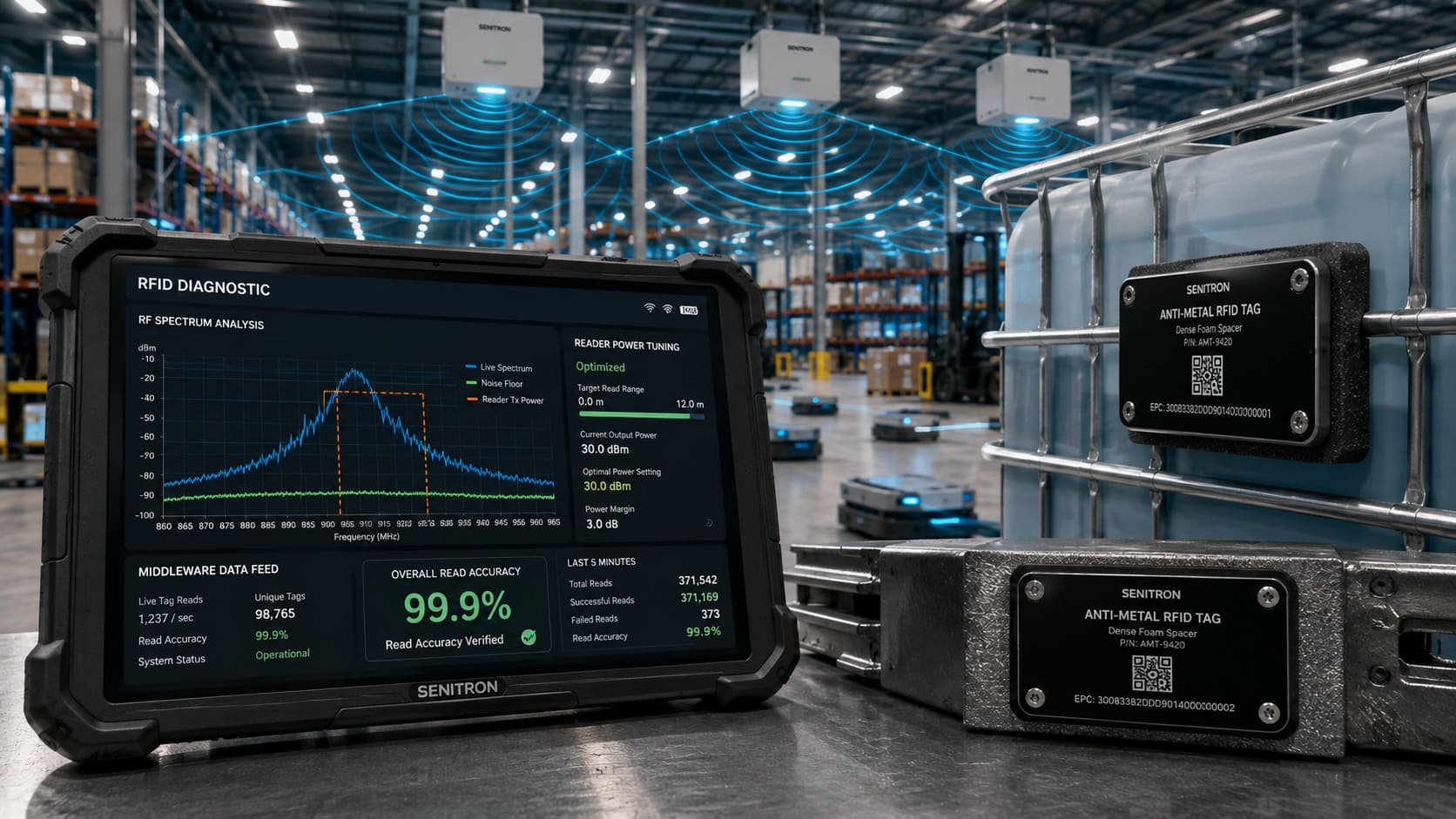
RF can be affected by liquid and metal. Seek the advice of experts who can help in the choice of tag type and placement to guarantee high read rates of your particular packaging.
Ensure Data Quality
You are halfway through the physical read. Information in the tag should be correct, and it should be formatted uniformly by partners. Implement the GS1 standards of EPCs and essential data items.
Engage with Supply Chain Partners
Traceability is a product whose value is compounded by the level of connectivity. Work together with the upstream suppliers and customers on the downstream to develop a common vision and systems that are interoperable.
Check the Cost and Collaboration
- The main obstacle is the per-tag price, but it has touched pennies when it comes to simple labels. The business case should be constructed on the basis of total value: not only the savings in the recalls, but also the savings in labor, accuracy of inventory, and reduction of waste. The industry has to change its perception of traceability as a compliance cost and as a competitive asset.
- More so, the full potential of an RFID-enabled chain is only realized when it is massively adopted and shared with data. Consortia and technology providers in the industry play a key role in developing the neutral and standardized platforms through which contenders are able to work on safety.
- UHF RFID is not a tracking tool; it is a trust infrastructure. It changes the supply chain into an opaque chain of operations to a transparent, connected, and intelligent network. It significantly saves human health and saves finances by allowing the recall within minutes as opposed to days.
- With the changing regulations of the U.S. and the high expectations of consumers, investment in this technology becomes an unavoidable factor for progressive food companies.
It is the ultimate move towards a safer, smarter, and more sustainable food future, where every salad, every steak, and every bite of the snack served comes with an invisible, digital companion that tracks the farm-to-fork path of their products, is assured, and reliable.
The race is on. The only question is when the food supply chain will implement this degree of digital traceability, but not whether it will do so. The companies that operate today are not only evading the future risk, but are establishing an indestructible base of consumer trust in the days to come.
FAQ
What is a UHF RFID tag?
It is a disposable sticker with a small microchip, and it is a high-tech one. It sends a distinct digital ID of that specific item, such as a digital license plate of a case of strawberries, when read by a radio wave scanner at a distance.
Are they more expensive barcodes?
No. Barcodes mark a product. RFID tags recognize every individual item, which is unique and can be scanned immediately without the need to see its position directly, and even when the item is in a box on a pallet, tracking becomes significantly faster.
How fast is an RFID recall?
A trace that is done through a barcode may require days of manual checks. The automated digital query of an RFID-enabled system can identify the exact route and position of contaminated products within minutes to perform a surgical, targeted recall.
What are some major benefits that the customers can expect?
Unparalleled security and openness. The recalls are quicker and more accurate, thus minimizing the health risks. Consumers also had the ability to scan a product code and find out the entire path that the product has taken from the farm to the store, and ensure that it was of good origin and fresh.
What are the biggest hurdles for companies?
The first per-tag price and system fusing. Nevertheless, the investment is paid for by significant savings on waste of recalls, labor expenses, and better organization of the inventory, and the invaluable resource of enhanced consumer trust.