Time is money in a prestigious law firm; however, time is more than money, as it is a pillar of trust with clients and the integrity of cases. However, off the record of high-stakes litigation, one of the little productivity killers is oftentimes an absent physical case file.
Although there has been an effort to move to the digital frontier, physical documents have become a standard in lawmaking, whether it is the original contract and signed affidavits or vast fitis of discovery files. When a 2:00 pm hearing is at hand, and the main file is lost, it is not only a matter of a few minutes of searching but also a blow to the professional name.
Switch to RFID (Radio Frequency Identification) technology. Whereas barcodes have revolutionized the retail sector, RFID is now turning the paper trail into a digital highway, entailing high speed. This guide discusses the way that contemporary companies are attaining almost flawless accuracy of documents.
Why are traditional filing systems failing modern law firms?
The conventional filing systems, which are based on human memory, paper logs, or basic barcodes, have three major weaknesses:
- The Line of Sight Bottleneck: Barcodes have to be sought and scanned one barcode at a time. The process of inventory of files in a file room of 10, 000 folders takes more than a day.
- The Invisible Mis-shelf: When a paralegal’s personality makes a wrong move of inserting a file (Case file A) in a different folder (Drawer B), this file is technically lost until somebody accidentally falls over it.
- Chain-of-Custody Gaps: Manual out cards are hardly ever completed on a trial day in the hustle and bustle. This puts in place a black hole whereby the system indicates that the file is in the cabinet, yet it is sitting on the desk of a partner three floors up.
This is because knowledge workers spend up to a day and a half searching for information alone, according to IDC Research. It is an unacceptable loss to a billable professional.
How does RFID technology actually “find” a paper file?
RFID file tracking system operates on radio waves as opposed to light. The folder is sprayed with a thin, adhesive RFID tag. This tag can be read using cabinets, drawers, and even other files, as compared to a barcode.
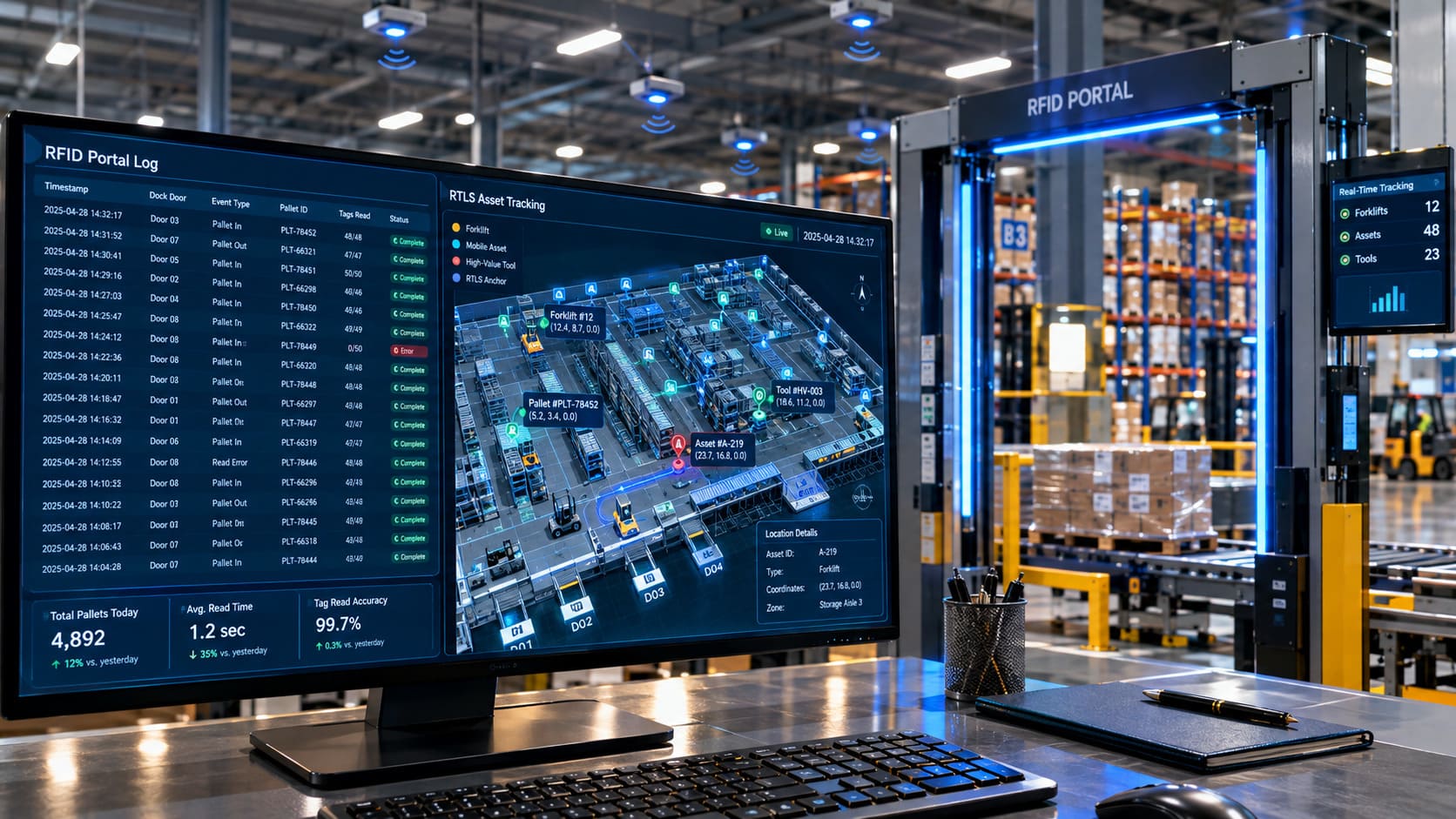
Fixed Portals: Readers mounted at the entrances to the file room or office suites will automatically check-in/check out files, as individuals bring them by.
The Search: The Butler Is The Game-Changer: The Geiger Counter. An employee can use an RFID reader equipped in a handheld device to locate a given file. The closer the person is to the right shelf or desk, the faster and louder the device beeps, and directs them to the folder, even when it is stacked under a pile of other papers.
Can RFID really achieve 99% accuracy in a chaotic environment?
Yes, as it eliminates the human factor of recording all the movements.
Automated Inventories: It is possible to move a member of staff to walk into a file room with a handheld reader and scan 1,000 files within a minute. The program automatically compares the list that is scanned with the one that is expected, pointing out the files that are misplaced so that they can be corrected as early as possible.
Real-Time Alerts: RFID real-time location systems give a notification when a sensitive case file, which is designated as Top Secret or High-Value, goes outside of an area without authorization. This preventive security provides the assurance that 99.9 percent of assets are at the correct location as indicated by the database.
What are the secondary benefits of tracking physical files digitally?
In addition to searching, RFID information in law firms can be used as a strategy information:
Audit-Ready Compliance: Each operation on a file is recorded at a time. Should there be an audit of the ethics, or if there is any standoff of how papers were handled, the firm can have a detailed digital memory of how long the file was with whom.
Space Optimization: Statistics indicate what files have not been accessed in years, and firms may feel confident transferring them to off-site, deep storage, as well as recapturing costly office space.
Team Transparency: In cases where a document is required, there is specific transparency in the system that displays the desks of individuals to whom the document belongs. No longer is the compression of work by emails of the company about missing files that all interrupt the flow of work.
Conclusion
In the current legal environment, accuracy is a source of competitive power. A law firm applying RFID technology to the problem of manual search and rescue missions does not merely help find the file quicker; it removes stress and professional liability, which is a risk of information loss. With 99% accuracy, the firms can at last accept the practice of law instead of handling the paperwork.
Frequently Asked Questions (FAQs)
Is the RFID signal safe for sensitive electronics or staff?
Yes. Passive RFID (that is applied in files) involves radio waves that are low power, that resembles that of a car key fob or a contactless credit card. It does not disrupt pacemakers, Wi-Fi, or office equipment.
Can we still use our existing filing cabinets and folders?
Absolutely. RFID tags are slim, flexible stickers that can be attached to your present manila documents or binders. You do not really have to get a new set of furniture; you are just merely tagging your existing ones so that they can be smart.
Does RFID work if the file is inside a metal cabinet?
Radio waves have difficulty traversing solid metal. Nevertheless, the smart cabinets can be equipped with internal antennas, or staff members can do some sort of mileage with the aspect of a shelf sweep, simply by opening the drawer. RFID makes search time much less compared to the hours taken by metal cabinets.
Is this system only for giant firms with thousands of files?
Although large volumes have the best ROI, small companies that do high-value litigation (e.g., personal injury or intellectual property) implement RFID, since the cost of loss of a single document, which is a so-called smoking gun, is much greater than the cost of the technology.