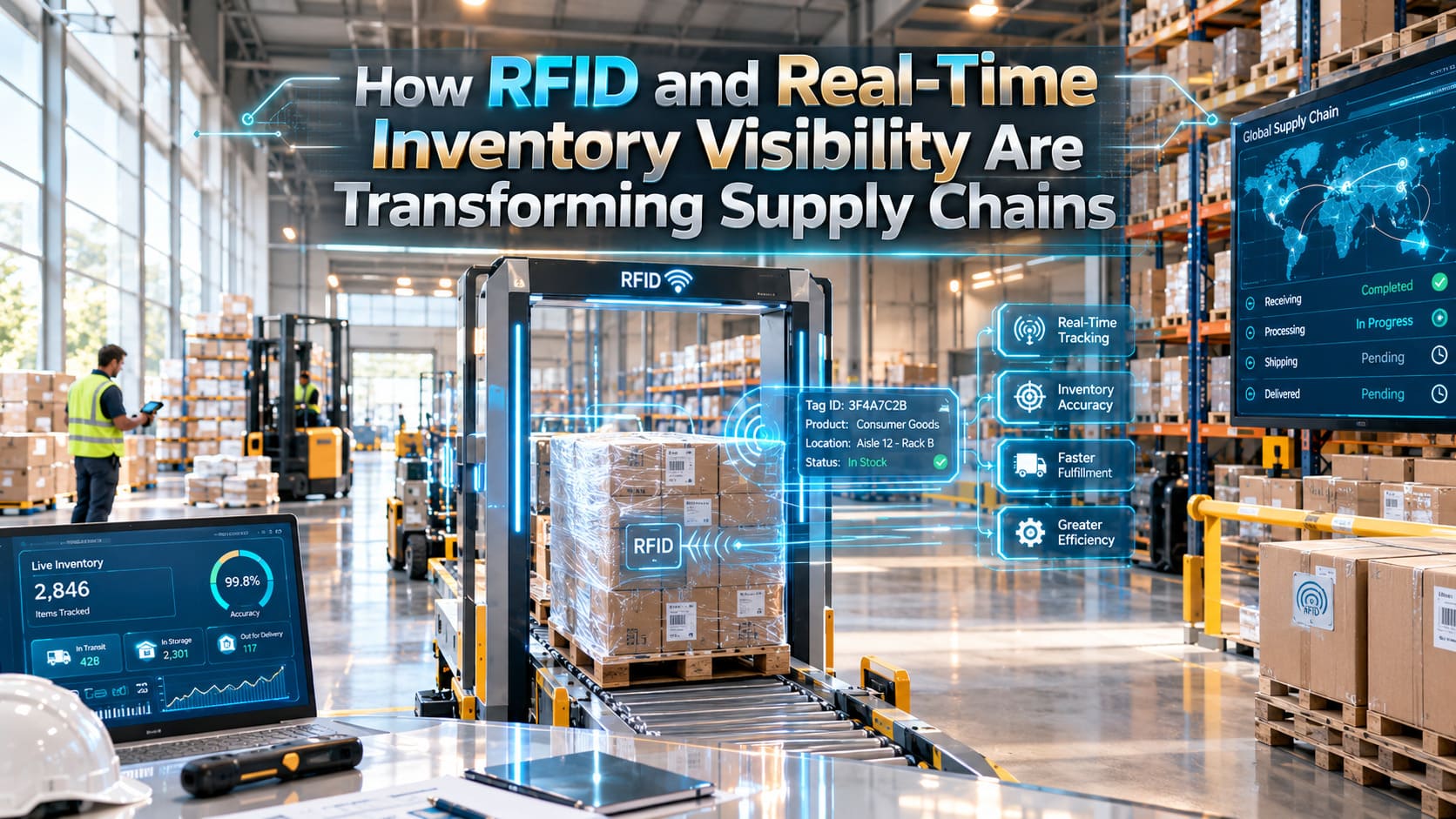
Most folks picture road toll machines, store stock checks, or big storage centers when RFID pops into their heads. Yet by 2026, this quiet tech slipped into city life – now running things behind the scenes without anyone really noticing.
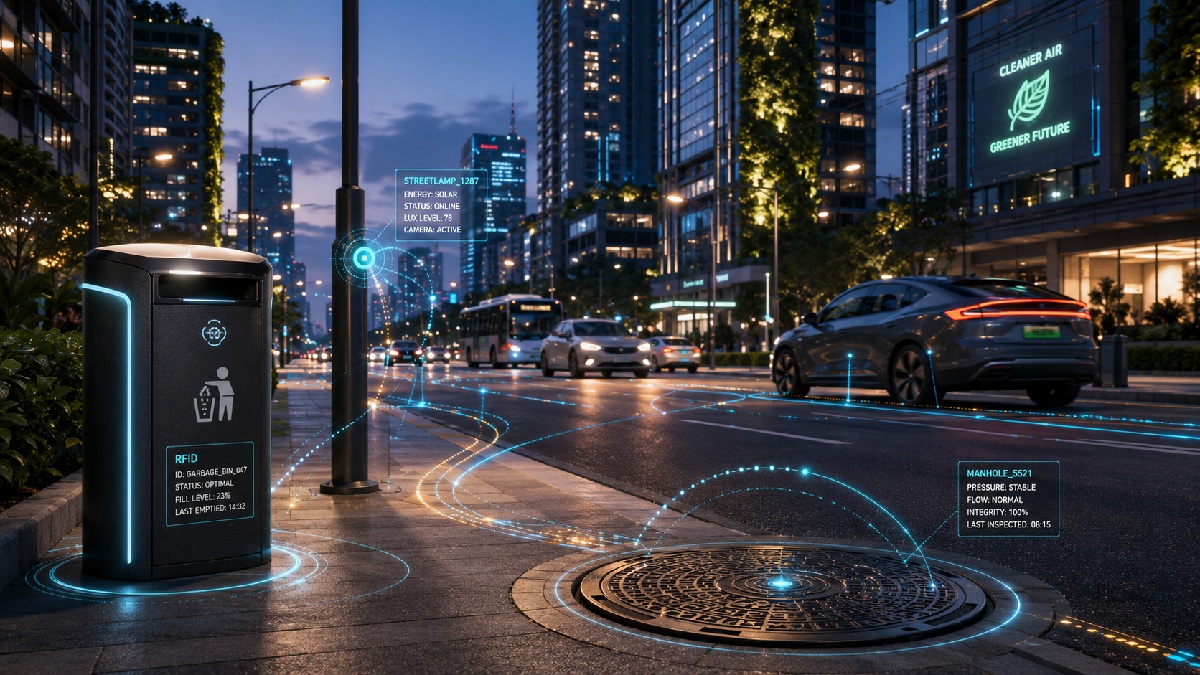
Folks living in big U.S. urban areas now see tiny radio chips tucked into city infrastructure – these help keep streets safer, cleaner, and faster to manage. Instead of old methods, officials track bins, lights, and even potholes using signals that whisper updates wirelessly. Some neighborhoods report fewer missed trash pickups since sensors alert crews when cans overflow.
Others notice repairs happen quicker because tagged manholes send alerts before issues spread. Maintenance workers spend less time searching, more time fixing, thanks to live location data streaming from embedded tags.
These small radio tags are bringing cities one step closer to automation, pollution, and billions of dollars of savings from trash bins to fire hydrants, street maintenance equipment, and everything in between.
This “invisible infrastructure” is emerging as the digital nervous system of modern cities.
What is RFID, and why are cities using RFID?
RFID (Radio Frequency Identification) identifies an asset, monitors it, and tracks it without actually touching it through the use of wireless tags and readers. RFID tags are not limited to remote scanning like barcode tags, and have a capacity for storing maintenance records, location information, inspection schedules, and usage records.
With RFID, cities with millions of public assets can get:
- Real-time infrastructure visibility
- Automated maintenance scheduling
- Faster inspections
- Better resource allocation
- Reduced operational waste
- Improved sustainability metrics
The technology is particularly useful because it operates unobtrusively without interfering with public life.
Smart Waste Management: Reinventing Trash Collection
One of the most impactful uses of RFID in smart cities is waste management.
Garbage trucks were formerly assigned to set routes and would run even if garbage was not collected or the bin was almost empty. This resulted in:
- Excess fuel consumption
- Unnecessary labor hours
- Increased traffic congestion
- Higher carbon emissions
That’s the model that’s being completely changed with the use of RFID-enabled smart waste systems.
The operation of RFID Smart Bins
The modern trash bins are equipped with RFID tags that identify:
- Bin ownership
- Pickup history
- Collection frequency
- Maintenance needs
- Fill-level sensor data
The system automatically records service activity and updates city databases at a central point when sanitation trucks approach, carrying RFID readers.
Some of the more sophisticated systems integrate RFID with:
- GPS tracking
- IoT fill sensors
- AI-powered route optimization
- Predictive analytics
This enables cities to refine their pick-up schedules in real time, rather than on assumption.
The environmental benefits are huge
Optimized collection routes reduce the need for unnecessary transportation of trucks in cities.
Benefits include:
- Lower fuel consumption
- Lowering greenhouse gas emissions.
- Less road wear
- Reduced traffic congestion
- Reduce the expenses for fleet maintenance.
In the densely populated urban areas, even the smallest routing improvements can be a huge environmental gain over time.
For example:
- Reducing the number of truck miles translates to lower diesel emissions.
- Idle time is reduced with smarter routing.
- The efficient scheduling reduces operational redundancies.
- RFID-based solutions are aiding cities towards achieving sustainability and carbon reduction objectives without significant changes in their citizen’s behaviors.
- RFID and Public Asset Maintenance
In addition to waste management, RFID is changing the way that cities manage public infrastructure.
In the city, there are a lot of physical assets, such as:
- Utility poles
- Fire hydrants
- Streetlights
- Traffic signals
- Water valves
- Public benches
- Storm drains
- Road maintenance equipment
It is costly and ineffective to track and service these assets manually.
Introducing automation in the maintenance life cycle is the goal of RFID.
Street lighting and utility poles
These RFID tags mounted on utility poles enable maintenance workers to have immediate access to:
- Installation dates
- Inspection records
- Repair history
- Structural condition reports
Scheduled maintenance timelines
The asset information is stored on a tag, rather than on paper or on an out-of-date database, so that workers can access it immediately in the field by scanning the tag.
This improves:
- Repair speed
- Worker productivity
- Maintenance accuracy
- Public safety
It also enables cities to prioritize repairs before failures occur.
Fire Hydrants, Emergency Readiness.
Another critical asset that’s benefiting from RFID tracking is fire hydrants.
Routine inspections need to be conducted to ensure that each hydrant:
- Water pressure functionality
- Valve reliability
- Accessibility
- Leak prevention
This is where the RFID-enabled hydrants come in handy:
- Maintenance completion
- Test results
- Repair needs
- Geographic location updates
This results in a dependable digital maintenance record that enhances the readiness for emergencies and decreases administrative paperwork. This can be critical to public safety and response efficiency in emergencies where accurate hydrant data is applied.
The next generation of Predictive Maintenance
Another fascinating use of RFID-based infrastructure is predictive maintenance. RFID-generated data can identify problems before they arise, rather than waiting for them to break down, at the city level.
In addition to AI and analytics platforms, RFID systems can identify:
- Repeated maintenance patterns
- Aging infrastructure risks
- High-failure zones
- Seasonal maintenance trends
This helps move cities from a reactive maintenance to a proactive asset management approach.
The result:
- Lower repair costs
- Fewer service disruptions
- Improved infrastructure lifespan
- Better budget forecasting
This translates to better public money spending for taxpayers.
Challenges cities have to overcome
While it has its benefits, the deployment of an RFID infrastructure has its challenges.
Initial Deployment Costs
The deployment of an RFID system to be spread throughout an entire city would need:
- Hardware investment
- Reader infrastructure
- Software integration
- Staff training
Up-front costs may be a problem for smaller municipalities.
Data Security Concerns
The more data cities gather in their infrastructure, the more vital cybersecurity has become.
Municipal systems are liable to protect:
- Asset databases
- Maintenance records
- Operational logistics
- Public service networks
Standardization Issues
Interoperability is challenging between different departments or neighboring municipalities, as different vendors may use different RFID ecosystems. With the standards of SMART cities already evolving, however, the integration challenges are slowly getting easier to overcome.
The following are some tips to help Cities implement RFID infrastructure
It is important for municipal planners to think about the scalability and integration of an RFID system in the long run before implementing it.
Begin at the High-Impact Areas
Typically, the rollouts of waste management and emergency infrastructure provide the quickest ROI.
Integrate RFID with IoT Sensors
When combined with real-time environmental data, RFID is much more effective.
Purchase centralized data platforms. Purchase centralized data platforms
One central console enables departments to work more closely together.
Prioritize Durable Tags
For outdoor infrastructure, the requirements are for long-term, weatherproof RFID tags of an industrial quality.
Educate Field Workers Early
It’s a lot easier to get maintenance crews on board with technology when they’re aware of the benefits that can be realized from implementing an RFID system.
The Future of Invisible Infrastructure
With the rise of smart cities, RFID will become more and more a complement to the following technologies:
- AI analytics
- 5G connectivity
- Autonomous maintenance systems
- Smart traffic networks
- Environmental monitoring platforms
Much of urban infrastructure management could be semi-autonomous in the future.
Garbage trucks may be able to optimize routes in real-time. AI can help maintenance teams get repair priorities before issues are even noticed. Sensor networks can be interconnected, enabling public assets to continuously report their status.
These systems are likely unnoticed by most people who live in these areas.
But that’s the idea.
Hidden beneath streets and inside walls, top-performing urban tech slips by unnoticed. Efficiency rises because systems work smarter behind the scenes. Daily routines keep flowing since upgrades blend into the background. Safety improves while people go about their business unaware. Sustainability gains come not from grand gestures but from constant, unseen adjustments.
Hidden beneath streets and inside walls, RFID now shapes how urban spaces function. Not merely for tracking shipments anymore, it quietly drives tomorrow’s city life.
FAQ
- Why do we need RFID technology in smart cities?
From afar, tiny signals bounce between tags and scanners, moving data without wires. Wireless labels stick to objects; machines nearby catch their whispers. Out on city streets, bins tell trucks when they’re full, saving fuel. Hidden inside bridges or benches, gadgets phone home if something breaks. When things shift or age, a network notices – no human needed.
- How does RFID improve waste management?
Starting off, bins with RFID chips share details like when they’re emptied, how full they get, and past pickups. Cities tweak garbage truck paths because of this info, burn less fuel at the same time, and keep streets cleaner more easily.
- Why do we need to tag utility poles and fire hydrants?
Out in the field, RFID tags help crews pull up past repairs without delays. Inspection logs show up fast when scanned nearby. Service timelines appear clear, cutting guesswork every time. Fewer breakdowns happen because details are always within reach. Efficiency rises since workers spend less time searching.
- Can RFID technology reduce carbon emissions?
Of course. When trash pickup paths get smarter, fewer trucks roll through neighborhoods without reason. Machines that signal when they need repairs help too – fewer breakdowns mean less idling and waiting around. Fuel burns more slowly under these conditions. City air benefits simply because things run more smoothly now. Emissions dip – not by magic, just better timing.
- What are the challenges cities face in RFID implementation?
Spending money at the start often slows things down. Hacking risks make some teams nervous. Programs sometimes refuse to work together. Learning new tools takes time for workers. Thinking years ahead is part of the process.
Learn more: RFID asset tracking software