AI is quickly moving beyond the stage of data analysis systems to become decision-makers, action planners, and task executors with limited human involvement. Agentic AI, which are these advanced systems, are proving increasingly useful in many sectors, including manufacturing, health, logistics, retail, and smart cities. But Agentic AI is a solution for the physical world that will need to be fed by a constant flow of accurate, real-time information. Here is where Radio Frequency Identification (RFID) technology is becoming a key enabler.

Back in the day, businesses turned to RFID mainly for keeping tabs on stock and gear. Now, by 2026, things are shifting – firms increasingly lean on it so their self-thinking AI systems can better grasp their surroundings before acting.
Understanding Agentic AI
Agentic AI systems are different from the traditional AI models that make predictions or give recommendations, as they are aimed at the following objectives:
- Observe their environment
- Analyze incoming information
- Establish objectives
- Plan multi-step actions
- Execute tasks autonomously
- Draw lessons from past experiences
Agentic AI can be applied in various ways, such as:
- Robots that handle inventory movements in a warehouse. Robots that control the movement of products in a warehouse.
- Individuals coordinating the supply chain independently
- Hospital asset management systems that are intelligent. Intelligent hospital asset management systems.
- To create good quality control agents
- Retail replenishment systems
These systems are highly dependent on the quality of the data that they are fed.
In Agentic AI, why is RFID crucial?
Objects talk through RFID by sending out signals using tags and reading devices – no cables needed. Instead of needing to face a scanner like bar codes do, these tags share information even when hidden or stacked together. Reading happens fast, handling many at once instead of one after another. Each tag can repeat its message again and again whenever asked.
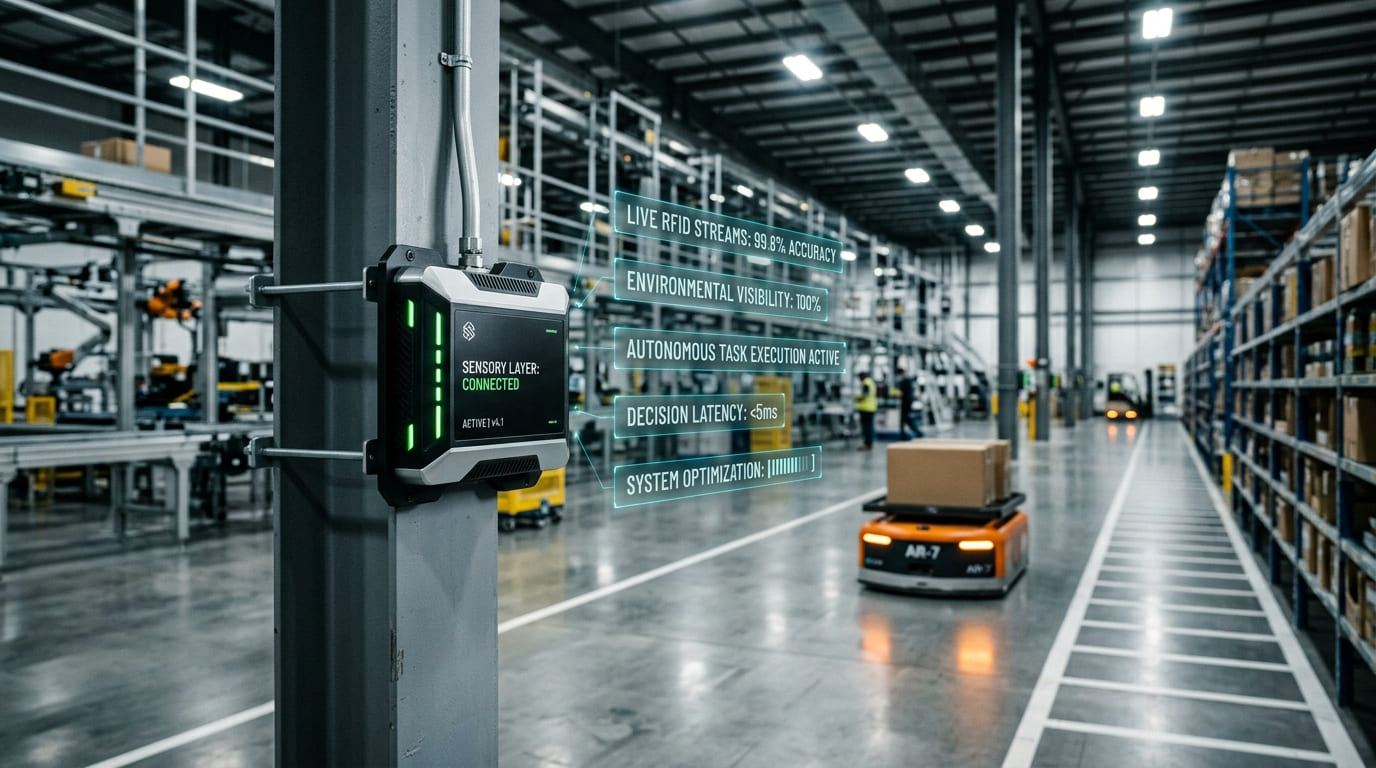
For Agentic AI systems, RFID acts as an important sensory layer.
The benefits include:
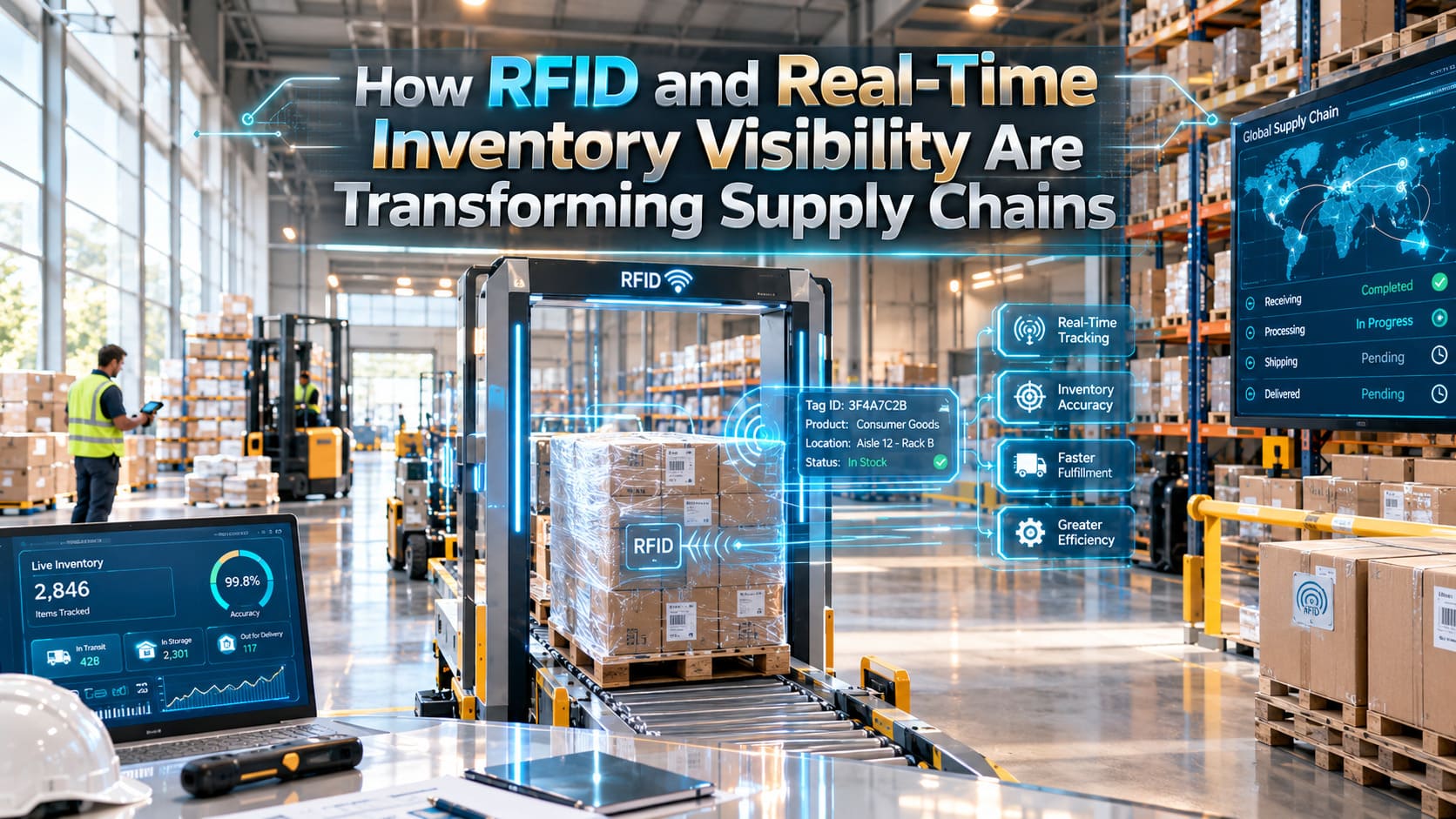
Real-Time Visibility
Agentic AI thrives on up-to-date information.
RFID can continuously provide information on such as:
- Item location
- Movement history
- Inventory counts
- Asset availability
- Equipment status
AI agents can make decisions based on the current conditions, rather than relying on delayed database updates.
Reduced Human Intervention
Many manual scanning steps are eliminated using RFID.
An autonomous warehouse agent can automatically capable of detecting:
- Incoming shipments
- Missing products
- Overstock situations
- Misplaced assets
Improved Environmental Awareness
Agentic AI works best when it’s aware of its environment.
The context that RFID brings makes it possible for AI to answer these questions:
- What supplies do you have?
- What assets are coming and going?
- What needs to be restocked?
- Which equipment needs servicing?
The following capabilities are a major improvement for autonomous planning.
RFID vs. Traditional Tracking Technologies
When comparing RFID to other identification systems, its benefits for deployments in Agentic AI become evident.
RFID
Advantages:
- No line-of-sight requirement
- A number of tags can be read at the same time.
- Faster inventory updates
- Suitable for automation
Challenges:
- Initial infrastructure investment
- Signal interference in a certain environment
Barcode Systems
Advantages:
- Low implementation cost
- Easy deployment
Challenges:
- Manual scanning was frequently needed
- Slower data collection
- A small number of independent operations are supported.
Computer Vision
Advantages:
- Rich environmental information
- Object recognition capabilities
Challenges:
- Light-sensitive litters vary in light sensitivity
- High computational requirements
- Greater privacy concerns
Several companies are integrating RFID, computer vision, and sensor technologies to build full data ecosystems for Agentic AI.
Use Cases for 2026 and beyond
There are already examples of several industries using Agentic AI and RFID to work together.
Smart Warehousing
AI-powered automation has become a staple in modern fulfillment centers and is used to oversee stock levels. AI-driven automation is a key feature of contemporary fulfillment centers and is employed to oversee stock levels.
These systems can employ RFID to:
- Know what is missing and instantly detect it.
- Reorder products automatically
- Make efficient, accurate, and efficient robotic picker assignments
- Reduce inventory discrepancies
Healthcare Asset Management
It’s a common challenge for hospitals to find the necessary equipment.
An agentic AI system with RFID data can:
- Use wheelchairs and medical equipment
- Optimize equipment utilization
- Schedule preventive maintenance
- Cut down on searching time for assets
Manufacturing Operations
Intelligent production agents that are capable of monitoring the workflows are adopted by factories.
RFID helps to identify:
- Component availability
- Assembly progress
- Material bottlenecks
- Product genealogy
This helps to create more adaptive manufacturing environments.
Retail Automation
Retailers are transitioning towards self-service inventory optimization.
With the help of AI agents powered by RFID, users can:
- Monitor shelf availability
- Trigger replenishment requests
- Predict stock demand
- Minimize shrinkage losses
Challenges Facing RFID-Driven Agentic AI
RFID implementation, although beneficial, comes with its own set of challenges.
Data Quality Issues
The quality of the tags can result in a misread.
Organizations should ensure:
- Proper reader positioning
- Routine system calibration
- High-quality tag selection
Security Concerns
RFID information could include sensitive operational information that is sensitive.
Best practices include:
- Encryption protocols
- Secure network connections
- Access controls
- Regular cybersecurity assessments
Scalability Requirements
There is a lot of data in big deployments.
To effectively function, agentic AI systems must be supported by an infrastructure that can:
- Process flows of continuous RFID streams
- Supporting edge computing
- Managing distributed databases
If not planned, performance bottlenecks can occur.
Tips That Will Help You Explore RFID and Agentic AI
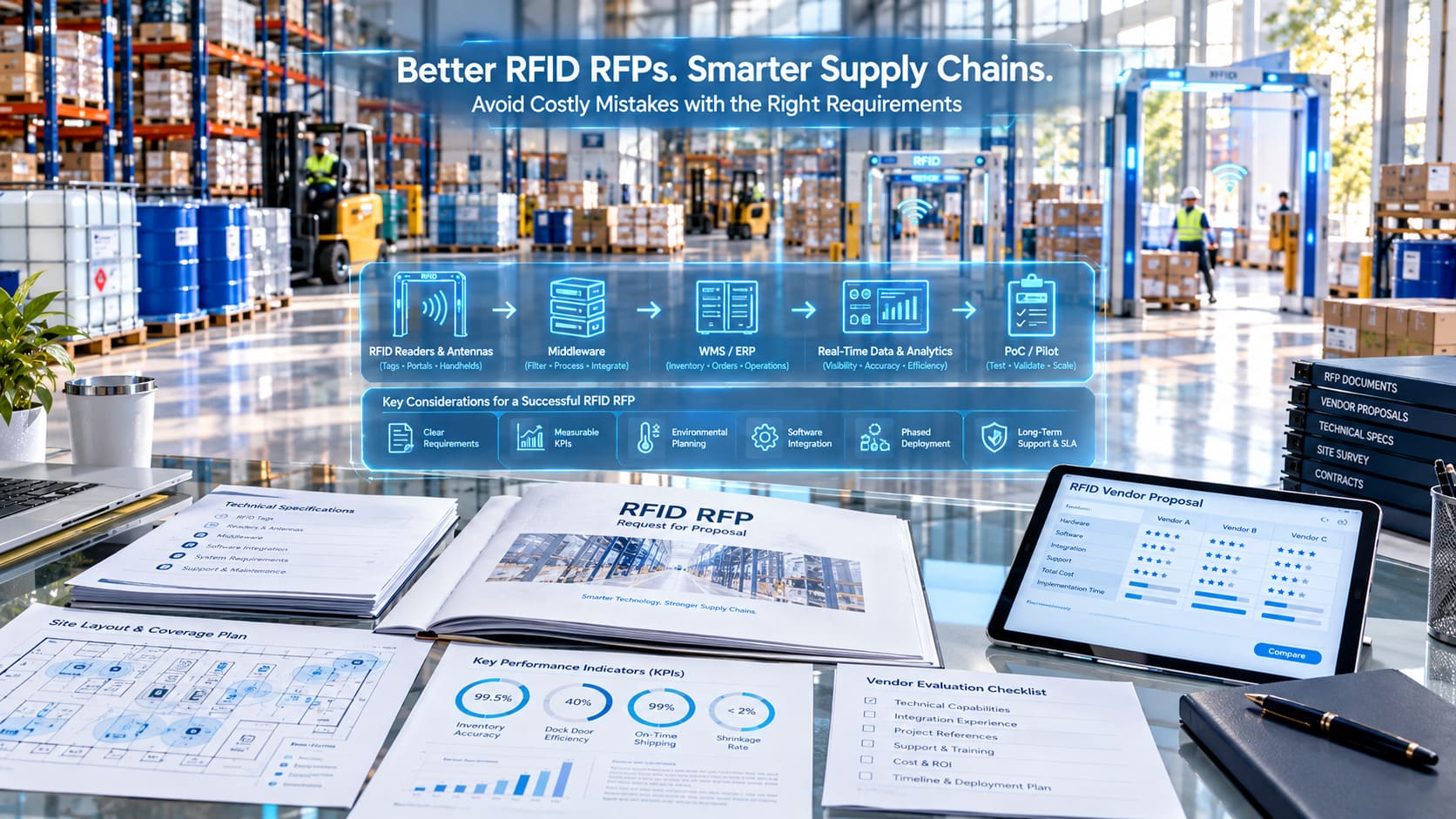
For companies that are thinking about implementation, a step-by-step method is beneficial.
Be Sure to Begin with a Pilot Project
Start by monitoring a small number of assets, then gradually build up to the enterprise level.
Identify High-Value Processes
Concentrate on places where there is a lack of visibility that leads to quantifiable inefficiency.
Examples include:
- Inventory management
- Equipment utilization
- Supply chain coordination
Utilize multiple data sources to integrate them.
RFID works best with:
- IoT sensors
- Enterprise resource planning systems
- Computer vision platforms
- Predictive analytics tools
Establish Governance Policies
Organizations should define:
- Data ownership
- Privacy standards
- AI oversight procedures
- Security responsibilities
Long-term scalability is supported by strong governance.
Nowadays, RFID isn’t just tagging items anymore – it’s helping machines decide on their own. As Agentic AI grows sharper, it leans harder on live, accurate data from surroundings.
Out there, RFID tags talk to smart gadgets near the machines they’re attached to. These local computers think fast, making choices on their own before sending data further. Devices everywhere gather whispers of information, passing it through silent networks.
Intelligence grows step by step, reacting to changes as they happen. Actions unfold based on what sensors detect moments earlier. Decisions arrive without waiting for someone to press go. To bring digital intelligence to physical action, these systems have a persistent visibility that RFID supplies.
Those organizations that pioneer RFID technology and its integration with Agentic AI could find themselves well-positioned to enhance operational effectiveness, cut expenses, and create more resilient, adaptive business environments in the coming years.
FAQ
What is the correlation between RFID and agentic AI?
Out here, FID shows where things are, how they’re moving, and what shape they’re in – right when it happens. Because of that flow, Agentic AI senses surroundings, picks actions, then carries them out on its own. Efficiency climbs, reactions get faster, all without constant oversight.
What makes RFID important for an autonomous AI system?
Now picture this: Agentic AI works best when it gets precise information fast. Because RFID keeps tabs on where things are all the time, machines powered by artificial intelligence can shift gears smoothly as situations evolve – no constant human input needed.
Which industries will benefit the most from it?
Real-time tracking of assets matters a lot in fields like shipping, factory work, hospitals, stores, and moving goods around. When machines adjust on their own and stock levels stay balanced, things tend to run smoother out there.
What are some common challenges you will have to face?
Fixing high setup prices matters when using RFID. Poor data accuracy can mess things up down the line. Wireless signals sometimes clash with nearby equipment. Hackers might target the network if safeguards are weak. Systems must grow smoothly as data loads increase from constant scanning.
How are companies successfully adopting RFID in Agentic AI projects?
Start small through trial runs. Pick tasks where results matter most. Link RFID tools directly into current workflows instead of working around them. Set firm rules early – security needs structure. Following standards helps later growth. Rules also keep operations legal. Longevity depends on planning today.
Learn more: RFID asset tracking software · RFID warehouse management system