In 2026, it no longer matters who can create “more channels”—it’s about “unified coordination” in the retail space. The modern consumer is not just looking to see a seamless, uninterrupted experience when shopping via a mobile app. Still, when they walk into a physical store, they are not the same person. But the glue that cements this experience together isn’t glamorous advertising – it’s inventory accuracy.
New to the topic? Read our complete guide to retail RFID: how it works, what it costs, POS and ERP integration, and how to roll it out store by store.
Having accurate inventory isn’t just a back-office measure for accountants for retailers. The ability to be first has become the biggest advantage that determines a brand’s loyalty in the eyes of the modern ‘always-on’ consumers. It is now the primary competitive edge that defines the loyal relationship a brand can cultivate with the modern ‘always-on’ consumer.
Q1. Why is inventory accuracy the “ground truth” of modern retail?
One place that is a failure is inventory in the omnichannel world. If a customer sees a product on your digital store and it does not appear on the shelf, the customer journey comes to a sudden halt.
Today’s retail intelligence is based on data parity. Regardless of whether you’re leveraging AI-powered shopping bots, social commerce, or in-store pickup, these systems will all need one thing: a “source of truth.
Even if your inventory data fluctuates by a few percent, an AI shopping agent can’t confirm availability, and before you can get the sale, you’ve already missed it. 99%+ inventory accuracy ensures that those who come in to see what they can find are likely to return.
Q2. How does inventory accuracy enable “Unified Commerce”?
Unified commerce is the evolution from a disjointed system to a seamless one. The key to this is accuracy:
- Intelligent Order Routing: With real-time accuracy, your system doesn’t just see “stock”; it sees potential. It can intelligently direct an order to the closest store that has the item, reducing shipping expenses, carbon footprint, and increasing delivery speed.
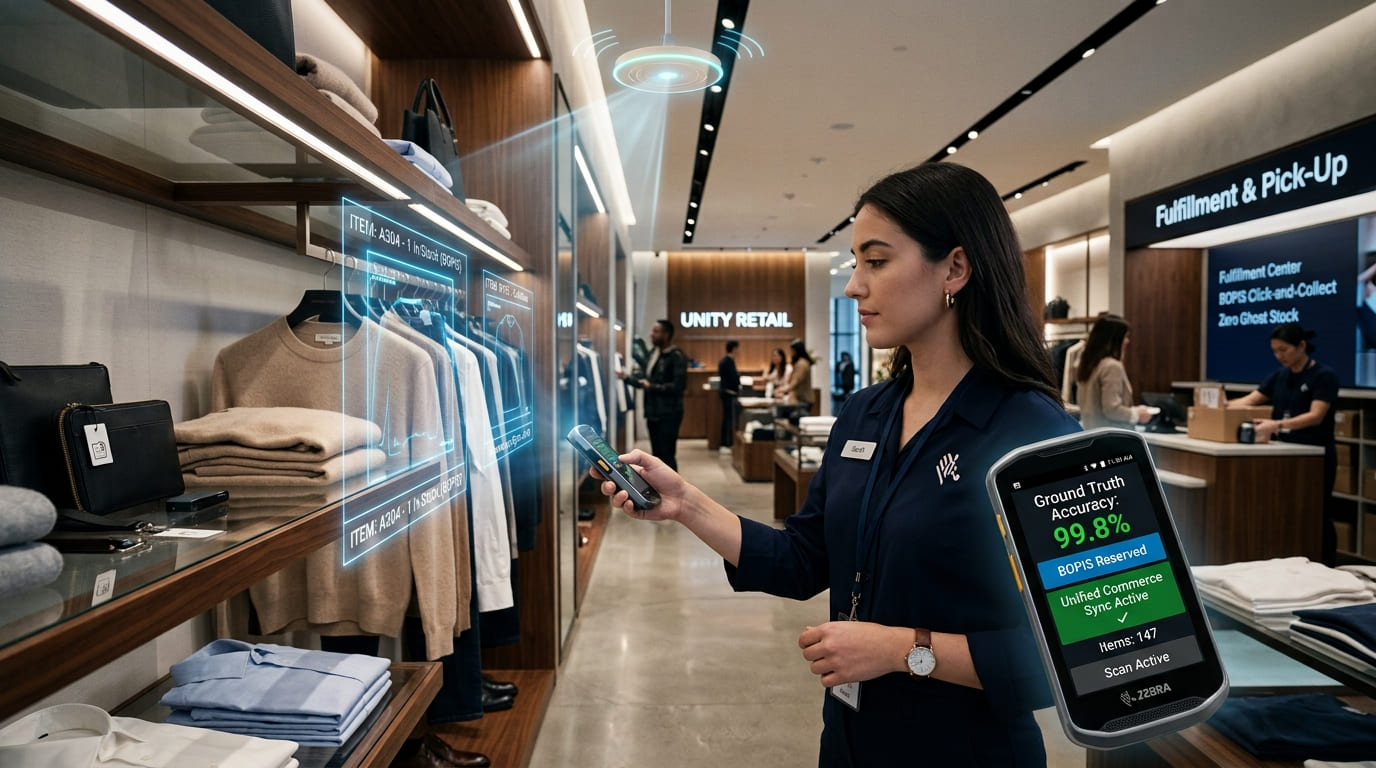
- Frictionless Fulfillment: BOPIS (Buy Online, Pick Up In-Store) or Ship-from-Store relies exclusively on the assurance that the product will be in stock. With accurate data, store associates can place orders confidently, without having to search for what is called “ghost stock” or cancel orders at the last minute.
Retailers that have a high rate of inventory accuracy can shift gears more rapidly. There is no need to be overwhelmed by “stale” reporting when a particular trend is made in social media, you’ll know right away where there is stock to take advantage of the demand.
Q3. What is the impact of inventory inaccuracies on customer trust?
Trust is fragile. The price of an incorrect inventory count is more than just a lost sale in 2026.
Overpromising Delivery Date or Stock: It leaves people unhappy right away. Retailer confirmation of orders that cannot be met can indicate disorganisation and this can lead to loss of trust that the brand is able to deal with any future orders.
Otherwise, “hidden” inventories — physically available goods but not in the digital system — have the same negative impact as “lost”. This basically means that you can’t sell products that are on your own shelves.
There are infinite alternatives out there for the customer today: Customer Lifetime Value (CLV). When things go wrong with one of their channels, they usually switch to another channel that is more reliable for them.
Q4. How is technology like RFID redefining inventory benchmarks?
Manual counting is considered a thing of the past. “Always-On” RFID is now transforming retailers from snapshots to real-time sensing of high-performing retailers.
Different from Bar Codes: RFID can read tags in bulk and without line-of-sight. This can achieve virtually 100% accuracy even in dense store environments.
Sensing Infrastructure: The store floor can be made a “sensing network” by embedding RFID. The system can automatically identify the misplaced items, automatically activate automatic replenishment, and give associates the precise coordinates of the product, cutting picking time by up to 50%.
Fuel for AI: RFID is the ‘fuel’ for AI and machine learning models. It offers detailed and up-to-date data, which helps to forecast, price, and deliver highly personalized customer experiences.
Q5. How does inventory accuracy drive sustainability and support the Circular Economy?
The “overproduction trap” can often make retail sustainability difficult. If retailers don’t have accurate inventory information, they will overorder to prevent stockout situations. This overstock often becomes unsold ‘dead stock’ which can end up in landfills and incinerators.
- Reducing Overproduction: With 99% accurate inventory data, retailers can shift to Demand-Driven Replenishment. This is because brands are now producing and stocking based on actual sales signals, not on inflated “safety buffers” which result in a significant decrease in the amount of unsold goods produced.
- High item-level traceability: It is needed when optimizing the Circular Lifecycle: Circular business models like resales, refurbishment, and trade-in programs are characterized by a high degree of item-level traceability.
Having accurate inventory data enables brands to keep an eye on the condition and history of used products, ensuring they can be efficiently routed to refurbishment and re-circulated to the market, instead of being discarded.
Conclusion
With the business world becoming more competitive in 2026, inventory management is the foundation of retail success. A real-time, unified view of business isn’t just about cutting costs; it’s about shaping the frictionless experiences that foster customer loyalty.
FAQs
Can we rely on legacy systems for omnichannel inventory?
No. Legacy systems are usually based on batch processing and data silos, which are not fast enough for the needs of today’s customers. For real accuracy, it’s crucial to have a single Order Management System (OMS) that keeps all your points of sale (POS), warehouses, and digital platforms in sync.
How much does inventory inaccuracy really cost?
There are two costs: The first is the cost of the canceled orders and lost sales, and the second is the “hidden” cost of labor. Hours are lost looking for things that are missing, and hours are lost when data is not consistent, which could be used to engage with customers.
Is 100% accuracy possible?
Perfect accuracy in complex environments is challenging, and yet in the field, RFID and AI-driven processes are helping retailers to maintain accuracy of over 98–99%. This “ground truth” represents the point at which omnichannel experiences become problematic and seamless.
Learn more: RFID for your POS