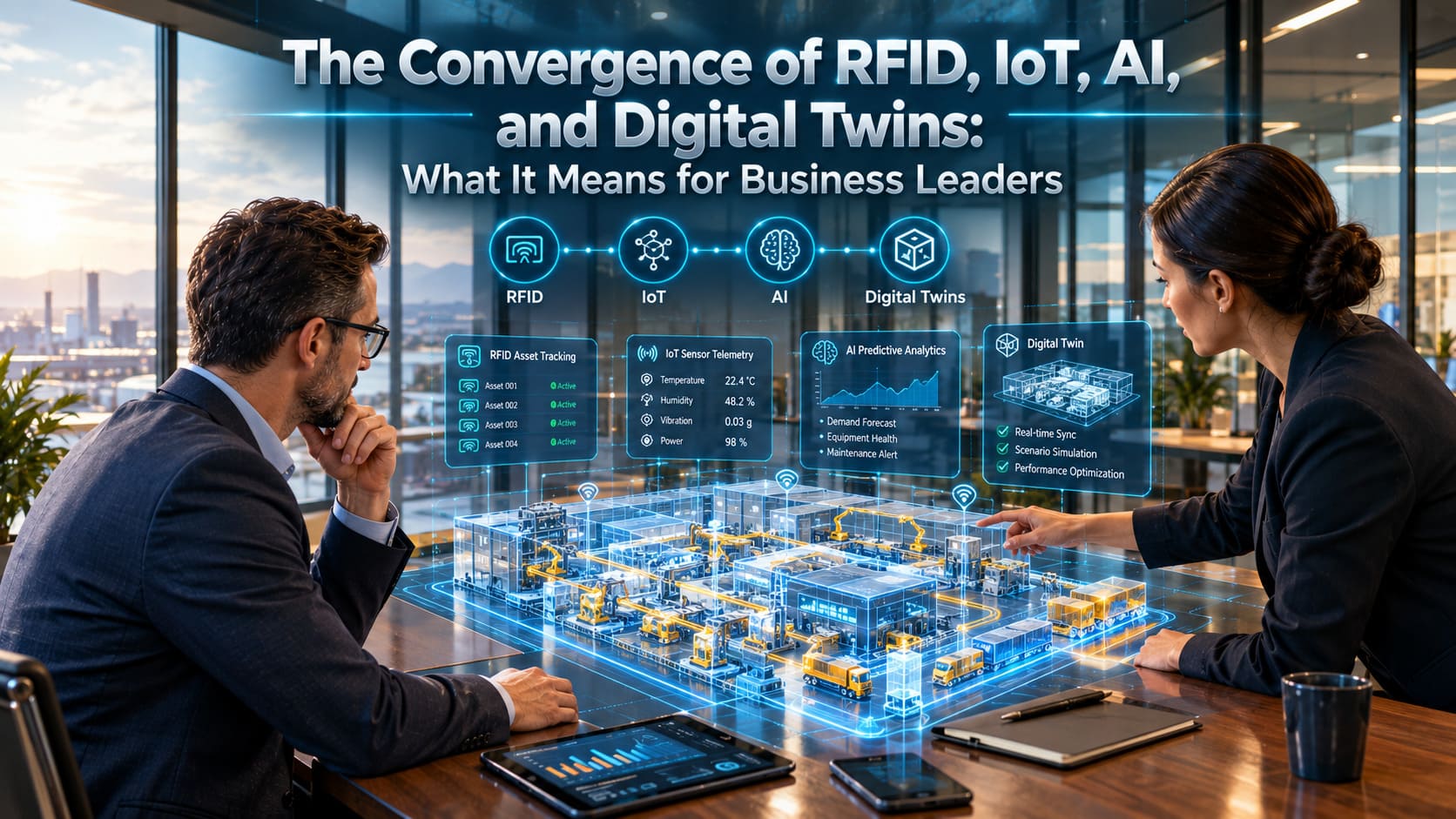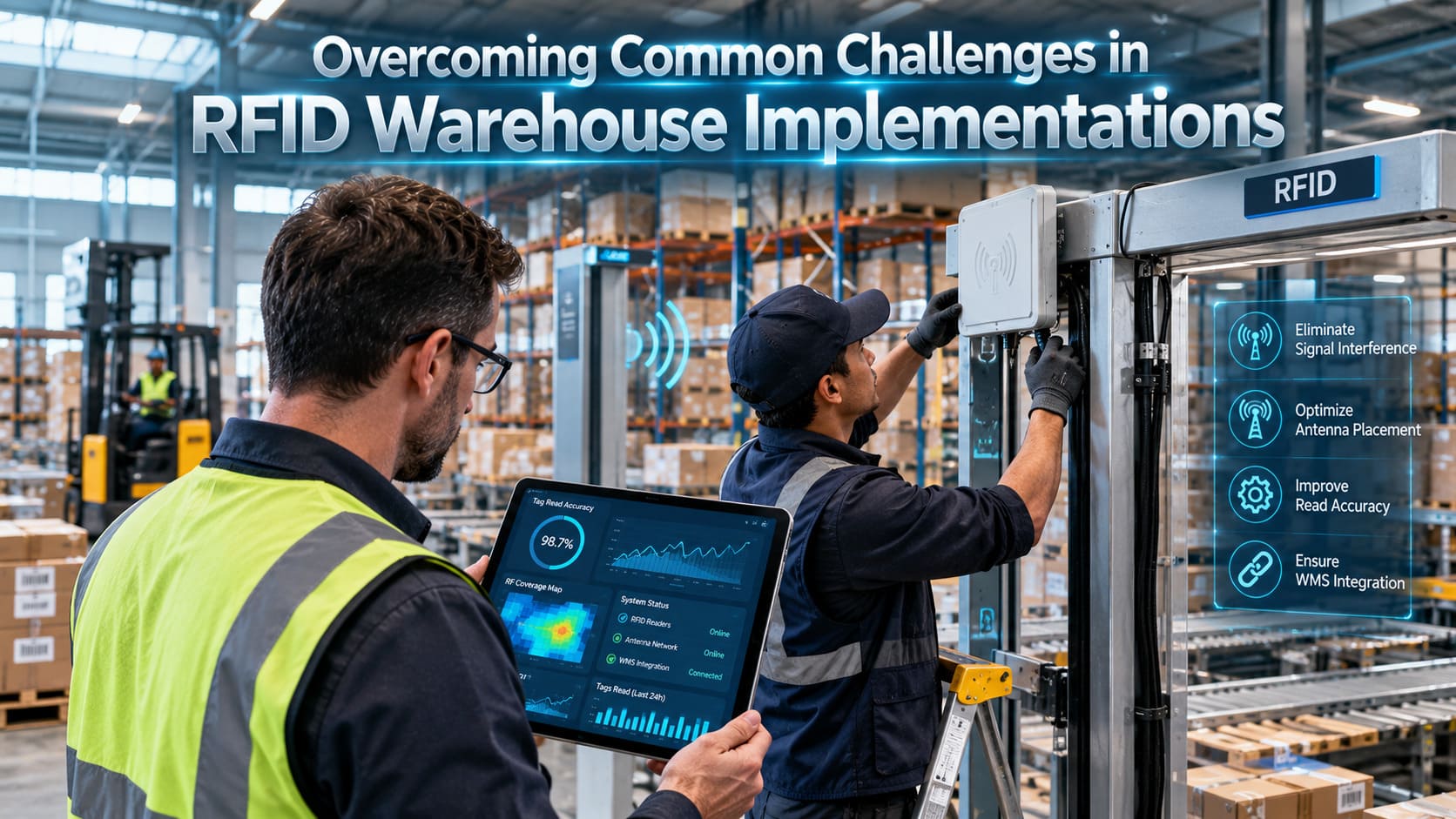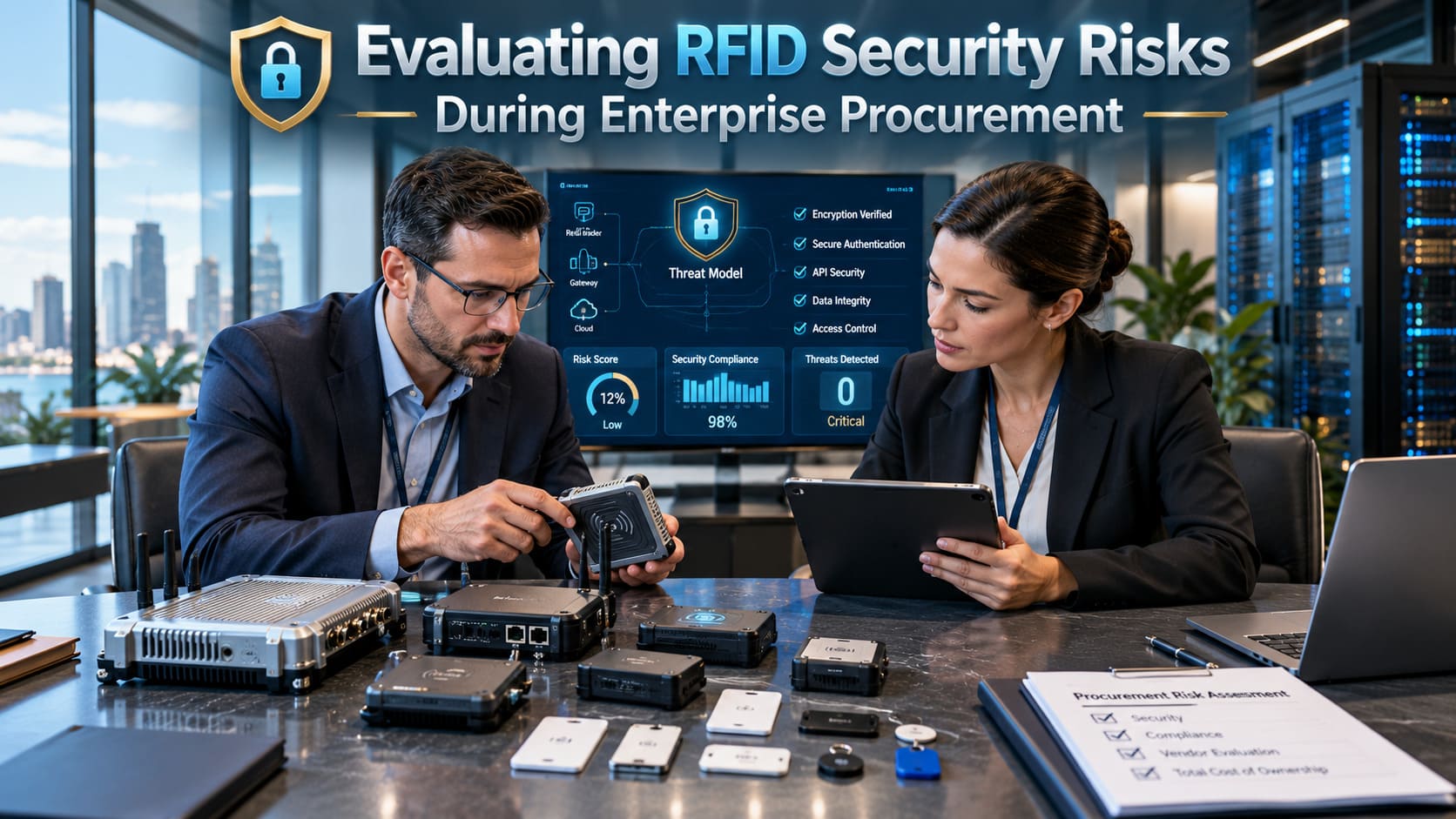
RFID (radio frequency identification) powers the Internet of Things by giving physical objects a digital identity that machines read automatically. A tag on the item, a reader that picks up its signal, and software that turns each read into an event let IoT systems know what an object is, where it is, and when it moved. No battery on the item, no person holding a scanner.
Most IoT conversations centre on smart thermostats and connected cars. Yet most physical things in a business, such as a pair of jeans, a surgical tray or a bin of fasteners, will never carry a Wi-Fi chip. They are too cheap, too small, or simply too many. RFID is how those things join the network anyway.
What RFID actually contributes to IoT
An IoT system runs on data from the physical world. Sensors measure conditions like temperature or vibration. RFID answers a more basic question first: which object is this?
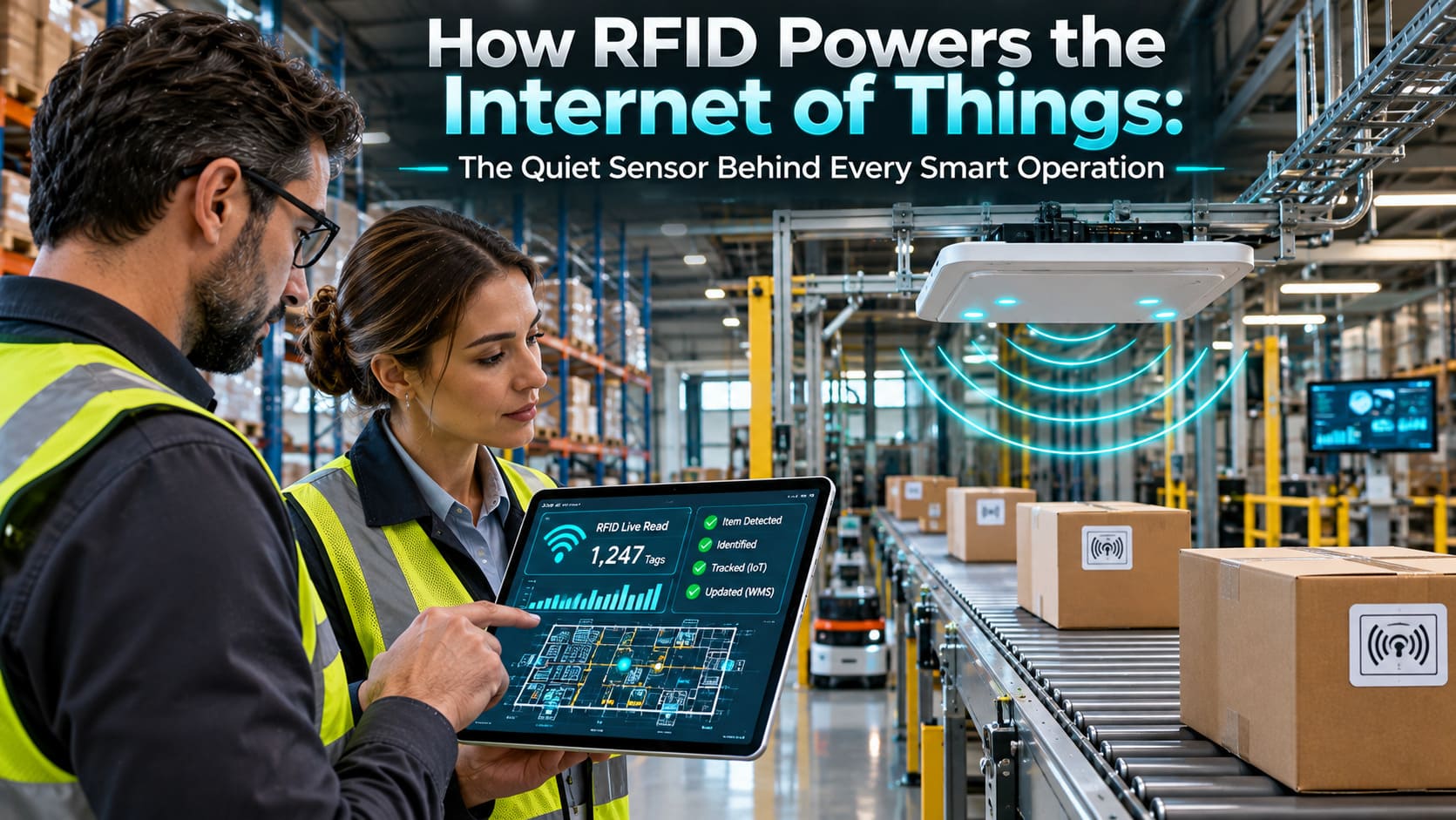
A passive UHF RFID tag is a tiny chip and antenna inside a label, often costing only cents. It has no battery. When a reader sends out radio waves, the tag harvests that energy and replies with its unique ID. A single reader can capture hundreds of tags per second, through cardboard and fabric, from several metres away.
That mix of no power source, no line of sight, and bulk reading is what lets IoT scale from a few hundred connected devices to millions of tracked items.
How the RFID-to-IoT data flow works
- Tag: each item carries an encoded RFID label with a unique identifier, usually an EPC (Electronic Product Code).
- Reader: handheld scanners or fixed readers (doorway portals, ceiling arrays, shelf antennas) capture tag IDs as items pass or sit in range.
- Edge filtering: middleware strips duplicate reads and adds context such as time, reader location, and direction of travel.
- Software platform: an RFID platform like Senitron’s Athena converts raw reads into business events: item received, item moved to Zone B, item left the building.
- Integration: those events sync to the tools teams already use, including POS, ERP, warehouse systems, Shopify, and Lightspeed.
Skip step four, and RFID is just radio noise. Hardware reads tags; software decides what the reads mean. That is why Senitron’s software is hardware-agnostic and works with readers and printers from manufacturers such as Zebra and Impinj.
Where RFID-enabled IoT pays off
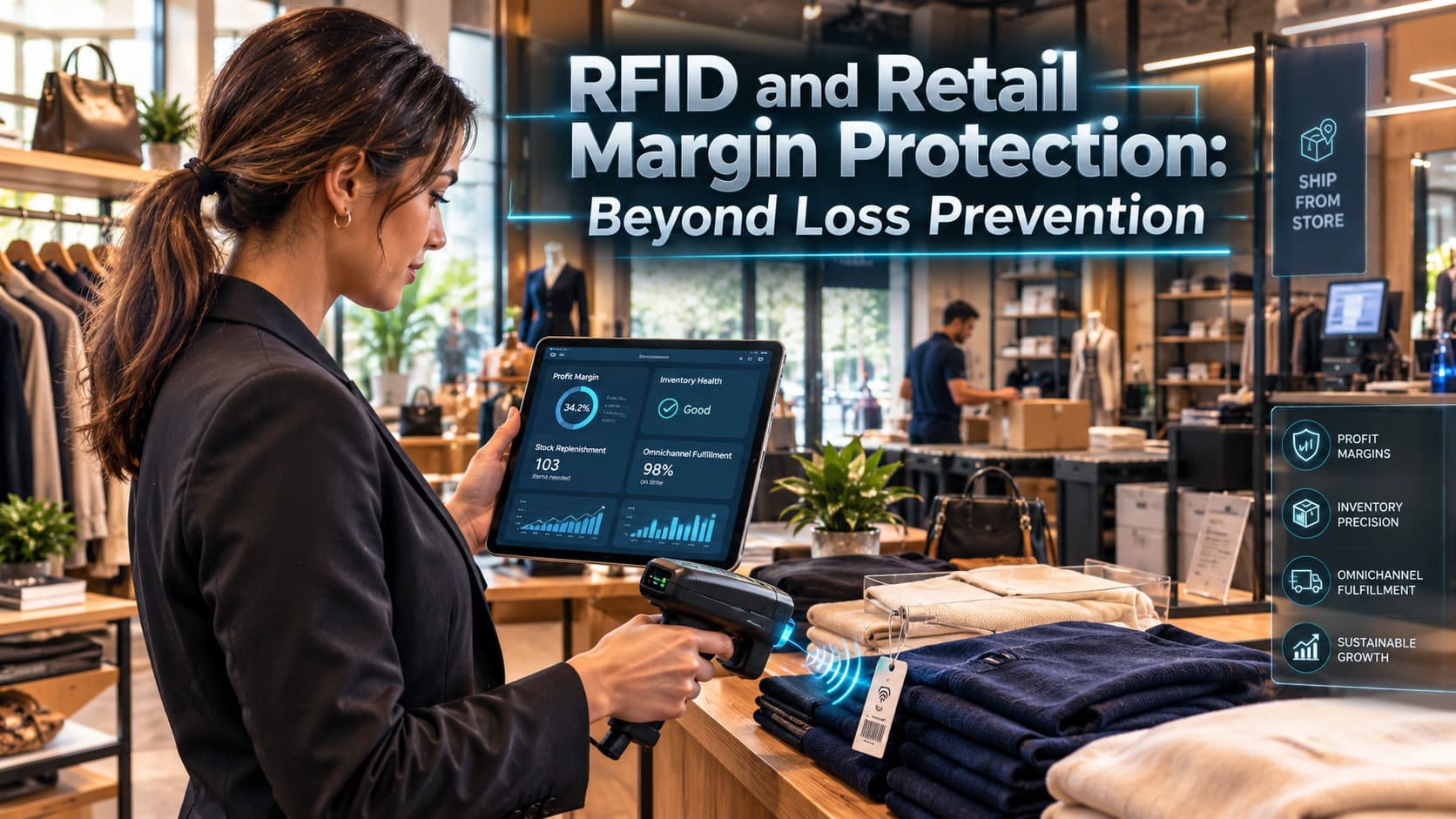
Retail: inventory you can actually trust. Store stock records drift from reality as items get misplaced, stolen, or mis-scanned. RFID makes counting fast enough to run daily instead of yearly. For Lightspeed retailers, Senitron reports handheld RFID cycle counts up to 2,800% faster than other methods. Fixed overhead readers go further, giving staff continuous, hands-free visibility, so they know a size is in the back room before telling a shopper it is sold out.
Healthcare: finding what matters, fast. Hospitals use RFID to locate infusion pumps and wheelchairs, manage consumables, and track surgical sponges to protect patient safety. Every minute a nurse spends hunting for equipment is a minute away from a patient.
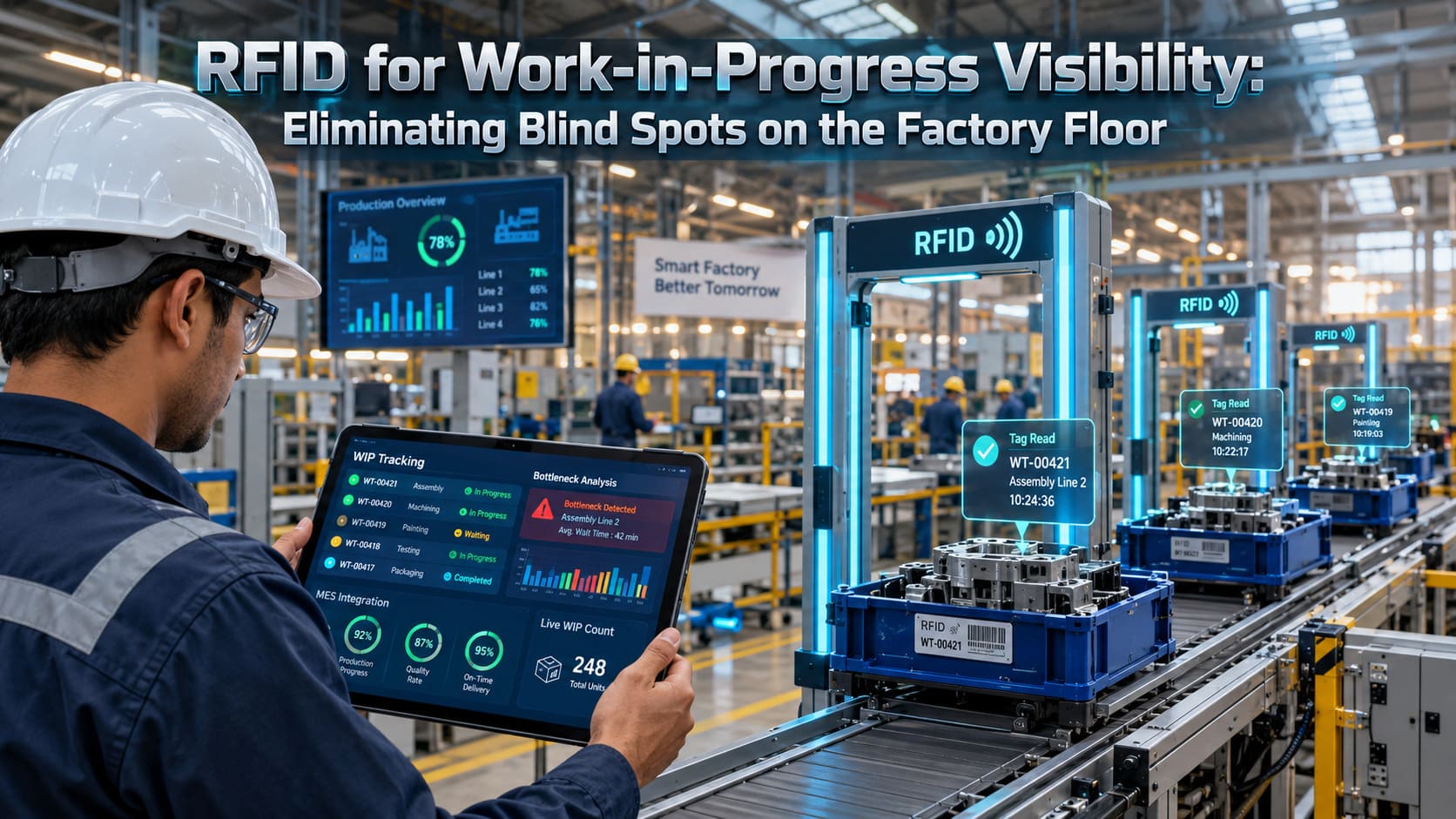
Manufacturing and distribution: live work-in-progress. Tags on parts, tools, and bins show where each job sits on the line. At the dock door, outbound shipments verify themselves as they roll past a portal.
People and high-value assets. Real-time location systems (RTLS) built on RFID show where staff and critical equipment are, supporting attendance records, safety zones, and audit trails in sectors like aerospace and law enforcement.
RFID vs. other IoT identification technologies
|
Technology |
Power on the item |
Line of sight needed |
Typical read range |
Cost per tag |
Best for |
|
Passive UHF RFID |
None |
No |
Up to ~10 m, many tags at once |
Cents |
High-volume, item-level tracking |
|
Barcode / QR |
None |
Yes |
Centimetres, one at a time |
Fractions of a cent |
Manual, low-volume scanning |
|
Bluetooth Low Energy (BLE) |
Battery |
No |
Up to ~50 m |
A few dollars |
Live location of high-value assets |
|
GPS tracker |
Battery |
Needs open sky |
Global |
Tens of dollars |
Vehicles and outdoor shipments |
RFID is the one option that identifies thousands of low-cost items at once with zero maintenance on the item itself.
What’s next for RFID and IoT
- AI on top of RFID data. Continuous reads build dense movement histories. AI models can use them to flag shrink patterns, forecast replenishment, and catch misplaced stock before a customer notices.
- Tagging at source. More brands tag items at the factory, so products arrive at stores already IoT-ready.
- Plug-and-play commerce. RFID now connects directly to platforms small retailers use. Senitron’s Shopify app, launched in 2025, syncs RFID counts in one click.
- Sensing tags. Newer RFID tags report temperature or moisture alongside identity, turning a simple label into a low-cost sensor.
How Senitron turns RFID into a working IoT system
Senitron builds RFID software for inventory, asset tracking, RTLS and process automation across retail, healthcare, manufacturing, distribution, aerospace and law enforcement. Its Athena platform covers the full cycle: printing and encoding tags, counting stock, mapping items on an uploaded floor plan, auto-detecting misplaced items, and syncing with POS and e-commerce systems. Because it runs on any major reader hardware, a business can start with one handheld and grow into fixed, hands-free coverage without starting over.
The point of IoT was never the devices. It is knowing what is happening in your operation the moment it happens. For the millions of everyday objects that will never carry a chip of their own, RFID is how that knowledge gets made.
See it in your own operation. Book a Senitron demo and find out how quickly your inventory can become accurate.
Frequently asked questions
- What is the role of RFID in IoT?
RFID provides automatic identification for physical objects. It lets IoT systems detect, count, and locate items without manual scanning or a battery on each item.
- Is RFID an IoT technology?
Yes, and one of the first. Kevin Ashton coined the term “Internet of Things” in 1999 while presenting RFID for supply chains at Procter & Gamble.
- What is the difference between RFID and IoT?
RFID is a data-capture technology. IoT is the wider network of connected devices, software, and analytics that acts on that data. RFID is one of the inputs IoT depends on.
- Does RFID need the internet to work?
No. Tags and readers communicate over radio. Internet access is only needed to send reads to cloud software and connected business systems.
- Which industries use RFID IoT solutions?
Retail, healthcare, manufacturing, distribution, logistics, aerospace, and law enforcement are the most common adopters.