Over the years, supply chain management has been operating based on reactive analytics. Managers relied on past information to respond to the question, “What has happened? But with today’s fast-paced and competitive marketplace, it’s not enough to look back. Supply chains need to be proactive and ask, “What is likely to happen next?”
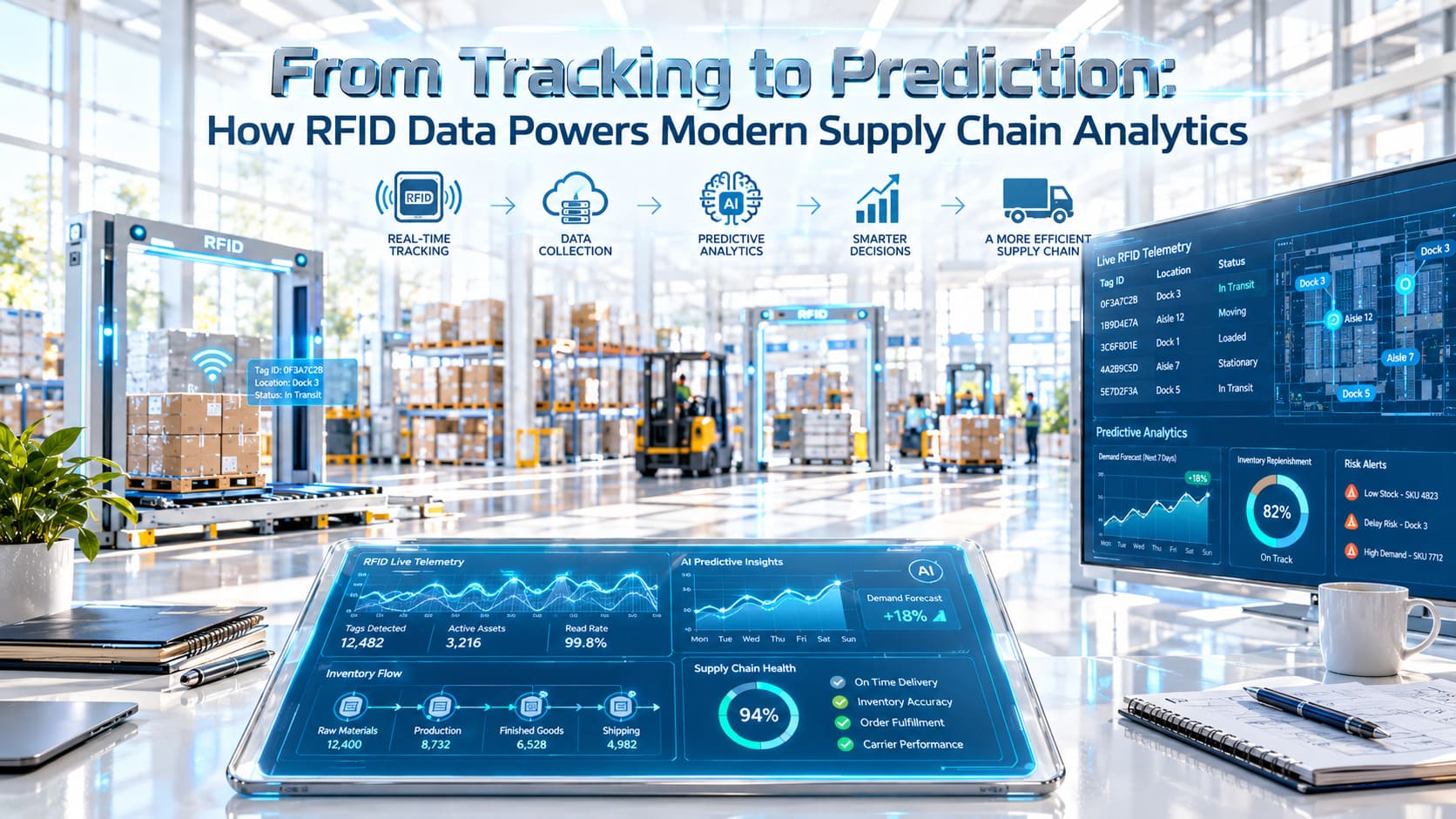
It’s all about the quality and speed of the data for this shift to happen from report to predictive. Radio-Frequency Identification (RFID) comes to the rescue in this situation. The advantages of RFID are that it supplies a continuous, real-time stream of data for physical assets, which can then be utilized in further Machine Learning (ML) and Artificial Intelligence (AI) models. See how RFID data is driving the next-generation predictive supply chain analytics.
How does RFID transition a supply chain from reactive tracking to predictive analytics?
In order to be accurate, predictive analytics needs to be fed a vast amount of clean, real-time data. Traditional manual tracking – like bar coding – only captures information at discrete moments, like when a worker scans an item. This is a huge missing time series in the data.
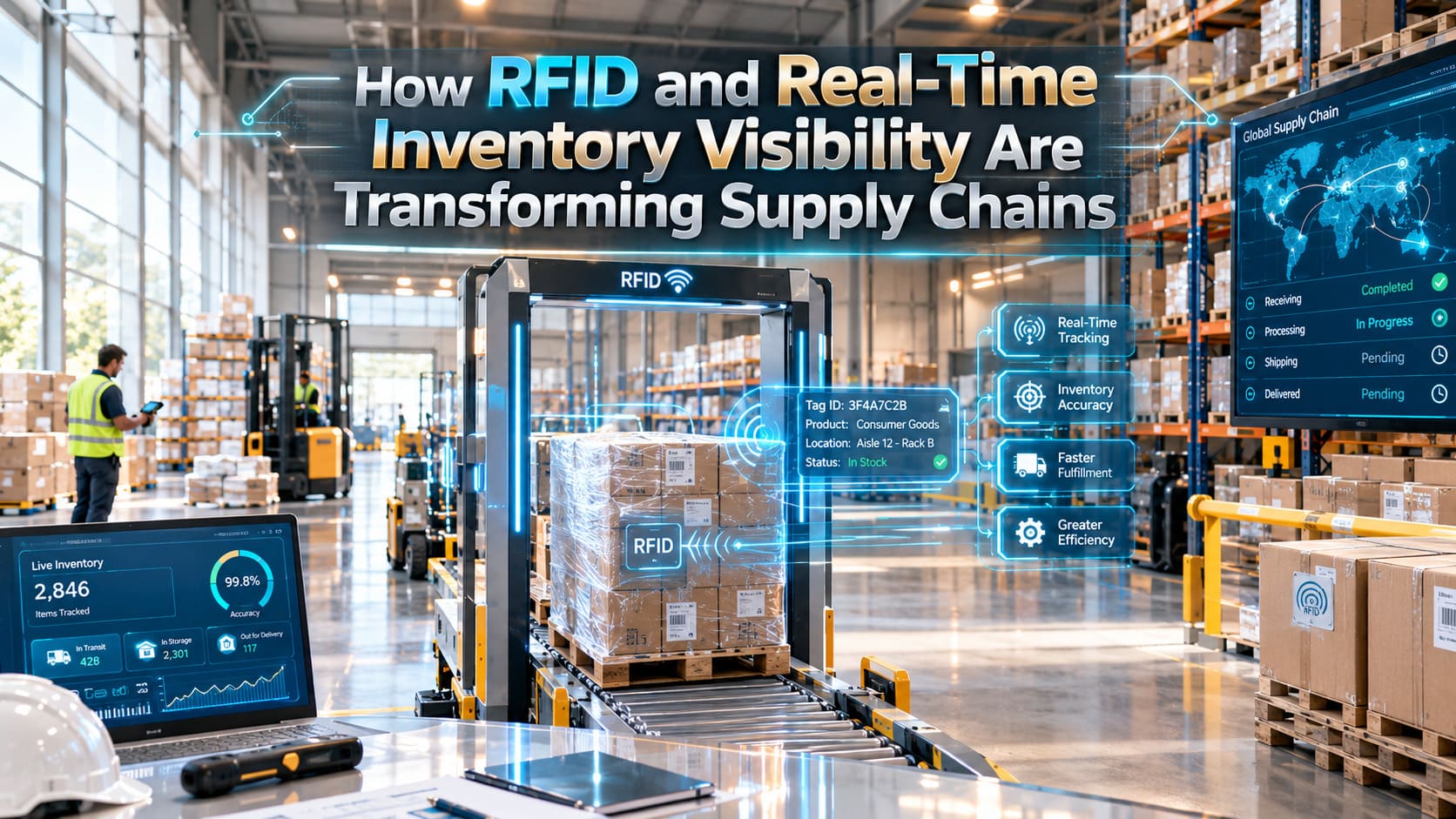
The solution of RFIDs fundamentally alters this situation by automating the data capture process. The RFID readers are not dependent on line of sight, and therefore could continuously and simultaneously monitor the movement, location, and status of thousands of tagged items. The continuous flow of information creates a “live” digital layer as it goes over the physical operations.
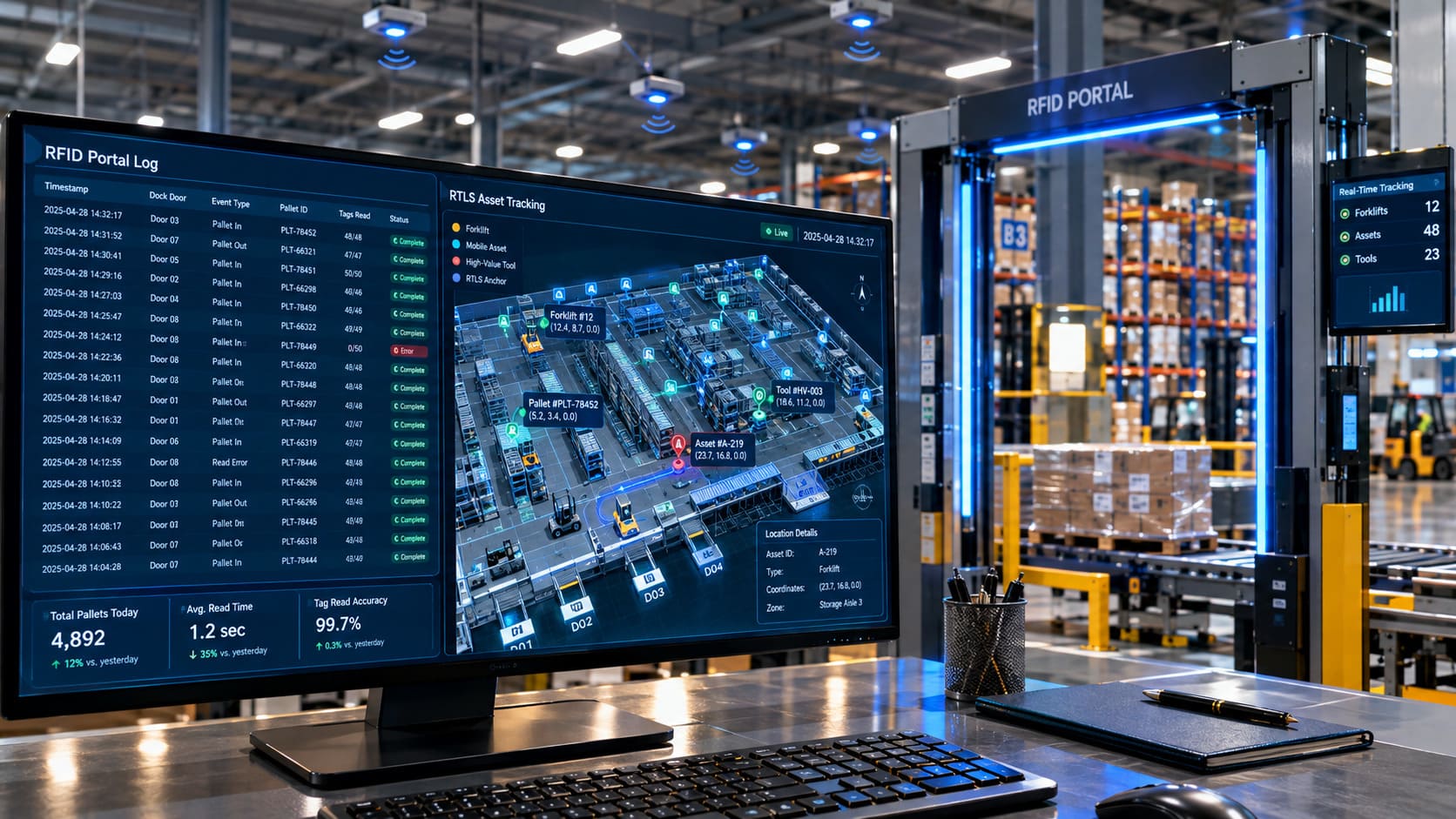
An RFID system can record actual dwell time within the facility, as well as the path it followed through the facility and interactions with other assets, not just the fact that a pallet arrived. Such a high resolution of data without gaps is just the kind of data predictive algorithms require to be more accurate in their predictions.
What role do AI and Machine Learning play in analyzing RFID data?
In an enterprise-scale deployment, a huge amount of raw data is generated. Without management, this can overwhelm Enterprise Resource Planning (ERP) systems with redundant reads and unnecessary clutter. This data is the fuel that powers AI and Machine Learning as their analytical engines.
These algorithms are applied at the edge and middle layers to process and receive raw RFID data, which is cleaned and filtered for duplicates and anomalies. After structuring the data, Machine Learning models can be used to uncover patterns and correlations that human managers are unable to see.
For instance, AI can study all of the RFID timestamps for thousands of shipments and determine the “velocity” that a warehouse operation should operate at. If it identifies some deviation from this learned pattern, it marks it as an anomaly and transforms raw radio waves into actionable insights for strategic decision-making.
How can predictive RFID data prevent operational bottlenecks and supply chain disruptions?
Logistical delays can quickly snowball; for example, a small delay in a receiving dock can lead to significant delays on the production line. Predictive analytics transforms risk management from a reactive to a proactive approach by using RFID data.
Since ML models track real-time movement data provided by RFID, they can predict when and where a congestion may occur, preventing operations from coming to a halt. The predictive system can automatically notify the managers if raw materials stay for 15% longer than the average in the staging area, to allow them to shift labor resources or to route the next shipment to a different staging area.
In addition, in combination with the use of sensor-enabled RFID tags (which measure temperature or humidity), predictive models can anticipate issues with the equipment and initiate predictive maintenance, thereby prolonging the lifespan of the assets and averting unexpected equipment failures.
How does RFID-powered predictive analytics optimize demand forecasting and inventory levels?
The usual approach to demand forecasting is to look at historical sales figures, but these are often inadequate when there are sudden changes in the market. RFID-based predictive analytics uses the actual speed of products on the ground to predict with great accuracy.
When it comes to replenishing products from the backroom to the sales floor or from the distribution center to the loading dock, AI models can make accurate forecasts of a stockout long before inventory levels reach zero. This enables systems to carry out automatic replenishment based on demand.
How does predictive RFID analytics safeguard cold chains and perishable inventory?
With cold chain goods (pharma, bio, fresh produce), temperature changes can ruin entire shipments before physical damage is seen.
Proactive Spoilage Risk Forecasting: The sensor-enabled RFID tags constantly broadcast telemetry data on temperature, humidity, and location during the entire trip. This data stream is fed to machine learning models, which are able to compute the precise Remaining Shelf Life (RSL) of the cargo in real-time due to its cumulative environmental exposure.
Dynamic First-Expired, First-Out (FEFO) Rerouting: An algorithm can automatically switch your inventory logic in your Enterprise Resource Planning (ERP) system from the traditional First-In, First-Out (FIFO) logic to FEFO logic when it detects a minor temperature spike in a container.
Conclusion
RFID is not only for finding missing inventory, but it is also the data engine of the future for supply chain management. The real-time, continuous flow of physical data feeds into AI and Machine Learning models, moving beyond mere reactive tracking to anticipate demand, avoid interruptions, and unlock unprecedented operational agility.
FAQs
Is RFID data enough on its own to predict supply chain trends?
No. When combined with external data from other sources, e.g., market trends, weather forecasts, historical sales patterns, within an AI platform, predictive analytics can deliver maximum accuracy when paired with the ‘real-time’ physical data (location, movement, status) provided by RFID.
How does predictive maintenance work with RFID?
Active RFID tags with sensors can measure the environment, such as temperature, vibration, etc., on factory equipment. This ongoing telemetry information is fed into machine learning models that identify micro-anomalies, precisely identifying when a part will fail and allowing maintenance to be scheduled in advance of failure.
Does implementing predictive analytics require replacing my entire software system?
Typically no, with the exception of the latest RFID middleware and AI layers that connect effortlessly through APIs with your existing WMS or ERP. It enables you to implement predictive intelligence without an overhaul of your existing software.