Today’s supply chains are incredibly fast-moving, passing through warehouses, distribution centers, stores, factories, and transportation systems. However, many companies are still grappling with the simple question: “Where is the stock now?”
Traditional barcode scanning will give you useful information, but it usually requires you to have the workers manually look for and scan each product. Today, that is changing thanks to RFID and real-time inventory visibility, which help organizations identify, locate, and monitor inventory with minimal manual effort.
The outcome is a more integrated supply chain, allowing companies to make decisions more accurately on what they have on hand at the time instead of relying on past inventories or assumptions.
What Is RFID?
Radio Frequency Identification (RFID) is a technology that identifies objects with a tag. The information stored electronically on a tag can be detected by the RFID reader and does not need to be scanned from a direct line of sight, as with barcodes.
Based on the technology and configuration, RFID can benefit businesses by:
- Recognizing products, cartons, pallets, or assets
- Automating inventory counts
- Tracking inventory movements
- Finding missing or misplaced items
- Refining the accuracy of receiving and shipping items
- Tracking inventory in multiple stores.
This can greatly decrease the number of manual scans needed for high-volume operations.
Securing Periodic Counts to Real-Time Visibility
Periodic Cycle Counts are a common method of inventory control. Products are counted at regular intervals by employees, and the counting data is input into an inventory or enterprise system.
Unfortunately, inventory can flow from one count to the other.
Products might come in, go to a different shelf, be retrieved for an order, moved to a different facility, or sold in between physical counts. This results in an inventory difference between system inventory and physical inventory.
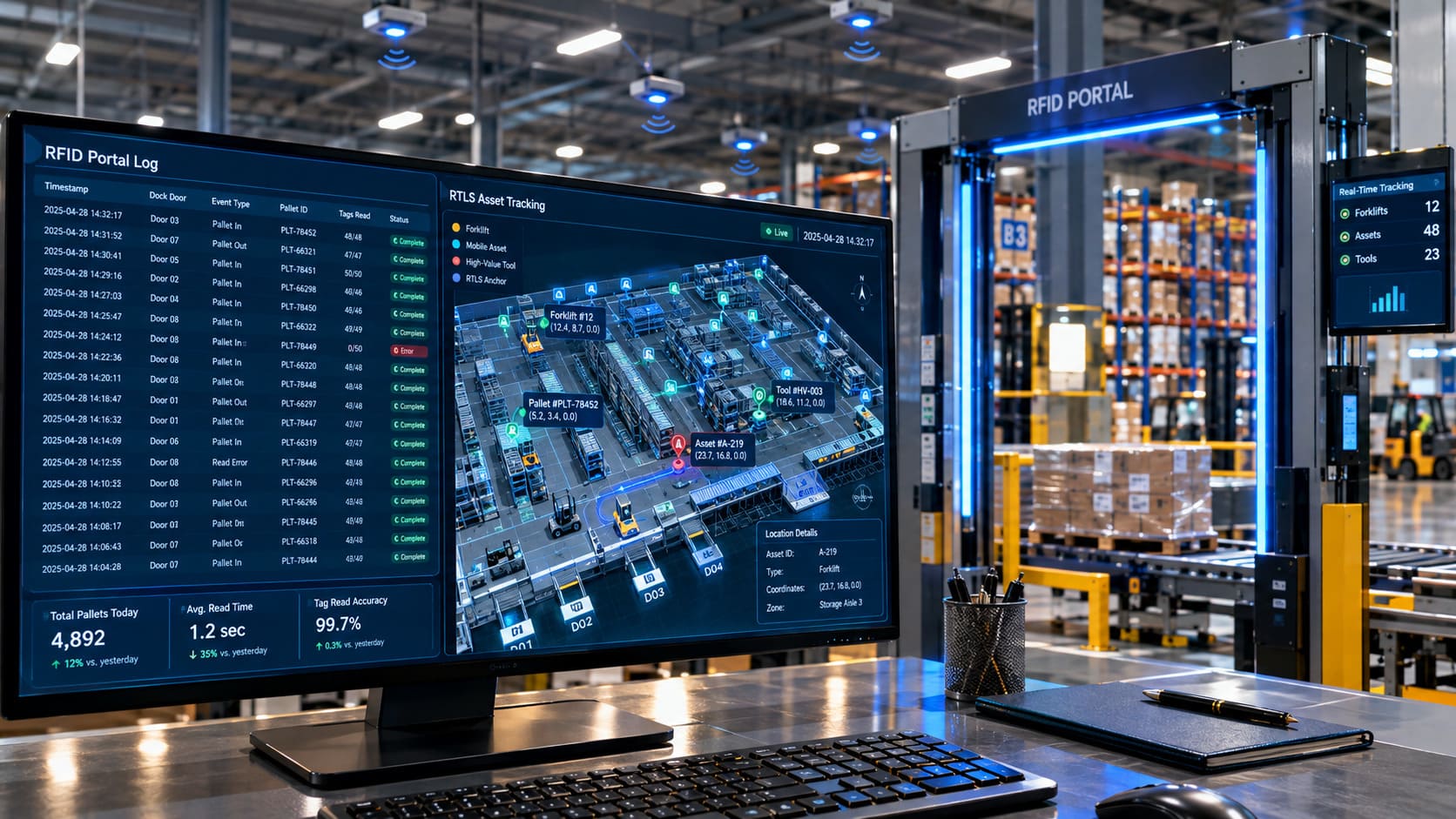
RFID takes this step at the item level, with more automatic capturing of item-level movement.
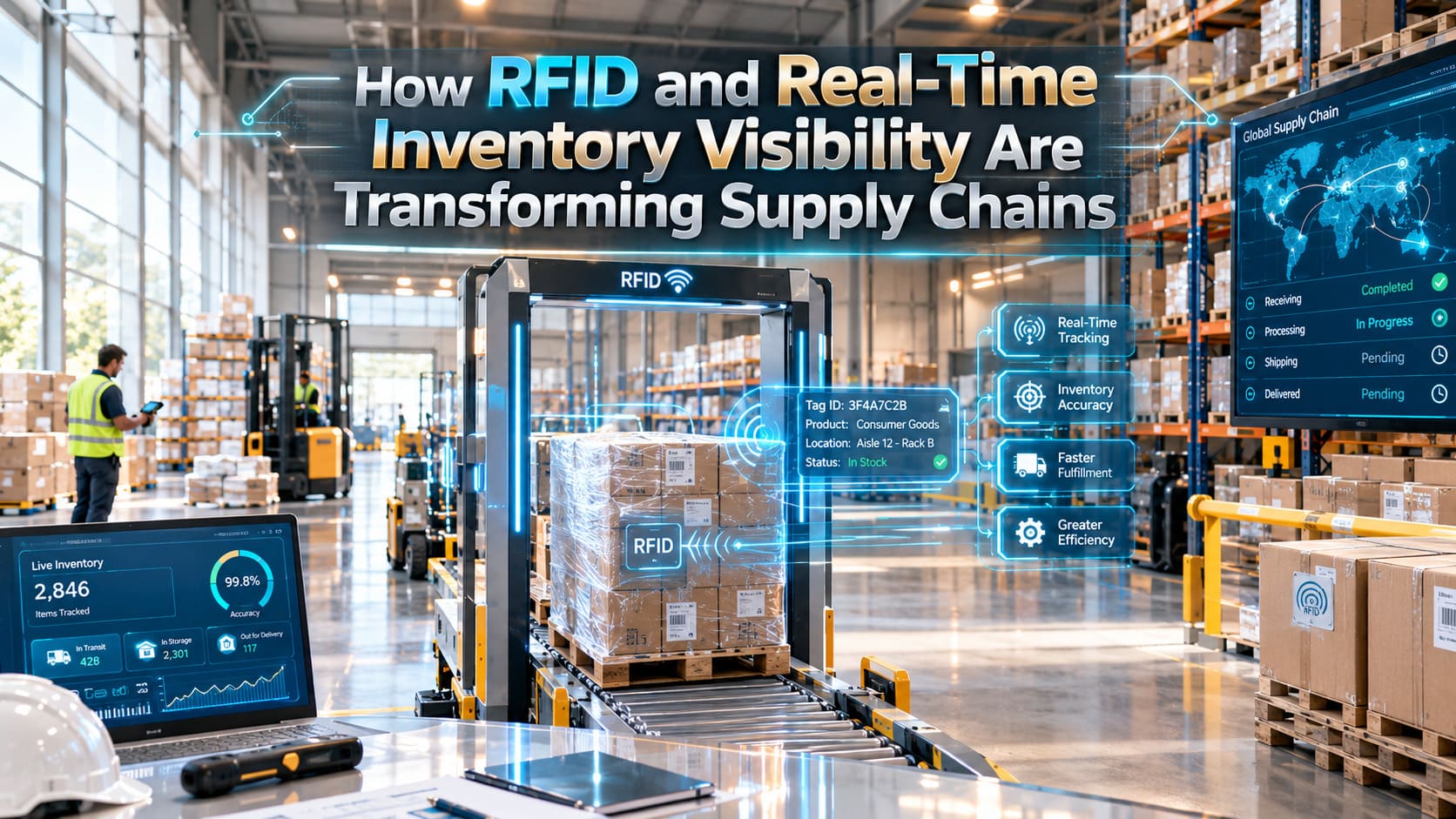
In real-time (or near-real-time), visibility can provide supply chain teams with a more comprehensive picture of:
- What stock or supplies do they have?
- The place where stock is stored.
- What has moved
- Items received or sent out
- What things could be missing?
- The plant needs to be fertilized when that might be necessary.
This information can help in expediting decision-making for operations.
Improving Inventory Accuracy
One of the top advantages of implementing RFID is inventory accuracy.
Organizations can cut down on issues linked to incorrect stock data when they understand exactly what they possess. They can reduce potentially unnecessary replenishment, stockouts, delays in orders, inventory, and lost labor.
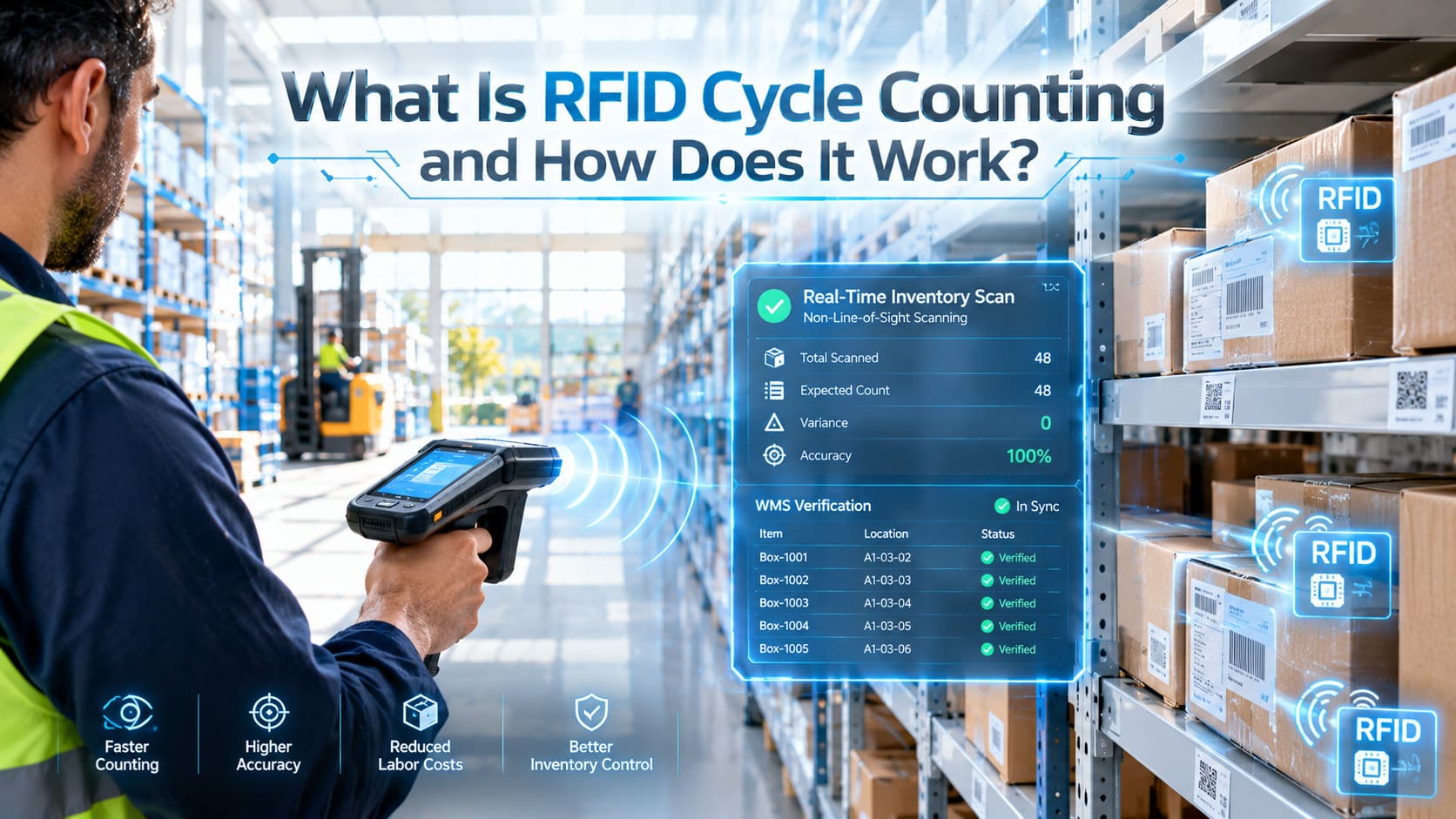
RFID can also help to make cycle counting more efficient. Workers can scan multiple products at the same time by using the RFID reader that reads the product tags within a specific reading area.
It can make a significant difference in large warehouses or retail settings.
Preventing Stockouts and Overstocking
When visibility of the inventory is poor, it can result in one of 2 problems: too little or too much inventory.
Stockouts may lead to loss of sales, production delays, or customer dissatisfaction. Meanwhile, overstocking ties up working capital and adds to storage needs.
Businesses can gain insight into their inventory levels and movement patterns earlier due to real-time inventory data. This enables buying and operations staff to decide with greater information when to reorder.
While RFID does not provide a solution to forecasting inaccuracies, it does provide forecasting systems with a better foundation in inventory information.
RFID Across the Supply Chain
RFID can be used in a warehouse but can also be applied in a number of different places throughout the supply chain.
Manufacturing
RFID can be used by manufacturers to monitor parts, work-in-progress materials, tools, and final products. This can enhance traceability and provide awareness of material location in production processes.
Warehousing
RFID can be utilized in receiving, put-away, picking, cycle counting, and shipping verification applications in warehouse operations.
Retail
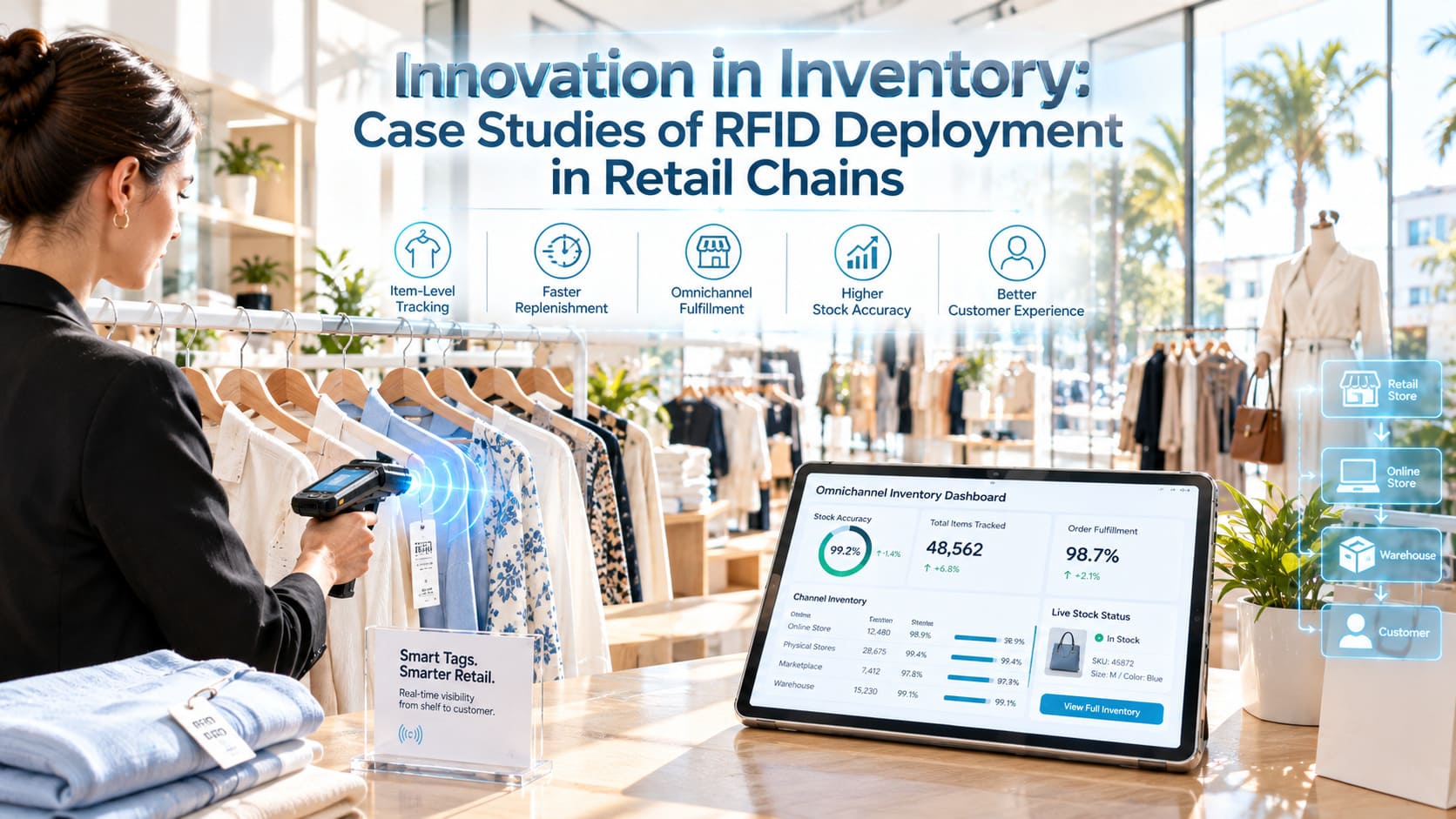
Store managers can find items in backrooms and stores with item-level RFID and manage inventory more effectively.
Distribution
RFID can be used to enhance shipment verification and minimize shipment errors between distribution centers.
Asset Tracking
In addition to merchandise, RFID can be used to track reusable containers, equipment, tools, racks, and other assets that move around many times within an operation.
RFID and Automation
The key benefits of RFID lie in the fact that it can generate information that can be used by other technologies.
RFID can communicate with:
- Warehouse Management Systems (WMS)
- Enterprise Resource Planning (ERP) platforms.
- Inventory management software
- Order management systems
- Analytics platforms
- Automated material-handling equipment
- Artificial Intelligence and machine learning systems
This marks an important change. RFID is not a mere replacement for the barcode scanner. It can be an extension of a larger supply chain technology ecosystem from which data can be generated.
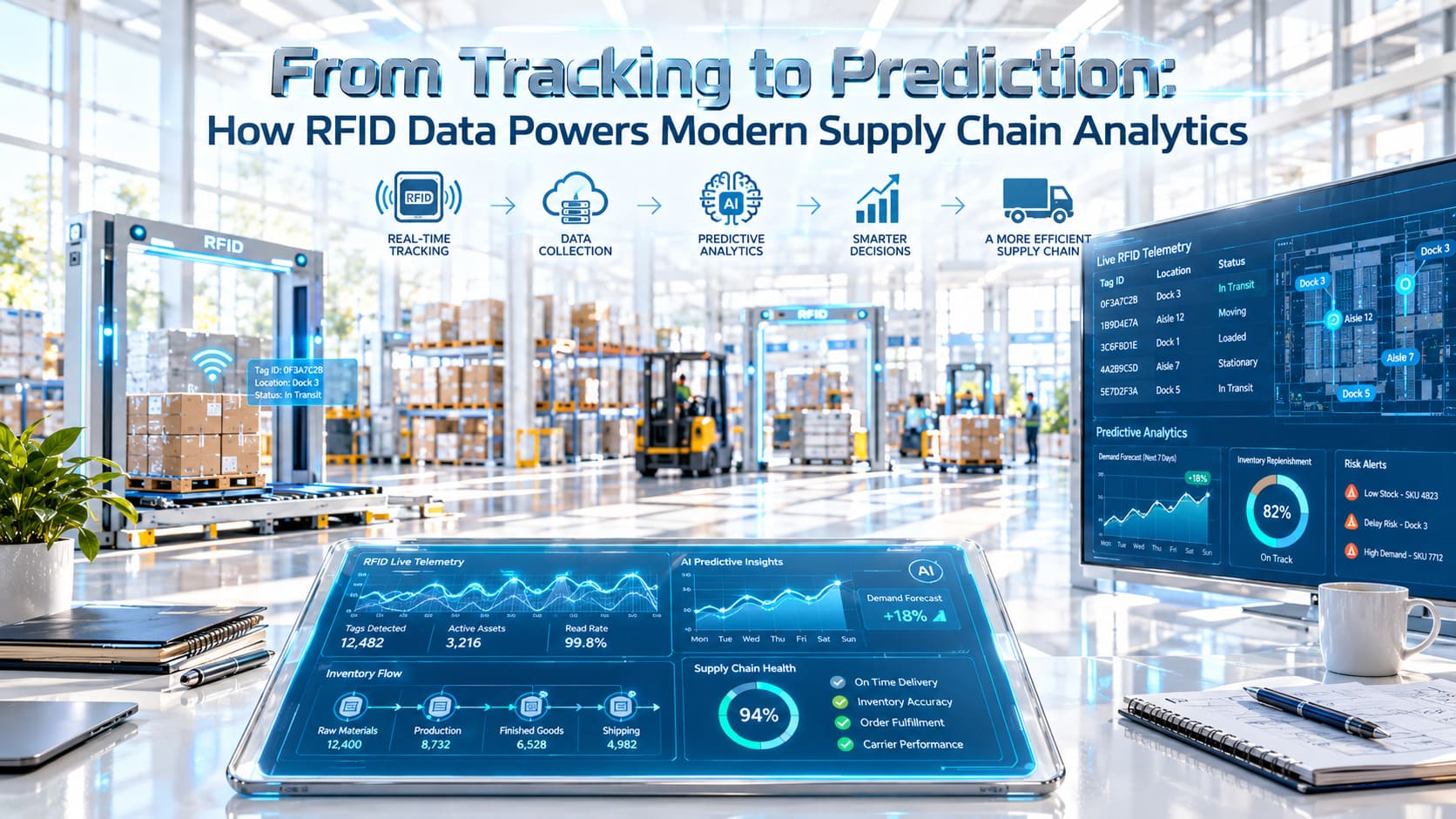
Real-Time Data Aids in Making Better Decisions
The value of visibility grows as businesses are able to act on data.
For instance, one inventory platform might have an item located in one facility, but not in another. Rather than buying more inventory, the company might be able to transfer existing inventory.
Likewise, warehouse managers can spot any discrepancies before they are found at the end of the quarter when they do a stocktake.
The aim is not to gather more data. The aim is to give the right information at the right time.
For Businesses, These Are Some Challenges They Should Consider:
The operational benefits of RFID are great, but it does take planning.
Important considerations include:
- The effect of tag selection: Various products/materials can influence the performance of RFID.
- Reader placement: If readers are poorly positioned, they may lead to gaps in coverage.
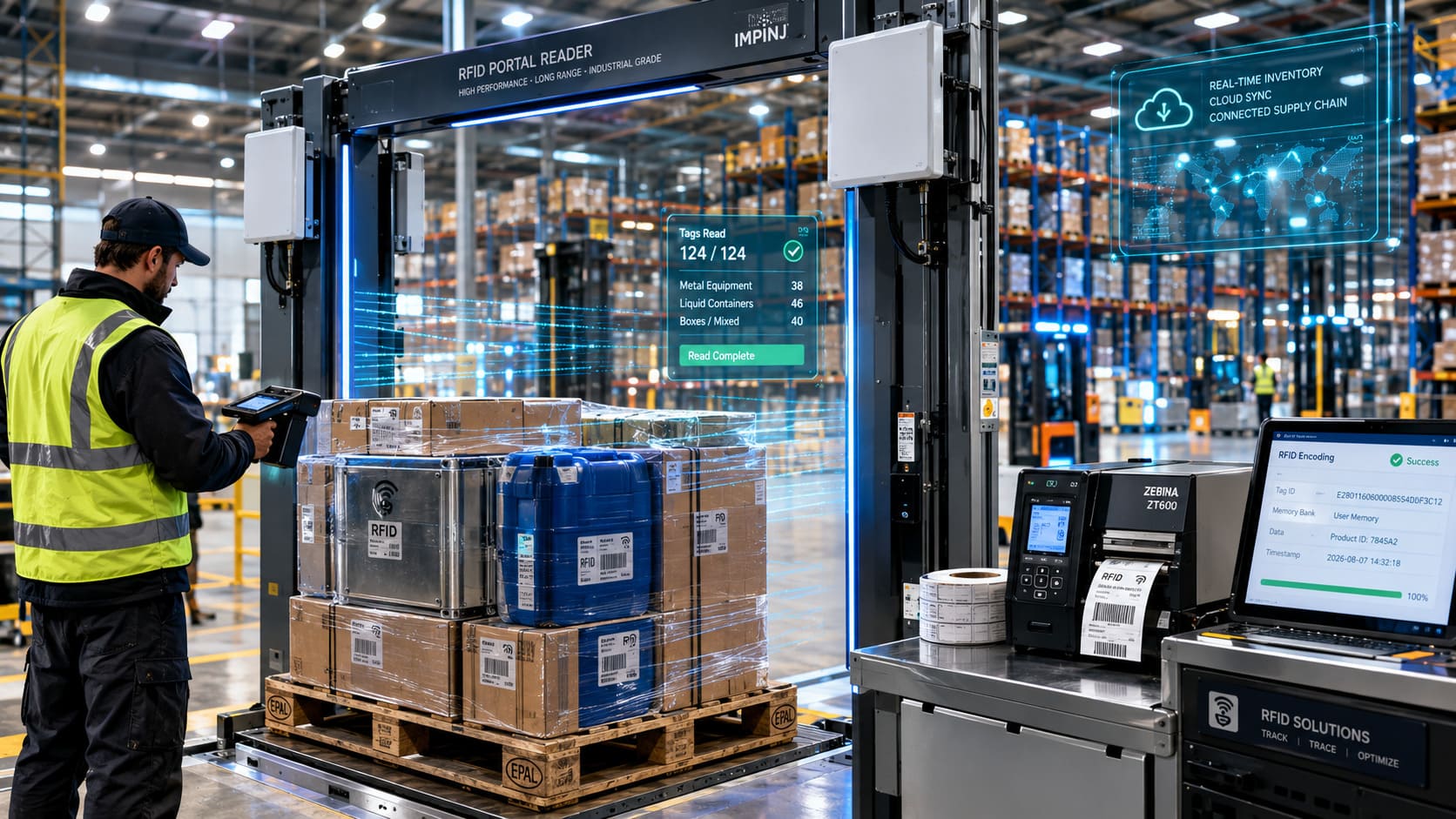
- Metal and liquids: Some materials can affect the operation of RFID.
- System integration: RFID data needs to be integrated seamlessly with other software.
- Data Quality: The more data, the better the information is not.
- New process and exception handling training for employees.
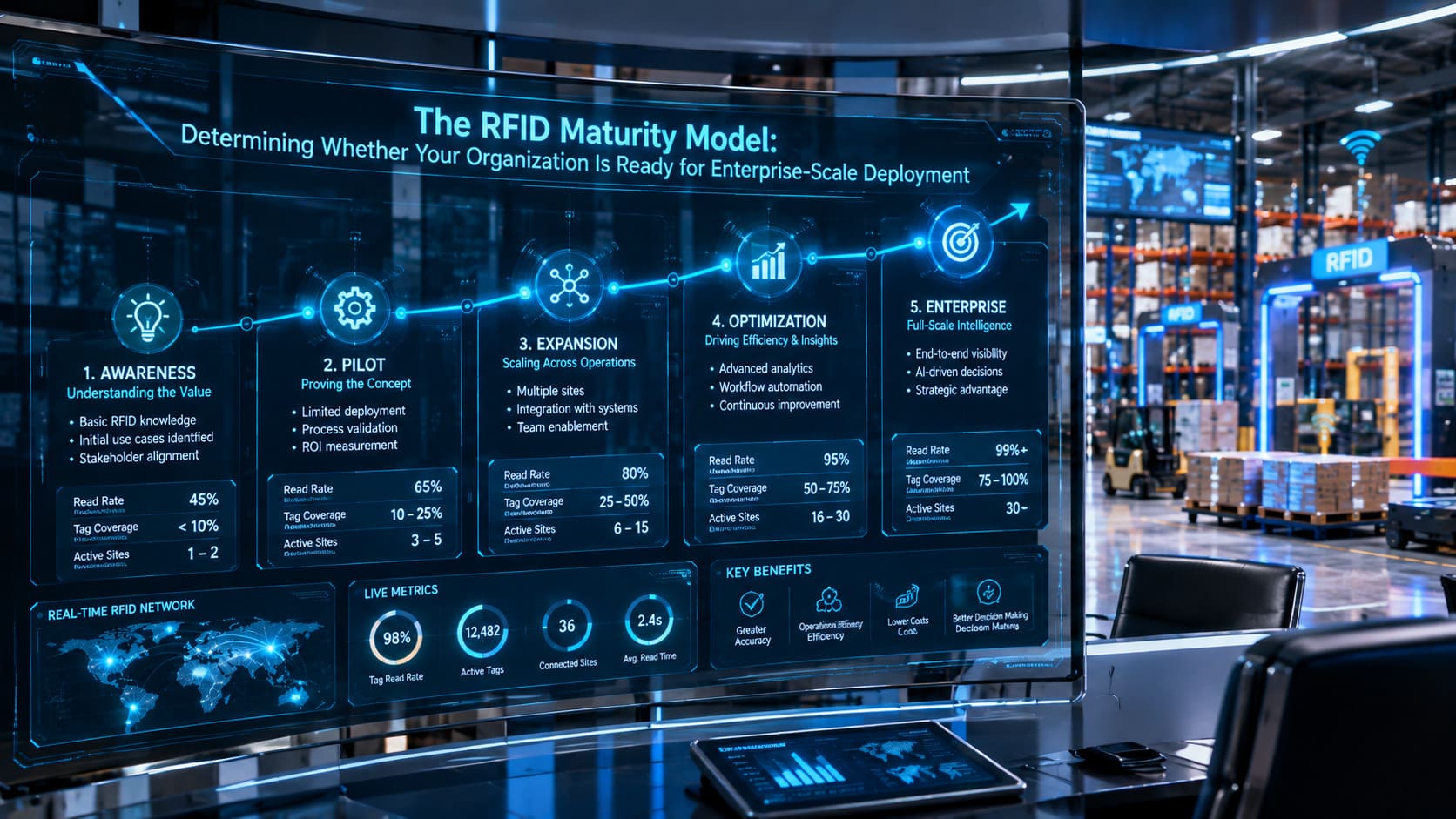
- ROI: Before a large-scale deployment, businesses need to look for measurable operational improvements.
A pilot program can be used to establish the technical and operational difficulties for use/expansion of the system.
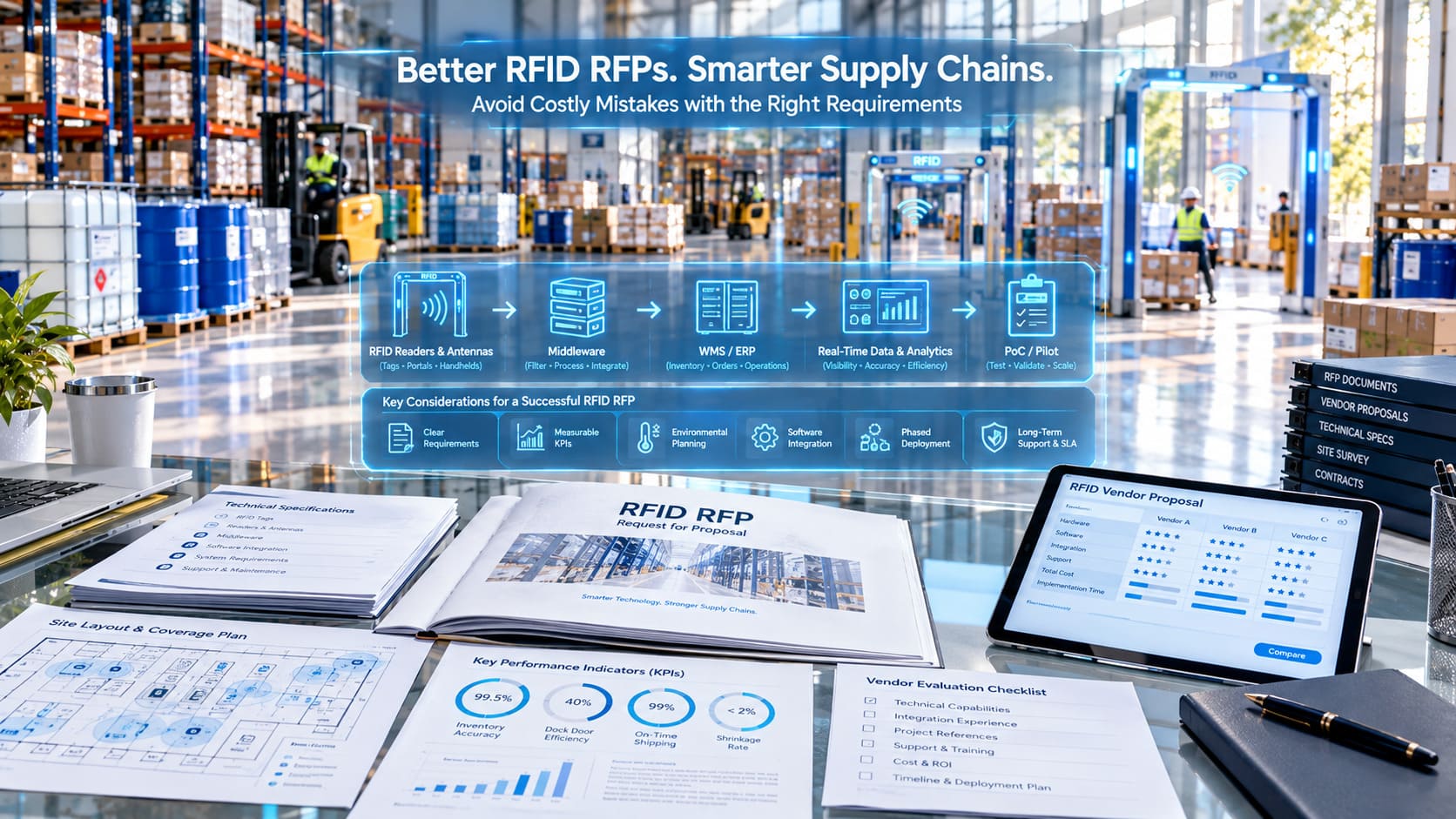
To Implement RFID Successfully, the Following Tips Have Been Included:
RFID implementation in business may be more successful if businesses approach it with caution.
Start with a specific problem
Determine if the purpose is to increase inventory accuracy, improve receiving speed, track what is happening to the inventory, enhance shrink reduction, or some other measurable goal.
Establish baseline metrics
Test inventory accuracy, picking time, inventory errors, stock-outs, and labor hours before implementation.
Test the environment
Test the performance of the tags in the presence of metal shelving, liquids, packaging, machines, and other potential sources of interference.
Interfacing with existing systems
Don’t develop an isolated RFID database that staff will have to manage independently of operational systems.
Track measurable results
Pre- and post-deployment comparisons to assess if technology is providing operational value.
RFID is joining in a wider movement towards connected supply chains. As RFID, IoT sensors, analytics, automation, and AI increasingly work together, businesses are able to evolve towards more continuous forms of inventory and asset monitoring.
The world ahead is not only about understanding how many products there are. It is also about where, how, and what to do next.
FAQ
How to improve inventory visibility with RFID?
RFID technology allows companies to identify and track items containing RFID tags with no need for line of sight. It helps manufacturers and retails stores to record inventories faster, locate items with more precision, and reduce theft, resulting in more efficient supply chains and having more accurate information on inventory levels.
Can RFID reduce inventory errors and stockouts?
RFID tags allow companies to carry out more accurate inventory management. RFID allows inventory managers to know what items are in stock at any given time within their warehouse. This allows managers to ensure that items are not misplaced and to know if they need to be restocked promptly. In addition, having a more accurate RFID inventory management system reduces the possibility of having too much or too little of a given stock.
What should a business consider before implementing RFID?
Before considering RFID investment, companies must identify their objectives, ensure RFID tag compatibility, RFID reader location, environmental factors, software, employee training, and return on investment. Testing a pilot program and measuring inventory accuracy, employee productivity, and inventory management are essential in addressing the challenges of RFID technology.