High-end retail is an exclusive world in which intimacy, exclusivity, and excellent service have always been the key to the shopping experience. But operating that “high-touch” environment with a global stock is a complicated task. So today, the most prestigious brands find themselves looking to solve this problem with a technology so inconspicuous to the naked eye: RFID (Radio Frequency Identification).
The world’s most prestigious luxury brand houses, such as Louis Vuitton, Prada, Gucci, are now embedding these super thin RFID tags into the product, either in the lining, or in the label or hardware of their products.
This device is so bigoted it’s being used as a disguise, making the boutique floor a responsive, intelligent space that doesn’t just react to a customer’s voice, but anticipates it.
Q1. Why are luxury brands choosing to hide RFID technology within their products?
The beauty is the essence of luxury. An ill-fitting plastic security tag destroys the design of a designer purse or the skirt of a couture dress. Brands use “Invisible Tags”, which are essentially paper-thin RFID inlays, to maintain the integrity of the product and provide a lot of digital functionality.
The tags do nothing until they are picked up by a sneaky RFID antenna that is concealed in the store’s fixtures or fitting rooms. This enables brands to deliver the magic of technology (i.e., being able to recognize a particular bag or size) without the shopper ever needing to see a scanner, a barcode, or a conspicuous security device.
Q2. How do these hidden tags create a “personalized” shopping experience?
This fitting room goes from passive to interactive once a customer enters an RFID-enabled fitting room.
Smart Mirror Interaction
The customer walks into the fitting room, and the mirror or built-in screen recognizes the RFID tags attached to their clothes. The mirror will show suggestions, such as styling tips, available sizes, or accessories (such as a matching belt or scarf) that might go with the outfit.
Real-Time Stylist Support
If a customer wishes to get a different size, they don’t need to walk out of the fitting room and go searching for an associate. They just press an interface on the mirror, and the staff member receives it immediately on their tablet.
Hyper-Personalization
When a customer is a repeat customer (VIP), the RFID system can help connect the dots between the customer’s previous shopping behavior and their visit today. The system alerts sales associates to make personalized recommendations based on their history with the customer, offering a highly customized and exclusive experience.
Q3. How does this technology protect the exclusivity and authenticity of a brand?
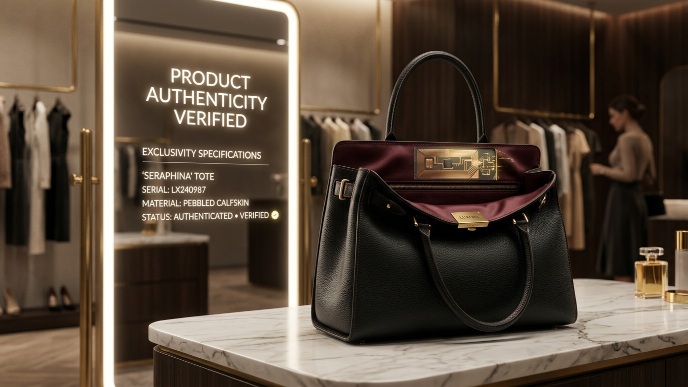
Anti-counterfeiting is likely the most important hidden RFID application. Where good “super-fakes” can fool even the most knowledgeable of buyers, RFID offers a “Digital Birth Certificate.”
Proof of Authenticity: Every tag has a unique ID, which is factory-locked. As a consumer, you can check the authenticity of the product using an easy-to-use app that comes from the brand, and you can rest assured that you’re purchasing a genuine piece of history, not a copy.
The Supply Chain Transparency: This enables brands to map out the entire journey of the product, from an artisan’s workshop to the retail shelf. The information of this provenance is becoming more and more relevant to collectors who have to ensure that the items they keep are authentic and of good origin.
Q4. What “Dark Data” does RFID provide to the brand behind the scenes?
The customer benefits from a personalized service while the brand collects in real time highly valuable and protected data, which helps to optimize its services.
The “Try-on to Buy” Ratio
Brands can view which products are commonly brought to the fitting room, but not bought. This information helps them to know whether the fit is off, the fabric needs to be refined, or the design is not aesthetically pleasing, and they can make changes more quickly.
Frictionless Inventory
The tag is always on, allowing the store to get a complete inventory in minutes. This will guarantee that when a Customer is viewing the product as “in-stock” online, it is the same product they will find in the store, which will avoid the frustration of finding something out of stock online.
Q5. How does hidden RFID support long-term after-sales services and care?
A luxury relationship is not complete at the time of sale. In the case of high-end brands, the “Digital Birth Certificate” offered by hidden RFID tags is the backbone of a premium after-sales experience.
Easy authentication for repairs
When a client takes a vintage or damaged item into a boutique for repair, the service team can quickly access the hidden tag to see the exact manufacturing history, materials, and past service records. This means that no physical paper receipts or original warranty cards are required or will be lost over time.
Personalized care
The RFID tag can be used to send automatic and personalized care instructions to the client’s digital portal, thanks to the specific model and material identification.
For example, if a client owns a particular handbag made of leather, they may get a notification on how to clean the leather based on the finish they used during the production of the handbag, ensuring that the handbag has a long lifespan.
Conclusion
Interactive luxury is a matter of eliminating friction from the boutique experience. Incorporating “invisible” intelligence, the best companies are demonstrating that the future of exclusivity is not limited to the product itself, but also to the seamless, personalized, and authentic experience that surrounds it.
FAQs
Do these hidden tags compromise my privacy?
No. These are ‘passive’, meaning that they have no power supply and cannot follow you outside the store. The vast majority of the tags are turned off at the time of sale or otherwise switched to “privacy mode,” with the technology used only to enhance the first time the item is sold to a retail customer.
Are these RFID tags environmentally friendly?
The luxury brands of modern times are headed towards “Green RFID.” In line with the broader industry move towards sustainability, many new inlays are available that are paper-based and contain no plastics.
Does this technology make checkout faster?
Yes. RFID is used for a “frictionless” checkout. A salesperson can put an entire purchase into a reader, and it will read all items. This enables an end-to-end seamless shopping experience.