The retail industry is in a new era where traditional barcodes are not sufficient. Large retailers like Walmart, Target, Macy’s, and others have continued to increase their adoption of Radio Frequency Identification (RFID) beyond clothing to products such as home goods, consumer electronics, toys, sporting goods, and other high-volume items. For suppliers, RFID is not a competitive advantage anymore, but a business requirement that’s rapidly becoming one.
It’s easy to see that enterprise manufacturers probably have the resources to adapt, but it’s a different story for mid-sized and small manufacturers. They need to purchase new technology, revamp processes, and train staff while still making money. Even with these obstacles, companies adopting RFID find that the benefits are lasting and that they are not just doing something to stay compliant with the retailers.
Why are Retailers Increasing the Requirements for RFID Tags?
With RFID, the process is altered in that hundreds of tagged items can be identified simultaneously without having to scan them directly with a line of sight. This provides retailers with:
- More precise stocktaking figures
- Faster stock replenishment
- Enhanced multi-channel order management
- Reduced out-of-stock situations
- Better loss prevention
- Improved customer satisfaction
Retailers and businesses must have almost real-time stock visibility throughout their stores and warehouses, as e-commerce and buy-online-pickup-in-store (BOPIS) are expanding.
The Ripple Effect on Small and Mid-Sized Suppliers
Retail mandates don’t cover just the retailer – they cover the supply chain as well.
Retailers are now demanding that many smaller suppliers supply RFID-tagged items to their specifications, rather than requiring barcode labels. This transition may be daunting for companies that are under a tight budget for technology.
Common challenges include:
- Buying RFID printers and encoders
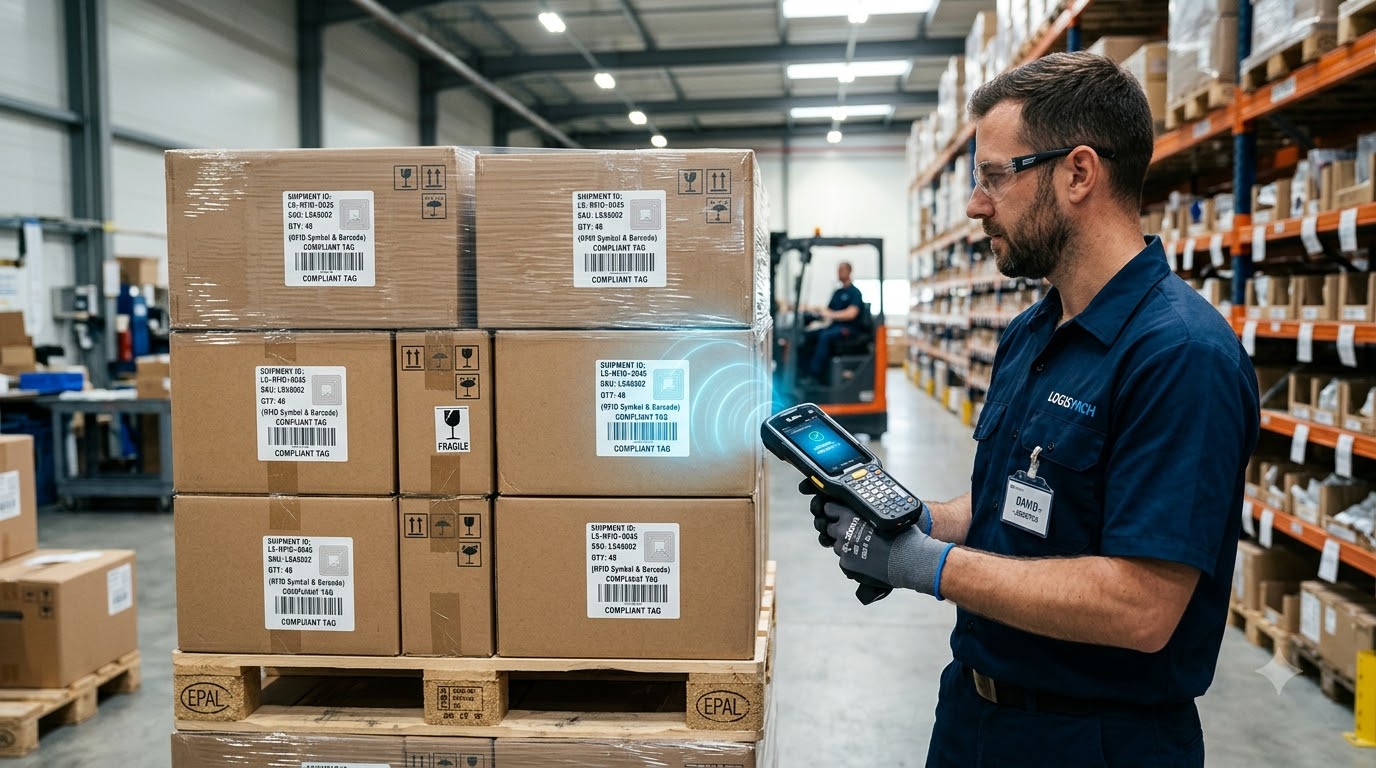
- Purchasing conforming labels with the RFID technology
- Keeping inventory management software up to date.
- Linking RFID to ERP or warehouse applications
- Training warehouse personnel
- Adhering to retailer-specific compliance requirements
While these investments demand initial capital outlay, suppliers who wait to make them could face delayed shipments, lost retail partnerships, or even face chargeback fines.
Knowing the Cost of RFID Adoption
Implementation cost is one of the top issues on the mind of smaller businesses.
Expenses often include:
- RFID printers
- Fixed or handheld RFID readers
- Each product has an RFID tag.
- Software integration
- Staff training
- System maintenance
The total investment will be dependent on the company size, number of SKUs, and complexity of operations. Fortunately, the cost of the RFID hardware has dropped significantly in the last ten years, making it more affordable and, therefore, more widely applicable to smaller organizations.
In addition, many of the suppliers opt for phased deployment, as they start with products targeted for retailers who use RFID, and then gradually roll the solution out throughout the company.
More than Compliance: Operational Benefits
Retailers can push initial take-up, but suppliers can also see operational saving within the business.
Improved Inventory Accuracy
With RFID, manual counting is virtually eliminated, which makes it possible to keep an extremely accurate stock in the company.
Benefits include:
- Fewer stock discrepancies
- Better purchasing decisions
- Reduced inventory shrinkage
- Faster Warehouse Operations
In seconds of time, employees can scan entire pallets or shelves, rather than scanning each individual item.
This results in:
- Faster receiving
- Quicker shipping
- Reduced labor costs
- Improved productivity
Improved Supply Chain Visibility
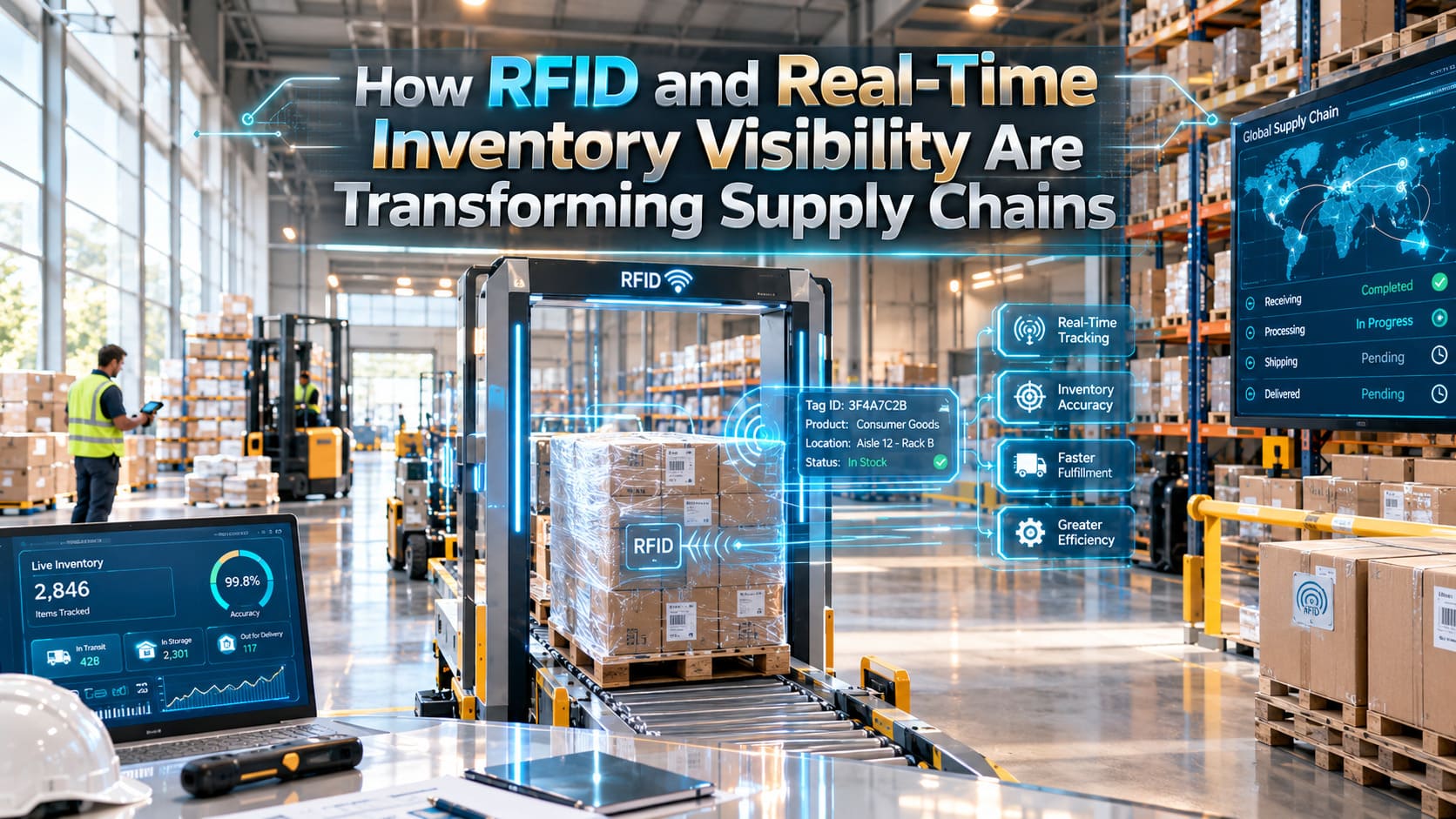
RFID gives real-time visibility of product movement in the warehouse and distribution process.
Managers have access to:
- Faster inventory updates
- Better shipment tracking
- Improved replenishment planning
Reduced Retail Penalties
By complying with the retailer’s requirements, suppliers can avoid penalties for non-compliance, can also ensure that shipments are not delayed, and can ensure that shipments are not rejected.
Compliance also helps to build lasting connections with key retail partners.
The Adoption of Technologies Is Becoming Easier
The technology of RFID has been made more affordable because of several developments.
Today, there are modern RFID solutions that are available that provide the following:
- Cloud-based inventory platforms
- Mobile RFID readers
- Plug-and-play software integrations
- User-friendly dashboards
- Automated compliance reporting
Some technology vendors also provide managed RFID services so smaller vendors can deploy the technology without having to keep extensive IT resources in-house.
Planning for the Future of RFID
Industry experts predict RFID needs will continue to grow in other retail sectors.
To prepare for this, businesses should evaluate the following:
- Real-time Stock Management Systems
- Warehouse workflows
- Product labeling processes
- Retail compliance requirements
- Technology upgrade timelines
Suppliers can help minimize rushed implementations in the future when new mandates are introduced by preparing early.
Small Suppliers Often Face Challenges in Pricing
With a structured approach to transition to RFID, it is much easier.
Take note of the following good practices:
- Begin with one retailer. First, use RFID for the customers who must comply before you do. Apply RFID to those customers who already need to comply, and expand from there.
- Choose scalable technology. Choose systems that can scale up to meet your business.
- Train employees early. By educating staff properly, implementation errors are reduced.
- Test prior to full deployment. Pilot programs are used to identify workflow improvements.
- Work with experienced RFID partners. Costly integration problems can be avoided with expert advice.
- Monitor performance metrics. Spend time monitoring inventory accuracy, how fast items are fulfilled, and labor savings in order to measure ROI.
The Use of RFID is Increasingly Becoming the Norm
Now, RFID is rapidly gaining traction as the next standard in retail. RFID is becoming the new normal for retail, as barcodes did decades ago. Initially started in apparel, it has now spread to multiple product categories, driven by retailers’ requirement for instant inventory visibility and productivity.
Small and medium-sized US suppliers may need to make new investments and change their processes. Compliance is not the only advantage that RFID brings to businesses—it can enhance inventory accuracy, streamline warehouses, boost retailer relations and pave the way for future upgrades.
The transition from the bar code is more than just an evolution in technology. It represents a shift towards a smarter, data-driven supply chain where visibility, speed and accuracy are the key drivers of competitiveness. Suppliers who invest now will be positioned for success in a continually connected retail environment with the changing demands of retailers.
FAQ
Why should retailers use RFID instead of traditional barcodes?
RFID offers a solution that enables scanning multiple items at once without requiring a direct line of sight to the tag, which lets the business know what is in stock at any given time, helps complete inventory counts faster, reduces out-of-stock instances, and enhances omnichannel order fulfillment capabilities, thus increasing overall efficiency.
Is it expensive for small suppliers to install RFID?
The initial investment can consist of RFID tags, RFID printers and readers, software, and employee training. Many companies, however, recover this investment through gains in accuracy, time saved, compliance, and overall productivity.
How can small suppliers prepare for RFID compliance?
To begin with, it is essential to make sure that each retailer’s RFID requirements are properly considered, a pilot implementation is conducted, and the latest scalable technology is acquired. In addition, it is critical to train employees and engage leading RFID solution providers. A step-by-step approach would allow addressing the issue properly without causing significant disruptions.