Quick answer: NFC (near-field communication) is a short-range type of RFID. It runs at 13.56 MHz, reads one tag at a time at a distance of a few centimeters, and is built into almost every smartphone, which is why it powers tap-to-pay, access cards and product authentication. UHF RFID reads hundreds of tags per second from many feet away without line of sight, which makes it the technology of choice for inventory counting, asset tracking and supply chain visibility.
RFID and NFC are often mentioned as if they were competitors. They are really members of the same family: both use radio waves to read a tiny chip and antenna, and neither needs a battery in the tag. The difference is how far they read, how many tags they read at once and who carries the reader. This guide explains how each one works, compares them side by side and shows which one fits each job.
What Is RFID?
Radio frequency identification (RFID) identifies items wirelessly. A reader sends out radio energy through an antenna, a tag on the item uses that energy to power its chip, and the chip answers with its unique ID. The reader passes the ID to software that knows which item, carton or asset it belongs to.
RFID comes in three main frequency bands:
- Low frequency (LF, 125–134 kHz): reads at a few inches; used for animal ID, key fobs and older access badges.
- High frequency (HF, 13.56 MHz): reads at up to about three feet; used for library books, smart cards, ticketing and NFC.
- Ultra-high frequency (UHF, 860–960 MHz; 902–928 MHz in the US): reads from several feet to 40 feet or more and hundreds of tags per second; used for retail inventory, warehouses, logistics and asset tracking. UHF RFID follows the EPC Gen2 (ISO 18000-63) standard and is also marketed as RAIN RFID.
What Is NFC?
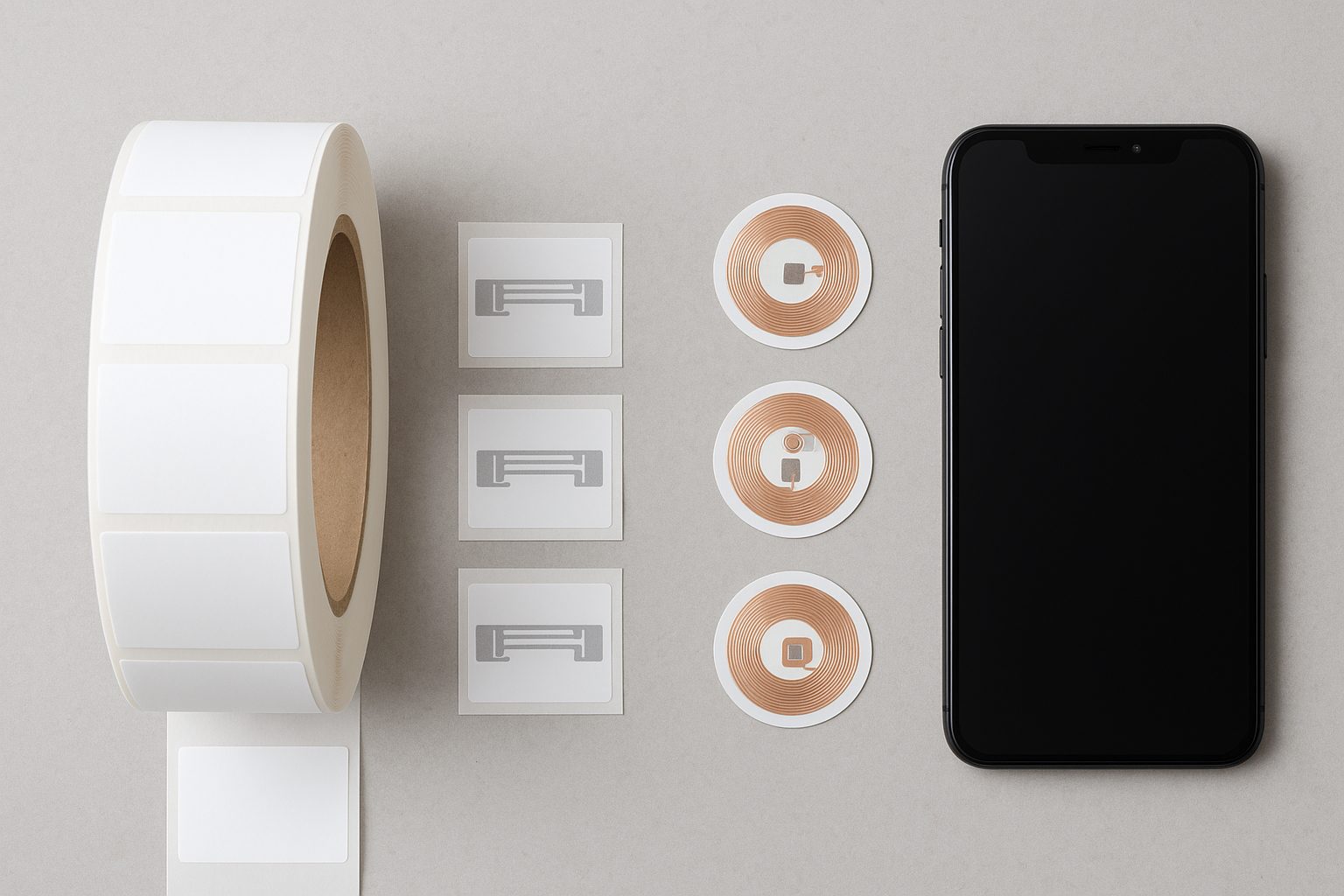
Near-field communication (NFC) is a set of standards built on HF RFID at 13.56 MHz. It deliberately works only at touch distance, usually under 4 cm (about 1.5 in), so a reader talks to exactly the tag or card the user taps. That close range is a feature: you choose which tag to read simply by holding your phone to it.
NFC adds a few things that plain RFID does not have. A phone can read and write NFC tags, act as a card itself (as it does for mobile payments), and exchange data with another NFC device. Because nearly every modern smartphone has an NFC reader, an NFC tag can open a web page, a product record or a setup screen with no special hardware.
RFID vs NFC: Side-by-Side Comparison
| UHF RFID | NFC | |
|---|---|---|
| Frequency | 860–960 MHz (902–928 MHz in the US) | 13.56 MHz (high frequency) |
| Typical read range | Several feet to 40+ ft with passive labels | Under 4 cm (about 1.5 in) |
| Tags read at once | Hundreds per second | One at a time |
| Line of sight | Not needed; reads through boxes and packaging | Not needed, but the reader must touch or nearly touch the tag |
| Who reads it | Handheld RFID scanners, fixed readers, portals, RFID printers | Smartphones, payment terminals, door readers |
| Communication | Reader to tag | Reader to tag, plus phone-to-phone and card emulation |
| Standards | EPC Gen2 / ISO 18000-63 (RAIN RFID) | ISO 14443, ISO 15693, NFC Forum tag types |
| Best for | Inventory counts, receiving, shipping, asset tracking, loss prevention | Payments, access control, product authentication, tap-for-info |
How Read Range and Speed Change the Job
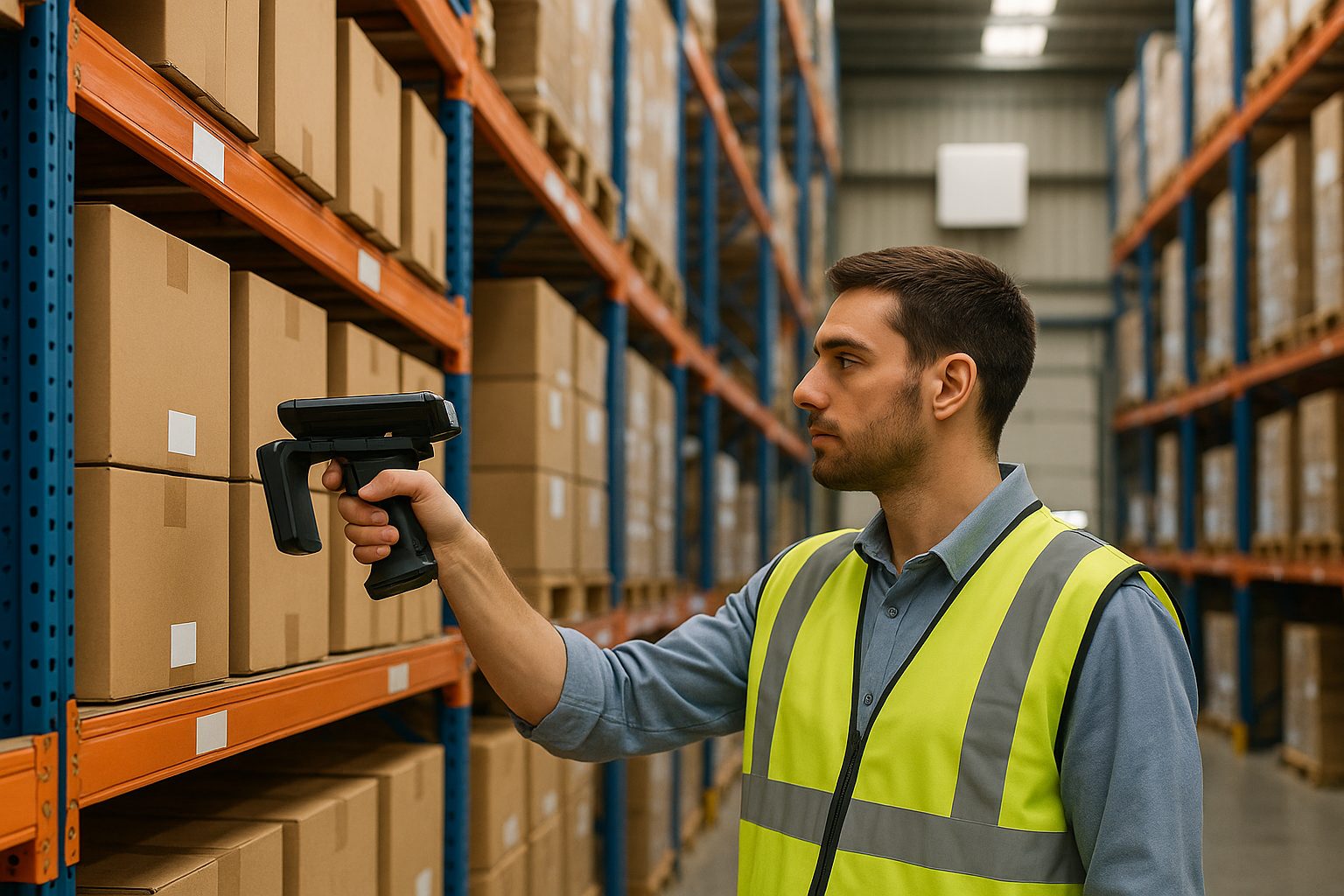
The single biggest practical difference is distance. UHF RFID uses far-field radio waves that travel, so a reader can energize every tag in a room, a rack or a pallet. Anti-collision rules in the Gen2 standard let the reader sort out hundreds of answers per second. A person walking the aisles with a handheld reader can count thousands of items in minutes, without opening boxes or turning items to find a barcode.
NFC uses the near field, a magnetic coupling that fades within a few centimeters. That makes it precise and personal: tap one tag, get one answer. It is ideal when a person should deliberately choose one item, and impractical for counting a shelf.
Where UHF RFID Wins
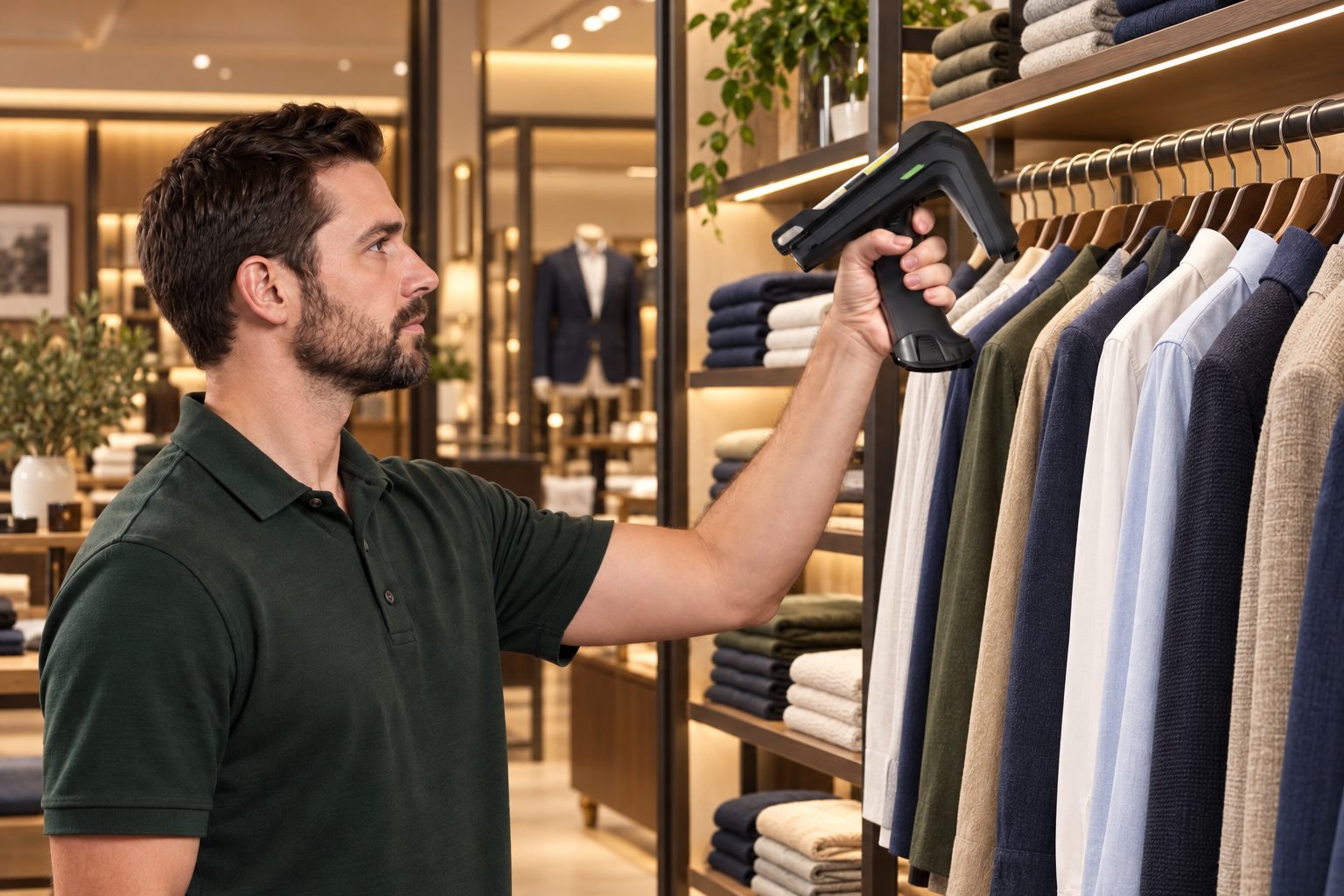
- Retail inventory: full-store counts in minutes instead of days, accurate stock for online orders and faster replenishment of the sales floor.
- Warehouses and distribution: receiving and shipping verification, carton audits in a tunnel or at a dock door, and cycle counts of entire racks.
- Asset tracking: finding tools, IT equipment and returnable containers, and logging what leaves a room or a building.
- Loss prevention: exit readers that alert staff when an unsold item leaves the store.
Where NFC Wins
- Payments and tickets: contactless cards, phone wallets and transit passes.
- Access control: office badges and hotel key cards that work only when presented.
- Product authentication: a shopper taps a luxury item or a bottle to confirm it is genuine.
- Customer engagement: a tap opens care instructions, a product video or a reorder page.
Can You Use Both? Dual-Frequency Tags
Yes. Dual-frequency tags place a UHF antenna and an NFC antenna on one label or hang tag. The store and the warehouse count the item with UHF readers, while the shopper taps the same tag with a phone to see product details or verify authenticity. For most operations, the business value comes from the UHF side, since that is what keeps inventory accurate across every location.
How to Choose Between RFID and NFC
- Count or interact? If you need to count, find or verify many items, choose UHF RFID. If one person needs to interact with one item, choose NFC.
- Who holds the reader? If staff use dedicated scanners or fixed readers, UHF fits. If the reader is the customer’s phone, NFC fits.
- How far away are the items? Shelves, racks, cartons and doorways need UHF range. Counter-top taps work with NFC.
- What are the items made of? Both technologies have tags designed for metal and liquids; choose a tag built for the material.
- What software will use the reads? The tag only carries an ID. The value comes from the inventory or asset software that turns reads into counts, locations and alerts.
RFID for Inventory With Senitron
Senitron runs on UHF RFID because inventory is about counting many items quickly and accurately. Senitron supplies UHF RFID labels and tags with NXP UCODE 9 chips, from small 1.06 in stickers to 4 × 6 in shipping labels, with read ranges from 3 to 45 ft. Its RFID readers, scanners and printers come configured for the Senitron software, and the same platform powers retail RFID inventory management, warehouse inventory and RFID asset tracking. Some handhelds in the lineup also include NFC, so staff can tap a badge or a single tag with the same device.
Frequently Asked Questions
Is NFC the same as RFID?
NFC is a type of RFID. It uses the 13.56 MHz high-frequency band and is designed for very short-range, one-to-one exchanges, such as a phone tapping a tag or a card tapping a terminal. All NFC is RFID, but most RFID used for inventory is not NFC.
What is the read range of NFC compared to RFID?
NFC works at a few centimeters, usually less than 4 cm (about 1.5 in). Passive UHF RFID labels read from several feet to 40 feet or more, depending on the label size and the reader.
Can my phone read RFID tags?
Most smartphones read NFC tags and some HF RFID cards. They cannot read UHF RFID tags, which are the tags used for inventory counting. Those need a UHF RFID reader, such as a handheld RFID scanner or a fixed reader.
Which is better for inventory, RFID or NFC?
UHF RFID. It reads hundreds of tags per second from a distance without line of sight, so a whole stockroom, store floor or pallet can be counted in minutes. NFC reads one tag at a time at touch distance, which suits authentication and customer engagement.
Can one tag have both RFID and NFC?
Yes. Dual-frequency tags combine a UHF RFID antenna for supply chain and inventory with an NFC antenna that shoppers can tap with a phone. Brands use them to get fast inventory counts and a phone-readable product page from the same label.
Is NFC more secure than RFID?
NFC is harder to read from a distance because of its very short range, and NFC chips used for payments and access add encryption. UHF inventory tags carry an item number rather than personal data, and they can be password-locked so the stored data cannot be changed.
Ready to count inventory in minutes instead of days? Talk to Senitron about the right RFID tags, readers and software for your stores, warehouses or assets.