More and more, businesses are shifting away from technology projects and towards connected systems that are able to “understand” what’s happening in the physical world and respond intelligently. This convergence between RFID, the Internet of Things (IoT), Artificial Intelligence (AI), and Digital Twins is driving this transformation.
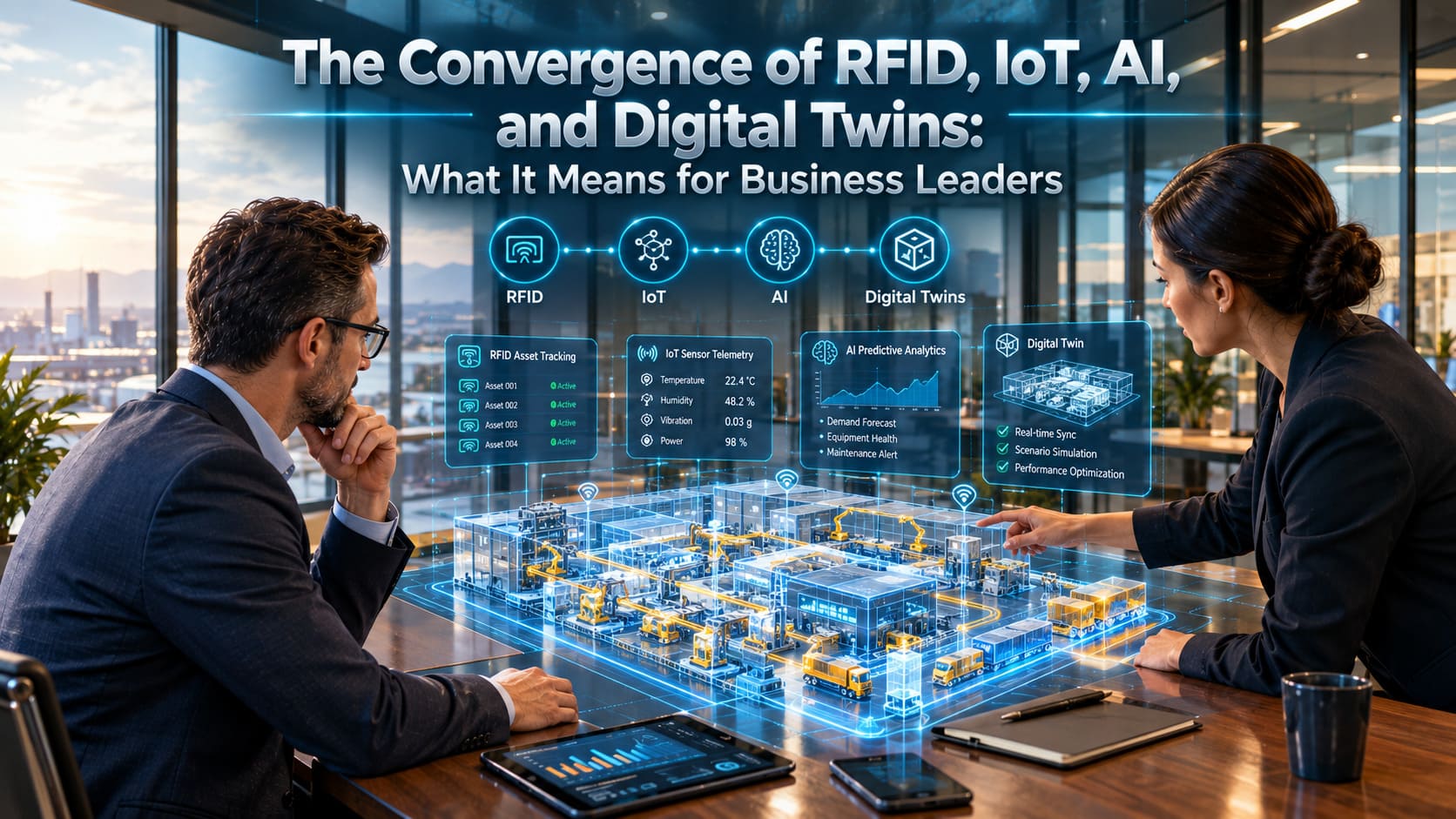
The various technologies offer different capabilities. RFID tags are used to identify physical objects; devices and sensors are connected via IoT; data is analyzed using AI; and digital twins provide dynamic digital representations of physical assets and processes. When combined, they can provide business leaders with a more comprehensive perspective of operations.
Explain the concept of the Four Technologies
It is useful first to understand the role of each technology without looking at the combination of them.
RFID is an automated identification and tracking capability. Product, equipment, container, and material tags can be read without needing to line up the reader with the tag.
IoT is the interconnection of physical devices and sensors to networks, enabling organizations to gather data including temperature, location, vibration, pressure, energy usage, machine status, and others.
AI can process vast amounts of data to uncover patterns, forecast potential issues, optimize operations, and aid in decision-making.
Digital twins are digital models of physical assets, systems, or processes. A digital twin can adapt to altering operational conditions if it is continuously updated with real-world data.
These technologies, as used separately, can be helpful. Combined, they can develop a cohesive feedback loop between the physical and digital worlds.
Why Do They Need to Work Together?
Think about a manufacturing plant.
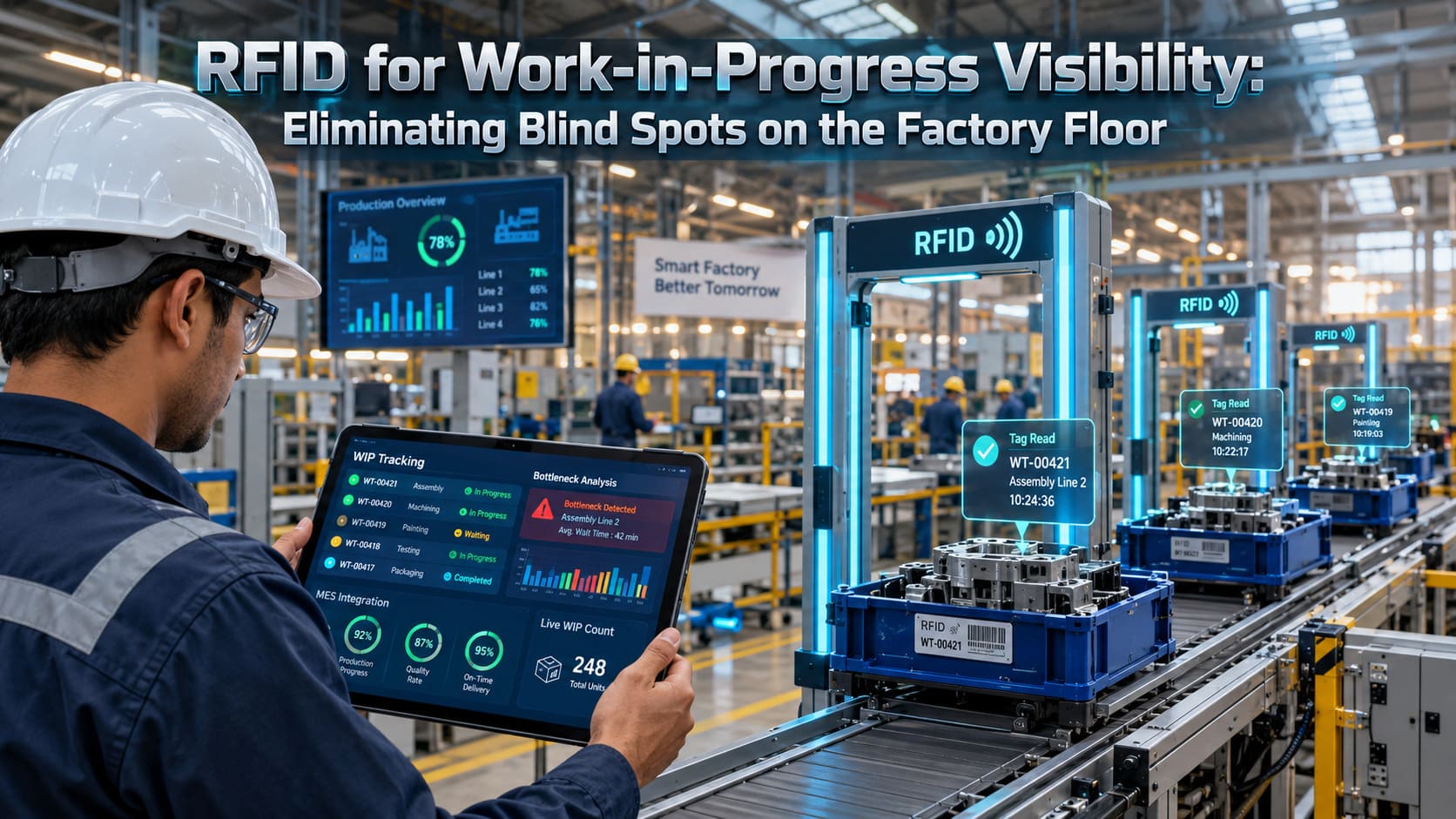
An RFID tag is a tag that tells us what a component is. The machine processing the component is monitored using IoT sensors. This data is fed into software that uses AI to identify an odd delay in production.
The status of the equipment and WIP can then be reflected in the digital twin of the production line. This information can help managers grasp what is going on and provide an assessment of any changes in operation.
The basic relationship can be viewed as:
The identification with RFID, the sensing with IoT, the analysis with AI, and the representation and simulation with the digital twin.
Not all four technologies are needed by every business right now. Their value is dependent on the operating problem they are to be used for.
Why is this important to business leaders?
For executives, the tie-in is more about gaining visibility and better decision-making, rather than any specific technology.
Traditional business systems tend to share information about what has already happened with leaders. AI can enable Connected Technologies to deliver more timely information on what is currently happening and what is likely to happen.
Potential benefits include:
- Better tracking of assets and inventory.
- Better production data (be it from time or accurate cost analyses)
- Predictive maintenance
- Better supply-chain monitoring
- Reduced operational waste
- Immediate response to disruptions.
- Better and more informed capacity planning decisions
- Improved customer service
- Greater process transparency
The biggest opportunity is in linking these capabilities and not implementing them as technology projects.
From Tracking to Prediction
In the past, RFID has been used to give visibility into the location of an item or when it was picked up. IoT can add information regarding its condition.
For instance, RFID may be used to track a shipment, and IoT sensors can track the temperature and humidity. Both datasets can be analyzed by AI to uncover conditions linked to product damage or delays.
This alters the discourse from:
What happened to the product?
to:
Where is it? What is it like? What will probably happen next?
It can be especially useful for industries where the timing, quality, and condition of the assets have a direct impact on profitability.
Digital Twins bring an Additional Layer
Digital twins are able to combine multiple data streams into a digital model that is contextual.
A factory digital twin could consist of:
- Production equipment
- WIP locations
- Machine conditions
- Production schedules
- Material flows
- Energy consumption
- Maintenance information
AI can analyze scenarios or patterns in the digital environment, and RFID and IoT can provide information from the physical environment.
A digital twin might be used by a business to explore the impact of production schedule changes on equipment utilization, WIP inventories, or throughput before undertaking the change in a real production facility.
Leaders to consider the challenges:
While convergence offers promise, it does not take away the problems of either technology.
Data Quality
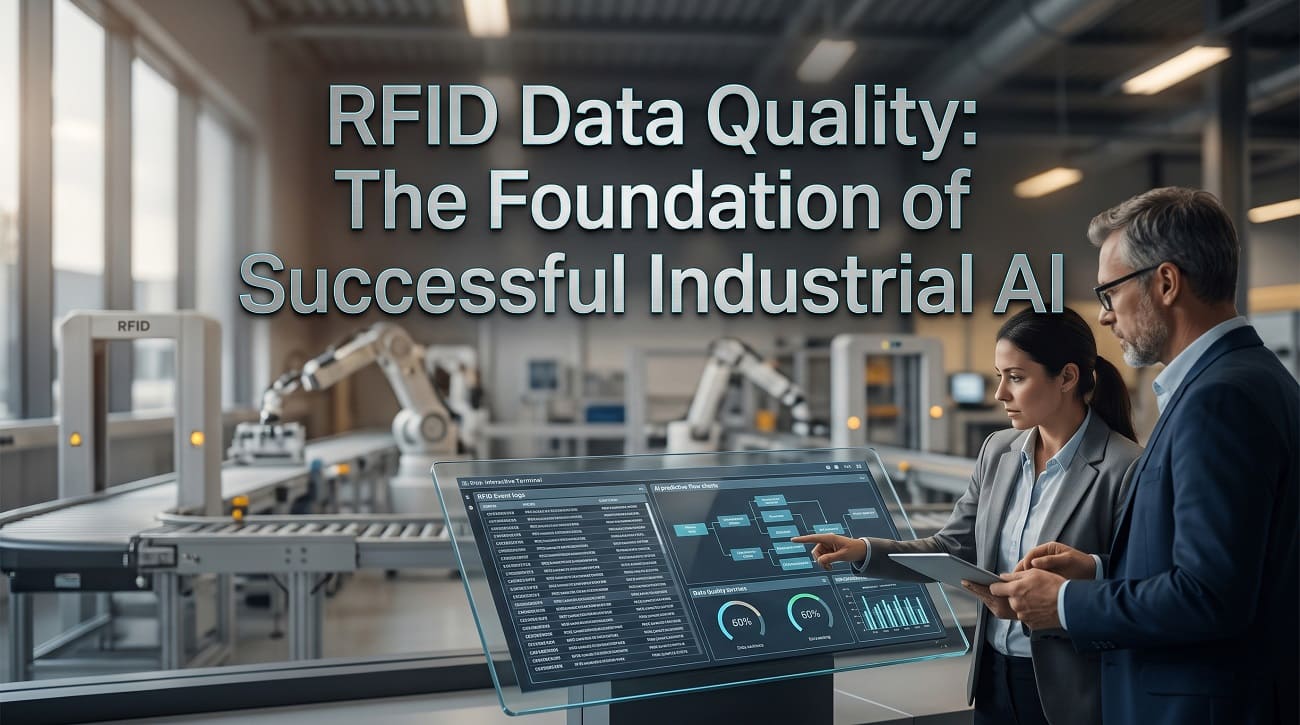
There is a need for trusted data in AI and digital twins. If the RFID reader fails to read the tag, an event is duplicated, the sensor reading is faulty, or the identifier is not consistent, the information from the sensors is compromised, and downstream analytics suffer.
Integration
Old legacy ERP, MES, warehouse, and supply-chain systems may not have been built to readily connect with newer IoT and RFID solutions.
Cybersecurity
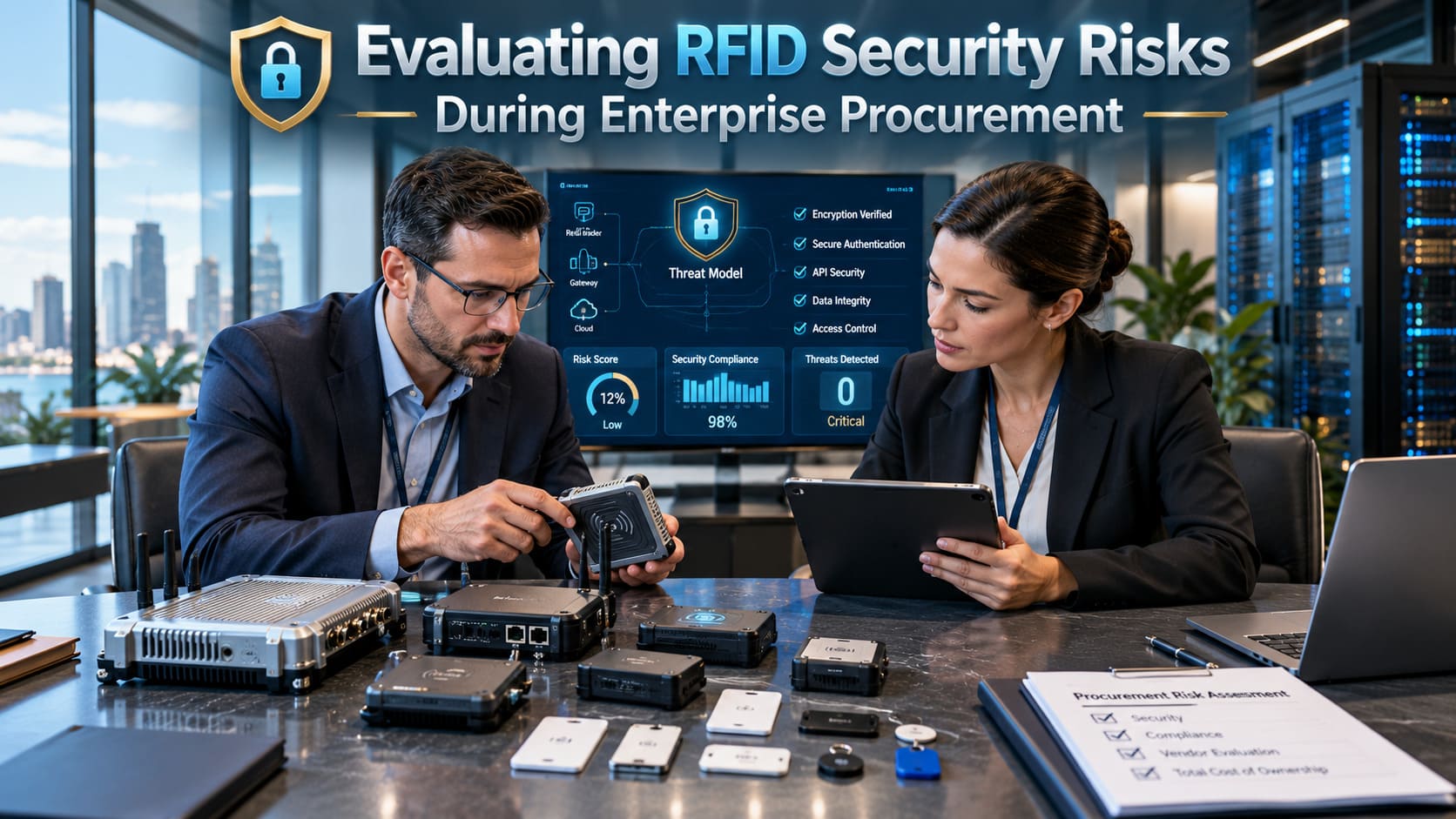
The more physical assets and devices connected, the more critical cybersecurity, access controls, network segmentation, and data governance become.
Cost and Complexity
Simultaneously deploying tags, readers, sensors, connectivity, software, analytics, and the infrastructure of digital twins can be costly and challenging.
Employee Adoption
The use of technology should reduce time wasters without complicated workflows. Training and participation of employees in the process of implementation are required.
Tips for Business Leaders
Businesses looking into this technology convergence should go through the process strategically.
- Begin with a business problem.
Recognize measurable issues, like inventory inaccuracies, equipment downtime, inefficient material movement, or supply-chain blind spots.
- Establish a secure database.
Before AI can get sophisticated, clean identifiers, standardized data, accurate reads from the RFID, and trustworthy sensor information are in place.
- Avoid technology silos.
Think about how information will be shared between RFID, the IoT, AI, and current business systems.
- Pilot before scaling.
Try one production line, warehouse, asset group, or one process along the supply chain.
- Define measurable KPIs.
Monitor parameters like downtime, inventory accuracy, throughput, labor efficiency, order accuracy, maintenance costs, or anything else.
- Design for scalability.
Select architectures that can expand with more sites, assets, devices, and data volumes as the program expands.
The Strategic Shift Ahead
Combining RFID, IoT, AI, and Digital Twin is part of a wider shift in business-to-physical interaction.
Physical things can be digitally identified with the help of RFID. Their condition can be measured thanks to IoT. AI can convert the data into insights, and digital twins can offer a contextual environment for monitoring and assessing operations.
The aim for business leaders shouldn’t be to use every new technology as it comes. The true value is in linking technologies for specific business needs.
If done strategically, this convergence can enable businesses to go from disjointed visibility to connected operations, in which physical assets, operational data, analytics, and strategic decision-making all play a pivotal role in an information-driven business.
FAQ
- How do RFID, IoT, and AI work together?
RFID technology serves to identify and track physical objects, and IoT sensors are used to collect information on the state of these objects and their environment. Using AI, it is possible to analyze and apply this data to spot trends and make decisions. Moreover, digital twins allow for simulating physical objects or processes.
- What are the possible benefits businesses can have?
Companies are expected to get benefits including enhanced asset tracking and visibility, improved operational data, predictive maintenance, increased inventory accuracy, improved response to disruptions, optimized production, and increased overall performance. The technologies mentioned above can help connect disparate sources of information within an organization.
- What should a business consider before adopting these technologies?
Therefore, companies need to define their objectives in order to determine whether it is reasonable to invest in RFID, IoT, or AI, or use all these technologies. Organizations should prioritize the critical areas where IoT can provide the greatest value. It is essential to pay enough attention to such issues as data quality and system integration, cybersecurity, cost, workforce training, and scalability.